Afghan photo bloggers, beyond war and Wikileaks
By publishing photos of different aspects of their country, Afghan photo bloggers display an Afghanistan beyond war and Wikileaks.
Nasim Fekrat, an award-winning Afghan blogger, presents us with both the beautiful side of Afghanistan – the country's natural beauty – as well as its “ugly” side, the poverty.
Afghanistan’s Beauty
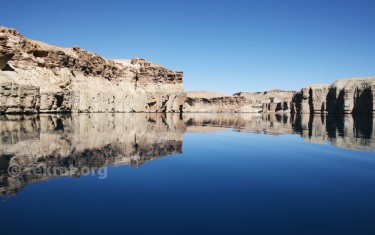
Band-e Amir Lake, photo copyright Nasim Fekrat (used with permission)
Nasim writes:
Band-e Amir was to become Afghanistan’s first national park in the 1960s, but due to the instability of the Kabul government at the time, this did not happen. In 2004, Band-e Amir was submitted for recognition as a World Heritage site. In 2008, Band-e Amir was finally declared Afghanistan’s first national park.
He also shows the struggle of the poor:
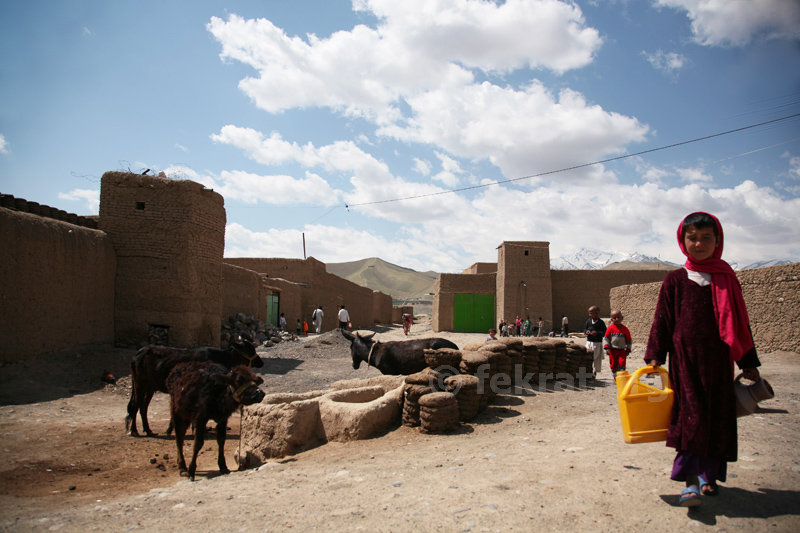
Grim picture of life, near the giant Buddhas of Bamiyan, a rare archaeological site. Photo copyright Nasim Fekrat (used with permission)
The blogger says:
Many of the impoverished families living in the caves say they are too poor to live anywhere else even though the government insists that they are doing damage to an the area, near the giant Buddhas of Bamiyan, which is a rare archaeological site. All are refugees who fled areas of fighting during the Taliban era, and have now returned from the other parts of Afghanistan. The cave dwellers are all Hazara, who are religiously and ethnically distinct and survivors of intense persecution by the Taliban.
Asadollah Habibzadeh, a photo blogger and journalist, based in Herat in Afghanistan shares several photos from Herat.
Cartoon exhibition in Herat's library:
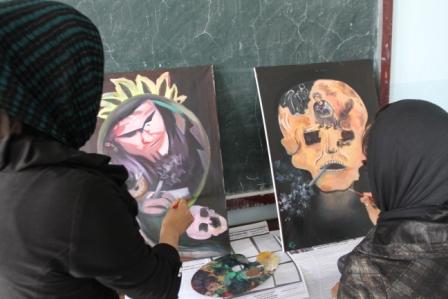
The photos take us on a journey into Afghanistan from the bee business in Herat to a womens conference in the city.