feed

Rebekah Heacock

Stories

July 16th, 2008

African bloggers react to ICC charges against Sudanese President al-Bashir 

Rebekah Heacock · 17:45 · Middle East & North Africa , Sub-Saharan Africa

Note: This article was written in collaboration with John Liebhardt

Bloggers from around the world are reacting to the International Criminal Court's recent recommendation that Sudanese President Omar Hassan al-Bashir be charged with multiple counts of genocide, war crimes and crimes against humanity. Many of those bloggers are criticizing the potential indictments, claiming they are difficult to enforce and that they will bring more unrest to an already unstable nation.


Refugee children waiting with their family for a food distribution in Sam Ouandja in Darfur. Photo by Nicolas Rost/UNHCR, uploaded by hdptcar

Background
After a three year investigation, Luis Moreno-Ocampo, the prosecutor of the International Criminal Court, wants to formally accuse Sudan’s president Omar Hassan Ahmed al-Bashir of 10 counts of genocide, crimes against humanity and war crimes in the African country’s Darfur region. It marks the first time the six-year-old ICC has brought charges against a sitting president. al-Bashir and a government spokesman immediately rejected the charges and claimed they would use diplomacy to fight the case. Sudan has signed but not ratified the Rome Statute, the treaty that established the ICC, meaning it is not obliged to cooperate with the court.

Moreno-Ocampo, from Argentina, contends that for more than five years al-Bashir has ordered the Sudanese armed forces along with the Janjaweed militia to attack and destroy villages of three separate ethnic groups in Darfur, directly uprooting nearly 2.5 million civilians who now live in refugee camps. The UN estimates fighting and disease have claimed the lives of nearly 450,000 people. The prosecutor says he has evidence that government-controlled military groups used rape, hunger and fear to drive people from their lands, which were then taken over.

The case against al-Bashir comes after the United Nations Security Council requested in 2005 that Moreno-Ocampo investigate the Sudanese president’s role in the Darfur conflict, which the United States government terms “genocide.”

While al-Bashir is supposed to be arrested by Sudanese authorities, three ICC judges (hailing from Ghana, Latvia and Brazil respectively) will begin weighing the claims and make a decision whether to proceeded with a trial. This review process could take up to three months.

From Sudan
On Friday, Too Huge World, an aid worker based in North Darfur, compared waiting for news of the indictments to waiting for a grenade to explode:

The potential implications of these indictments are many and depressing. Everything from anti-Western riots on the streets of Khartoum to government-backed attacks on UN targets to the expulsion of many or all international organizations.

I imagine that this is a bit of what it feels like to wait for a grenade to explode.

On Monday another post described effects of the recommendation that al-Bashir be charged on security in the area:

So far today we have not seen attacks against international staff or facilities. The only reaction so far seems to be some large orchestrated protests in downtown Khartoum, another one in El Geneina (West Darfur), a small, half-hearted one in El Fasher (North Darfur), and none at all in Nyala (South Darfur). In fact, as you may imagine, large numbers of the Darfurian population are not too sympathetic towards the government. Therefore, we expect problems principally where there are large concentrations of Arab tribes and/or their militias.

The scarcity of negative consequences so far should not be taken to indicte that there will not be other effects in the long-term. We wait. The next 24 hours are probably the most important.

Sudanese Thinker blames the UN for the security worries and criticizes those who support the potential indictment:

The real dimwits here are the guys in the UN who coordinated things so badly with the ICC, that the ICC is now causing them trouble and forcing them to tighten security.

[…]Now please give me a reason for me to be supportive of the ICC’s move. Those Sudanese who support it are thinking sentimentally.

And Ingrid Jones of Sudan Watch breaks a ten-month blogging silence with an open letter to the ICC begging them to reconsider:

Hello dear ICC, please do not indict Sudan's President Omar al-Bashir or others in the Sudanese government as unfair charges are likely to result in desperate consequences for many Chadian and Sudanese people, peacekeepers, humanitarian workers and those who are most in need of aid and protection.


Refugee woman in Sam Ouandja in Darfur. Photo by Nicolas Rost/UNHCR, uploaded by hdptcar

African bloggers react
African leaders who have spoken out on the issue have been largely against the ICC’s move. Egypt’s foreign minister worried that dealing “irresponsibly” with Sudan will only create more chaos. The South African government admitted al-Bashir will never be arrested.

Tanzania, which holds the African Union presidency, asked the ICC to suspend its order until the situation in Darfur and the fragile peace in southern Sudan are sorted out. This brought the ire of exiled Liberian journalist Emmanuel Abalo, who argues African leaders are once again standing up for a despot:

This nonsense of “African solidarity” and “protecting its own” as espoused by the AU fly in the face of human decency and forthrightness especially when there needs to be courage to speak plainly and boldly against excesses committed by member states of the Union.

The dilemma for some African leaders who were democratically elected and practice good governance is that the AU issues statements on their behalf which do not represent their individual positions on human rights abuses and tyranny as was the recent case with Zimbabwe. And the consequence is that other world continental groupings have to openly challenge the AU's credibility to the embarrassment of some member countries.

Some issues to consider from Codrin Arsene, writing at AfricanLoft:

Sooner or later the Janjaweed will retaliate. I think the UN should withdraw its entire non-military staff from Darfur and transfer it to Nairobi.

I also believe Argentina should increase security measures to maximum alert. We are talking about an Arab state that is charged with genocide. We are also talking about an army so desperate that will make any deals to get its revenge. And that could very well include deals with Al-Qaeda.

I admire Mr. Moreno-Ocampo determination to indict Sudan’s president but he should be very careful. His life is certainly in danger. He just made the first genocide accusation in the world.

In Kenya, Nairobi Notebook ponders the UN's role in the potential indictments:

The argument carrying most support right now seems to be that Moreno-Ocampo's bid to haul Al Bashir in front of the judges will do nothing to ease the suffering of Dafuris, only inflaming the situation as promises of more “blood and violence” are unleashed.

Rewind the clock a bit and you will remember it was the UN's Security Council that gave the green light to Moreno-Ocampo to investigate the Sudanese authorities in the first place.

The Angry African, a South African currently living in the United States, reminded readers that the ICC’s potential arrest warrant may not have much teeth, a fact that can be blamed on U.S. President George Bush.

[al-Bashir] is using the same argument President Bush used against the ICC. They both claim that the ICC have no jurisdictionover anything. They don’t recognize the ICC. This was the only court that could tackle Serbian war criminals. But President Bush wants special treatment for US citizens. He argues that everyone should be equal in the eyes of the law - but some are more equal than others. He doesn’t want Americans to be held accountable to this court even if they have committeda crime against humanity or genocide for that matter. Yes, everyone else should be covered by the ICC. Just not Americans. Do you truly believe Americans should have a higher right in this world? Should Americans be above the law? I don’t think we will ever see the day an American will be charged at the ICC. It’s aimed at warmongers and despots. but we have to make sure everyone is covered by the same law. Shouldn’t we?

Come on Bush - you are either for us or against us… The Darfur blood is on your hands. What options did you leave us with? Invading as a first option? I guess you don’t like it when people first try to take the legal route? It’s easier to go in with guns blazing isn’t it? You set the precedent. Invade Sudan - even the rest of the world think he is evil and worse than Sadam used to be. Be proud - you and the President of Sudan have something in common… I hope you are proud of your legacy.

Victor Ngeny, a Kenyan journalism student living in Uganda writing at African Path, claims a warrant would be too weak to do any good:

Mr Luis Moreno-Ocampo is a man on a mission; he wants to get an arrest warrant for Mr El Bashir. A small matter you might think, but if you factor the small detail that Mr El-Bashir is the president of Sudan and that China is squarely behind him, then it slowly becomes clear that Mr. Ocampo’s efforts will be in futility. Mr Ocampo’s, The Prosecutor of The International Criminal Court, case is that Mr El-Bashir has been executing genocide against his own countrymen in Darfur. There is also the small matter of Sudan not being party to the court.

Ugandan bloggers are perhaps uniquely situated within Africa to comment on the ICC's actions, given that the countries share a border and that the first warrants the ICC issued were against members of the Lord's Resistance Army, a rebel organization in northern Uganda. Chris Blattman, a political scientist with extensive experience in northern Uganda, compares the ICC's actions in Sudan and Uganda:

There's a temptation to say enough is enough, screw the bastard, and arrest away. But the indictments are a blunt instrument wielded by a narrowly focused and unelected body, the ICC, fighting for its existence and relevance (and trying to make up for a number of bungles). I support the idea of the ICC, but I'm worried that this risky decision was made without consideration for the big picture, including peace in the region.

The ICC's Ocampo has a reputation as a loose cannon and a publicity hound, and is said to have an eye on the Argentine presidency. This reputation accords with my impressions of the ICC's work in northern Uganda–a rash, risky, poorly informed and planned move that nearly backfired.

Is Ocampo acting rashly and alone again? I hope not. I hope that something as serious as an indictment of a sitting President would be part of a high level (probably secretive) discussion among world leaders and the UN. I hope this most of all when we are speaking of a nation with extensive UN operations, several peace efforts, several brewing wars, and an African Union peacekeeping mission (and thousands of foreign humanitarian workers) in country.

Ugandabeat describes local media reactions to the ICC announcement:

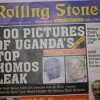
The International Criminal Court charged the Sudanese president, Omar Al-Bashir, with genocide, crimes against humanity, and war crimes in Darfur yesterday. The news rocked Uganda, with the major dailies putting Bashir's face on the cover, next to headlines that read “Wanted” or “Bashir Wanted for Genocide.” Sudan is Uganda's neighbor, and the politics of Southern Sudan and Uganda have always been intertwined.

[…]Of course, the situation is complex. Mahmood Mamdani, my favorite Ugandan scholar (actually, my favorite scholar in general), has long been critical of the motives of governments and NGOs in calling the war in Darfur genocide, particularly the demonisation of the Janjaweed.

Gay Uganda wonders what effect, if any, an ICC warrant will have on the situation on the ground:

The world is not without its contradictions. With Bashir of Sudan accused of genocide in Darfur, practical politicians are pointing out that if the president of Sudan is arraigned, that, the largest country in Africa, with the most consistent civil unrest since independence, is headed for more unrest.

The nightmare in Sudan has lasted longer than my life. Yet, isn’t Darfur enough to lead to his indictment? When will our leaders become accountable? When will they stop arguing their continued misleading of the continent in the name of ‘stability’?

Oh well. Even the Security Council could not get to grips with Zimbabwe. For Russia, did Medvedev get his wrist slapped when he returned home from the G8 summit? For China, it is simply the Platinum and Gold and other riches. The more the world changes, the more it is still the same.

Other reactions
The Social Science Research Council has an excellent guide to the controversy on their Making Sense of Darfur blog. Among the questions they ask:

Moreno Ocampo is taking a bold and momentous step for global human rights and for Sudan. It is also controversial and fraught with danger. Will this be a historic victory for human rights, a principled blow on behalf of the victims of atrocity against the men who orchestrated massacre and destruction? Or will it be a tragedy, a clash between the needs for justice and for peace, which will send Sudan into a vortex of turmoil and bloodshed?

Daniel Sturgis, a Canadian travel writer in Morocco, claims the ICC’s move may be correct but may jeopardize the chance for a peaceful resolution:

From a law perspective, the ICC decision to proceed with charges of crimes against humanity for Sudan's top brass, is definitely the right one.

From a moral perspective, the United Nations is unable to prevent the fallout if this decision enrages the Sudanese government. Isolated, Sudanese leaders are much more dangerous than the frustratingly ineffective checks and balances we have currently placed upon them.

To Ali Alarabi, writing for Mideast Youth, the charges are an unhelpful attempt to settle the political issue of Darfur. While the humanitarian costs are high in Darfur, Alarabi points out that the Sudanese government has every right to protect the integrity of its borders. However, larger and richer states are now hiding behind international law to punish the Sudanese leader.

International law however, as it appears to be, is there to punish weak and third world countries if they were deemed misbehaving according to standards of Western powers. As this issue demonstrates, International law is there to preserve the interests and the power of big powers against small helpless nations. Sudan is perceived to be not playing by the rules set forth by western powers when it comes to its energy supplies, its stand on the Arab Israeli conflict and its position on Iraq.

Written in Collaboration with John Liebhardt

5 comments · »»

July 15th, 2008

Uganda: (No longer) lost in translation 

Rebekah Heacock · 23:27 · Sub-Saharan Africa

A little over a year ago, Ugandan blogger Country Boyi wondered why Ugandans weren't blogging in local languages. He wrote:

The power of indigenous languages to infiltrate the thinking of the local people cannot be underestimated.

[…]Do bloggers, like other writers, have a major stake in the development of writing and reading materials in the local languages, and what is in it for them considering the Ugandan society pays little attention to the written word?

The majority of Ugandan bloggers have yet to write in languages other than English, perhaps because four distinct language families, each with multiple languages, are represented in the country. Over the last year, however, several of Uganda's blogren have forayed into the world of local-language blogging via Luglish, a blend of English and Luganda. Luganda is the local language most commonly spoken in central Uganda, including the capital city Kampala.

In one of the first Luglish posts in the Ugandan blogosphere, Tumwijuke of Ugandan Insomniac writes:

Yesterday, I was privy to a series of conversations between three 8 or 9 year olds in my neighbourhood. As the boys fought and laughed and jostled for position in their small trio, I was struck by how little we change over the years. How much we are just little boys and girls trying our best to live in this big, big world.

(Please adopt a Luglish – Luganda/English – accent when reading the following dialogue. If you don’t know what that sounds like … um, sorry move to Uganda for the experience; it’s a beautiful place … sometimes.)

She goes on to transcribe the conversations, italicizing the Luganda portions but not translating them.

For those who haven't yet had the chance to experience Luglish first-hand, several Ugandan bloggers have posted guides. Seamless‘ 21-part “UGA-SPEAK [A foreigner's guide]” gives tips like:

2. extend- move/push up, create a little space for me

3. ziwereze- pay up!

#2 and #3 are for y'all who won't be using car rentals, or the awe-inspiring boda-bodas but will be trying out our good old taxis.

4. [boda-boda]/bajaj- crazy means of transport via motorbike, which involves clinging on for dear life. Also, the heady rush of speed, a brush with death and wind through your hair.

The blog Fresh Apples reposts a guide to Ugandan English that he found on the Facebook group I love Uganda. Some choice entries on geography:

Out - anywhere outside of Uganda ie. studying from out

This side - Uganda

That side - The West (North America)

After reading the entry on Fresh Apples, blogger Buttercookie adds:

Push me to the shop.- Accompany me to the shop.

U have taken a long time minus coming. (This one is a classic.) What would the opposite be, U have taken a long time plus coming?- Yeah, I know what u’re thinking. Some people really do say that.

Come and we go.-Let’s go together.

Luglish has also been a popular topic for expat bloggers living in Uganda. Paige Anderson Bowen notes:

the official language of uganda is english, but it’s not an english an american would necessarily recognize or understand. most languages (all?) spoken in uganda are bantu languages, so the pronunciation of spoken english here often has a heavy bantu inflection and sentences can be delivered in bantu grammar. the “properness” of a ugandan’s english increases with education level and exposure to native english speakers, but the average ugandan speaks a purely (and sometimes maddeningly) ugandanized english that includes:

- “ok, please”: interchangeably used for yes and no
- “i am on my way coming”: estimated time of arrival anywhere from 5 min to 2 hrs to never
- up/down instead of left/right when giving directions

In another post on the same blog, Paige's husband Phil links to the Wikipedia entry for Ugandan English. And the Uganda wiki, an online encyclopedia on Uganda, also has an entry on the same subject.

Finally, taking the posts on cross-cultural conversation one step further, blogger Chris Mason gives his readers a lesson in Ugandan non-verbal communication:

Boda-boda [Ed.: motorcycle taxi] driver: Raises his eyebrows while making eye contact with me.

Translation: “Would you care for a lift to your desired destination, sir?”

Chris: Raises eyebrows while making eye contact with boda-boda driver.

Translation: “That would be splendid.”

Chris, uttering the only words that would appear in this exchange: “Garden City”

Translation: “I am heading to Garden City. Let us now embark on a pleasant back-and-forth negotiation of this trip.”

5 comments · »»

April 28th, 2008

Uganda: Mwenda, 3 others arrested in newspaper raid 

Rebekah Heacock · 17:11 · Sub-Saharan Africa
lingua → bn

(UPDATE: Andrew Mwenda has been freed on bond, see his letter to supporters on the TED blog.)

Bloggers and independent media outlets in Uganda are reporting that three journalists and a photographer at The Independent, an opposition newspaper based in Kampala, have been arrested and that the paper's offices have been raided by Ugandan security forces. One of those arrested was Andrew Mwenda, who was previously charged with sedition for his coverage of the death of Sudanese vice president John Garang in 2005.

Reuters and Uganda's Daily Monitor ran the story yesterday, and the Independent published a full account of what happened:

In a two-pronged operation, police and operatives from the Chieftaincy of Military Intelligence (CMI), Joint Anti-Terrorism Taskforce (JATT) and the Black Mamba squad raided The Independent again, exactly a month after the first raid.

At [Mwenda's] house, the police confiscated his lap-top, flash disks, 43 CDs full of information – both official and private, a manuscript of a book he has co-authored with Prof. Roger Tangri on Elite Corruption and Politics in Uganda. After that, Mwenda was driven to the offices of The Independent.

In no minute, other plain-clothed men, some feigning meanness others calmness, stream into the offices and start taking position as [police detective Joshua] Musede hordes the few employees already at work out of the newsrooms into the open space, saying there is something he is looking for.

Consulting editor Charles C. Bichachi then demands to know what the group was exactly looking for and the authorisation permitting them to do so.

“The ID is enough, he doesn’t have to show a search warrant,” interjected one of them, a relatively tall and light-skinned man feigning calmness, speaking Runyankole with a gun popping out of his waist.

Mwenda’s arrival clears the air as to what the raid this time is about; the team is searching for seditious material that the publication is in possession of; transcripts and audios of interviews of alleged torture victims in safe houses in Kampala and around the country under the wings of CMI.

Juliana at Afromusing writes:

Andrew Mwenda, arguably Africa’s most refreshing intellectual and journalist, has been arrested by Ugandan officials. More here.

This is utter injustice, and i am not even sure where to begin. For now, highlighting it on this blog seems to be one way, please highlight it on yours too, and I am sure some initiatives and online campaigns are being organized. Keep an eye on the TED blog for Updates.

Glenna at Uganda's Scarlett Lion adds:

May 3 is World Press Freedom Day. This year, Uganda was not included on the annual Reporters Without Borders survey. The web site lists no reason behind this decision.

Supporters of Mwenda have set up a Facebook group demanding his release.

3 comments · »»

April 20th, 2008

Uganda: Government refuses passport to transgender woman 

Rebekah Heacock · 11:06 · Sub-Saharan Africa
lingua → es

A post by Gay in Uganda last week reveals the discrimination the country's lesbian, gay, bisexual, transgender and intersex (LGBTI) population faces when applying for travel documents:

Ugandans know a guy called Brenda. A gal, because Brenda is a trans person. Meaning that biologically the birth was to a male baby, but growing up Brenda was more confortable in the female role, and ultimately embraced the female gender.

Recently, Brenda needed travel documents. They were denied. Reason, they don’t give them to ‘people who have changed themselves’. Julie Victor Mukasa (Note: a Ugandan lesbian activist) tells of the time that she had to prove that she was biologically female at the RDC’s office in Kampala, when she went to get passport forms filled. Use your imagination how she proved that.

Our constitution states that it is a citizens right to get a passport. Brenda is apparently not included in that definition of a citizen. But that is besides the point. Fact is, those of us who are in LGBTI activism, are suddenly finding problems getting travel documents.

Very likely I may have problems traveling next time that I need to do so. My passport may light up or something. Happened in Rwanda last month. Apparently, LGBTI activists need permission to leave the country!

Magintu, denied a passport renewal for entirely different reasons, vents:

I have been trying to get my passport renewed for three weeks now, to no avail. Over 8 years ago when they gave me my first one, I did not even show face in the passport office. And I got it two days later.

Now I want to renew my passport and Uganda is giving me shit about it. You would think they would recognise game and offer me the damn passport before I marry wisely and blow this joint. Or maybe they would nitpick about the fact that I was not born here; but no, they are more concerned about the fact that I have an occupation. Yes, I kid you not: they say that on my first passport I am listed as a student. Now in this application, I say I have a job. And they cannot understand how this can be. Depsite the fact that 8 years have passed between issuance of said first passport and request for a renewal, they still expect me to be a student.

Meanwhile, although Uganda's New Vision boasts several features committed to helping its readers find love, its focus seems to have switched from romance to finance. The View from Kololo's Hannah laments:

Mystery Date: once a portrait of young dreamers looking for love, once filled with anticipation and over-dramatized emotions, now a business opportunity, now filled with indifference.

Take, for example, Julius and Stella, from the March 22 issue. Julius is a videographer; Stella an artiste. Stella has a boyfriend; Julius is married. Stella’s summary amounted to this: “When I told him I was an artiste, he was happy because he is a promoter. He said we could make good money since he knows the trade well.” Julius said, “We exchanged greetings and I realized she was familiar. I had seen her on stage, singing. She said she liked me and I was happy to meet her because, as a promoter, I can benefit from her talent.”

The trend is evident in personal ads as well, Glenna at Uganda's Scarlett Lion reports:

I'm working on a story related to personal adverts in the Ugandan daily newspapers. More details on the story later, but I thought I would share a few highlights I've found perusing “Meeting Point” in the New Vision.

I've removed the contact information from the ads, but should you want one of these winners, just leave me a comment and I'll get it to you.

UNIVERSITY drop out, 29, wants financially stable, caring, lady.

I know that most financially stable, caring ladies want someone whose only description of themselves is related to the fact that they're a University drop out.

DAN, 18 wants a sugar mummy.

Dan, where have you been all of my life??

Several other bloggers also have their minds on money. Nathan of Muzungu! Muzungu! and Chris of Caked in Red Clay both posted this month about continuing to stockpile coins and small bills after leaving Uganda. Chris notes:

I realized, while my weighed-down pockets had me swaggering down the street like John Wayne on his way to a western dust-up, that my Uganda approach to collecting small change is not as effective here in the UK.

In Uganda, small change is worth its weight in gold. It means you can pay a boda-boda or matatu taxi exact change, you can pay for your lunch without feeling bad about the server having to canvas the area for change and you can pay for phone air time without any hassles. The two largest denominations, the 20,000 shilling (about $11) and 50,000 shilling (just under $30) notes, are generally major hassles to break, since they are so much more than most day-to-day expenses. So when a group is out for dinner and all chipping in on the bill, any change and small bills tossed in are highly coveted by all others who want to break their bills.

The abundance of coins is mixed with a different economy, where things are of course more expensive so more money is coming and going from your pocket. In one coffee shop I didn’t have the right change for a 1.25 pound cup of tea and apologized profusely as I gave him a 10 pound note, apologizing for him having to break such a big note.

He laughed.

I was reminded, yet again, that I was not in Uganda any more.

For The-xposer's Kisiki, finding correct change presents more than a reminder of cultural differences: it is an obstacle to entrepreneurship. He explains:

A few minutes before writing this piece, I was in Wandegeya on my way to town, and need for airtime arose. I went to an airtime stand, and order for 5,000 top up. A man in his late 40’s handed back my 20,000 note because he had no ‘chengi’ (change).

I moved to a next stand that was managed by an Asian, and I flashed my 20,000. The attendant took the note, handed me the airtime, and asked me to wait as he sought me ‘chengi’ from the business neighbours. Within two minutes, I was done and I walked away.

In doing a random survey, if both sellers have ten customers loaded big notes within 15 minutes, the earlier seller would have nothing. The second seller would have benefited from customers. Dominance of business mentality of the second seller is what entrepreneurs in Uganda should apply for their businesses realise advancement.

Sometime back, Bank of Uganda ordered the banks not to chase people who seek for change from banks. Today, some banks sell ‘chengi’, even in the Taxi Parks ‘chengi’ vending booms, but 10% off the money need change is quite high.

It will take a long while for Uganda business men and women to notice how much they lose by chase a customer because of ‘chengi.’

1 comment · »»

February 19th, 2008

Uganda: Bloggers tangle with mainstream media 

Rebekah Heacock · 10:23 · Sub-Saharan Africa
lingua → es

The blogren had their collective eye on Uganda's mainstream media this week. Tumwijuke at Ugandan Insomniac took reporting matters into her own hands following the lethal collapse of a secondary school building constructed on top of a ransacked graveyard, including several powerful photographs in her coverage of the tragedy:

Following below are a few pictures of graves at a family cemetery that was located on land which St. Peter’s Secondary School is reported to have ‘unlawfully’ acquired. The grave stones were carelessly knocked aside, bodies carelessly exhumed and dumped at an unknown location and this was on the same plot of land that the collapsed building was located. In fact the grave yard was less than 20 meters away from the new dorm.

No one from the affected family was willing to speak to me on record about the desecrated graveyard. They whispered about being paid to look the other way and being threatened into silence. Neither the school management nor the owner, Dominic Kavutse, were willing to comment.

Multiple comments on the post praised her for reporting the incident:

Those pix of the grave are so horrifying. How could they do that and go on as if everything is normally. You are a star for taking those photos. No newspaper has done that.
***
She treads where the brave dare not go. Girl, you deserve an award for uncovering these gruesome things in our very backyards.
***
i think this blog is finally teaching us all why there are blogs anyway. citizen journalism oyee!

Meanwhile, Moses Paul Sserwanga spoke out against the arraignment of two Daily Monitor senior editors following their exposure of a salary scandal involving the Inspector General of Government and High Court judge Faith Mwondha:

This is indeed a story of trepidation where offences which are against the spirit of our constitution are preferred against journalists to keep them forever in a state of fear.

The charges are basically designed to harass and intimidate journalists in the exercise of their constitutional rights to inform the public about the conduct of government/public officials.

But the citizens of this county must stand up and not allow our fears to be far outweighed by what we know is our obligation - to protect the provisions of our constitution. To help those who are victimised for the ideals they stand for; freedoms of liberty, speech, association and media not to feel alone.

And Nappy Brain took the government-owned New Vision to task over their response to a reader's question about statutory rape:

Did I get this wrong or didn’t this woman just say that a young girl/woman in her care was being raped repeatedly by her husband? Didn’t she say that the rape of this minor in her house has been going on for 2 years? Did she not also say that this young woman was in her care and that she had no one to turn to and nowhere to go after her father died?

So, why does the New Vision advise the woman to “work things out” with this rapist? Why does she advise her to send the girl away so she can work things out with her husband?

Our national newspaper advises women everywhere to mistrust the word of another woman who has been raped and instead side with the offender by attempting to restore some kind of relationship with him.

On a lighter note
In the past week, Uganda has played host to two famous visitors: the instantly identifiable Sex and the City star Kristin Davis and the somewhat less recognizable German president Horst Köhler. Glenna at Uganda's Scarlett Lion, assigned to cover Köhler's visit for the Daily Monitor, was bemused by his relative anonymity:

At one point during German President Horst Koehler’s visit to an [Internally Displaced Persons] camp just outside of Gulu, Northern Uganda, he looked to some of the IDP kids, then looked to his translator, and asked, “Do they know who I am?”

Pause.

“No.”

(I didn't know who Kohler was until I got the assignment last week.)

Both Köhler and Davis, who works as a global ambassador for Oxfam, toured northern Uganda to learn more about the region's ongoing civil war. Ugandan celeb-tracker Rafshizzle caught up with Davis in Kampala:

…And we missed her arrival but Rafshizzle Sherlocks worked overnight and found her at Oxfam Uganda headquarters in Muyenga as she presented bicycles to youths who won the climate change competition.
Davis, who is also the global ambassador for the international aid agency Oxfam then said, “This is my first visit (to Uganda) and I am really looking forward to meeting the people and seeing the country.”
Well, we’re also happy to see you, Ms Davis, but why were you hiding from us?

3 comments · »»

January 30th, 2008

Citizen Uganda: Smart and very, very pretty 

Rebekah Heacock · 15:46 · Sub-Saharan Africa
lingua → es

To scroll down the main page of Citizen Uganda is to indulge in a visual symphony: carefully selected photos align harmoniously with well-crafted blocks of text. Thick lines in complementary colors separate commentary from current events. Trios of links gracefully rotate, gliding from entertainment tips to featured blogs to Africa-focused videos and back again with the ease of a concert harpist trailing her fingers over the strings.

In short: Citizen Uganda is the best new online source of information about Uganda, and it's also very, very pretty.

Paschal Ssemaganda, the site's founder and editor, is pursuing a Master's degree in publishing. It shows. The site looks and feels like a glossy magazine, with columns on technology, the Ugandan economy and the arts interspersed with slick RSS feeds from Uganda's major newspapers and what Ssemaganda calls “chai” (tea): bits and pieces of the African blogosphere that offer readers a break from the tedium of Kampala office work.

“I want the site to be a fun, entertaining, alternative news source” Ssemaganda told Global Voices in a phone interview. “I want to stay away from left wing and right wing, but there is a core liberal philosophy.” So far the political commentary has been fairly balanced: a recent article condemned Uganda's opposition party for its response to the ongoing crisis in Kenya:

Speaking on behalf of the opposition, the shadow Foreign Affairs minister called for the isolation of Kibaki and for sanctions on his government…. This strategy might win some media attention and a couple of points for the opposition among NGOs and humanitarian agencies but ultimately it tells us more about their judgement. Okumu and Latigo seem to assume that Ugandans will not see through this attempt to manipulate a real humanitarian crisis into a political advantage for opposition. It also demonstrates their inability to prioritize. It is true that Uganda benefits from democracy in Kenya, but any sanctions on Kenya will cripple Uganda's economy as well.

An earlier post, however, questions the government's judgment in handling Uganda's microfinance industry:

…the government created a post for the Minister of State for Micro-Finance, thereby taking regulatory responsibility for microfinance institutions away from the Central Bank. It was not the wisest decision in retrospect, and was probably made so that the government would be well positioned to take credit for the positive developments that microfinance can bring to Uganda's economy. Now though the government has a potential catastrophe on hand. The lack of regulation for microfinance institutions threatens to undermine the confidence that many have in the practice and expose the NRM as bad managers.

Citizen Uganda's political commentary is engaging, but the site's real strength is in its focus on technology and digital communities. Since the site's inception last November, Ssemaganda has reviewed a local web hosting company, discussed iPhone possibilities in Uganda, debated the use of web standards in Africa and shared his thoughts on web design in Uganda. Readers are invited to contribute articles, events and photos, and the site has its own Facebook page to keep its fans informed.

According to its About Page, Citizen Uganda “is an amalgamation of a variety of opinions on current affairs, technology, the economy, and social development.” Part current events, part tech talk, part trendsetter, Citizen Uganda raises an exciting, beautiful bar for Uganda's digital things to come.

0 comments · »»

December 28th, 2007

Uganda: Is Uganda mentally, intellectually and creatively broke? 

Rebekah Heacock · 14:14 · Sub-Saharan Africa
lingua → de · pt · es

An interview with a Kampala City Council official has blogger Tumwijuke wondering if Uganda is “mentally, intellectually and creatively broke”:

What else would explain the near absence of public art in the city? Rich men and women in Kampala are opening new hotels, shopping centers, office blocks and apartments every month. These are well traveled and widely read (I hope) people who are exposed to things like good architecture, art and culture. So why is the city so bland?

Tumwijuke follows her account of the interview with photos and descriptions of Kampala's existing public art installations, an excellent collection of what few pieces the city has to offer.

The post also calls attention to blogren newcomer kampala.ver, Uganda's first architecture and urban planning blog. Author Filoug's Yes Please! and Urban Sins categories chronicle, with photos, the best and worst of Kampala's architecture, and a multiple-post proposal details a central public transport terminal that would reduce congestion and provide a combined space for transportation and commercial activity:

Clearly, the downside to my previous argument for the need of an organized bus system including the construction of a Central Kampala Public Transport Terminal is this: With the stroke of a pen we have done away with one of Kampala’s prime tourist attractions, the Old Taxi Park.

So we better come up with something really nice as a replacement. Something that doesn’t exist anywhere in town. Something that improves quality of life, for everybody to enjoy.

Such as a shady, relaxing, traffic-free Public Square in the heart of the city. Again.

To achieve this, a ’spine’ of blocks is arranged along Luwum Street and Ben Kiwanuka Street, creating an urban frontage, at the same time shielding the square. Narrow alleyways cut trough the blocks, emphasizing the sense of openness and spaciousness of the square itself. Since Old Taxi Park is located right in between Nakasero and Owino Market, it is also suggested to strengthen this axis by turning Market Street into a pedestrian shopping street. It’s already got the right name for it.

Finally, writing from the United States, Uganda-CAN worries about the effect next year's 10% reduction in U.S. diplomatic posts will have on the ability of the U.S. to support peace talks like the ongoing ones between the government of Uganda and the rebel Lord's Resistance Army:

These cuts (in the midst of the massive disparity) come as U.S. policymakers are realizing the limits of military solutions to complex security problems. Yet, this institutional arrangement continues to privilege military approaches, while limiting the potential for diplomatic engagement. This is having a real impact in northern Uganda and the whole of Africa. The U.S. military, with the advent of AFRICOM, is increasingly becoming the face of U.S. policy on the continent. Though the military does often play a key role, this limits the creative space for the U.S. to support peace negotiations and promote sustainable conflict resolution.

0 comments · »»

November 29th, 2007

Uganda: Ten questions with the Comrade 

Rebekah Heacock · 14:38 · Sub-Saharan Africa
lingua → de · pt · es

Beloved by the blogren for his prolific, provocative comments and his endless, passionate devotion to North Korea, the 27th Comrade was until recently one of Uganda's most active bloggers.


Self Portrait
27th Comrade

Two months ago the Comrade decided to take a hiatus from his blog Communist Socks and Boots, limiting his writing to the occasional post on the group blog The Kampalan. His decision was met with surprise, sadness and well-wishing on the part of the blogren, and this blogger missed his manifestos so much that she sought him out for a conversation about writing, reggae and, naturally, Communism:

ONE: How long have you been blogging?
Back when I was just starting out in serious software development, I had a small blog. Very clunky thing that I no longer maintain. I don't consider that phase, though. After all, it had only three readers - myself and my two alter-egos. Then came the real blogging, which I date starting in the last quarter of 2006, at CS&B. Not that much of a Long March to write books about, I'm afraid.

TWO: What made you decide to start a blog?
I had the ingredients: non-expensive internet, some stray time, and stuff to rant on about.

THREE: What do you use your blog for the most?
First I thought it would be something like an open journal. I have almost completely succeeded in keeping the tech stuff off the blog - it wasn't meant to be an outlet for my tech stuff. It was merely something to chronicle my more-interesting moments. And then, some day, I put an opinion out there. And then it became a kind of rant zone, on top of being a diary. By last post, the rant zone personality of the blog had won the civil war.

FOUR: Who influences your writing?
When I was in school, I used to read Ernest Bazanye's articles. Always. That cheeky, laid-back thing, you know. I like it. Other elements of my style came from Mario Vargas-Llosa, Salman Rushdie, Robert McLiam Wilson, and maybe Adam Thorpe.

FIVE: Top three favorite blogren?
Baz, funniest bugger alive. It's a shame he isn't announcing an up-coming novel, because I think Uganda's time is ripe for a Nobel Prize for Literature.

Tumwijuke has such rude talent with the camera that, while checking her well-written posts, I tend to wish I were a photographer myself.

Ivan. He's a graphic artist, and it shows in his writing. He writes paintings, in a cheeky style.

SIX: Why did you stop writing on CS&B?
I'm quitting my job to make some time for myself, so out goes the non-expensive internet. That's one of the ingredients for my blogging, and it won't be available for a while.

SEVEN: Do you think you'll start up again?
Yeah, definitely. You don't stop this kind of thing. I'll probably be programming my own blog engine when I'm off the job. When I come back, I may be self-hosted, or (if all that fails), I'll be back to CS&B. Both are equally likely.

EIGHT: Why are you a Communist?
Everyone is born a Communist. But living in a Capitalist society can quickly brain-wash people into thinking Capitalism is the norm. It isn't. Your mother didn't sell you breast milk. Your parents didn't rent a room out to you. And when you are taking care of them, you won't forward them the bills.

NINE: How do you feel about the United States?
How would you like it if every country were like America? If there were 200 countries in Iraq, 200 countries polluting the world, 200 slave histories, 200 Jena Sixes (that's Jena 1200), 200 million nuclear bombs at the ready, 200 hundred trigger-happy empires, 200 times that the American natives have been massacred, 200 bullying hegemonies, 200 causes and targets of modern terrorism. 200 stray, uncontrollable evils. The only positive of America is having shown us what Capitalism becomes if it is not squashed before it hatches. Looking at America, I find it harder to condemn the (rather brutal) purges that happened in twentieth-century Communist states.

So it's not just an act, then.
I'm Red. Through and through. Maybe nobody will doubt if I register the Communist Party of Uganda?

TEN: Last question: as an avowed fan of Bob Marley, do you have any comments on the death of South African Reggae star Lucky Dube?
A: I was shocked by what nobody seems to be saying about Lucky's death. He was killed by Capitalism. This rampant crime in South Africa, it is blamed on a trinity of poverty, un-employment, and the legacy of apartheid. Apartheid slave-driving and segregation were supposed to prop up the Capitalist machine. So was slavery in the USA. So was the raiding and massacring of the Australian Natives. So is the massacring of the environment. So is the massacring of the Middle Eastern children. Even when these regimes finally cave in to the revolutionary forces or civil rights movements or Umkhonto we Sizwe, the effects of the cannibalist nature of Capitalism will tarry with us for the next millennium.

Thanks, Comrade.

2 comments · »»

November 14th, 2007

Uganda: Are you ready for CHOGM? 

Rebekah Heacock · 10:29 · Sub-Saharan Africa

Ugandan bloggers gear up for the Commonwealth Heads of Government meeting, worry about the latest developments in the north and keep tabs on their favorite reality television star.

Are you ready for CHOGM?

The Commonwealth Heads of Government Meeting, known in Uganda as CHOGM (”cho-gum”), is just around the corner. Joshua Goldstein mentioned CHOGM on Global Voices earlier this year.

The blogren are taking a largely skeptical view of Uganda's readiness for the massive international conference, scheduled to begin November 23. “I went to Kampala a few days ago,” writes Minzo at Minega Strikes Back. “[G]reat city but if you actually believe they are ready for CHOGM I have a bridge in Brooklyn that I'd like to sell to you.”

Kelly of Kelly's Uganda Journal marvels:

Apparently his super-smartness, Inspector General of police, Maj Gen Kale Kayihura decided to have a CHOGM drill yesterday and closed Entebbe road, Ggaba road, and Nile Avenue…. This genius decision making resulted in apparently the worst traffic in the history of Kampala, and let me tell you from personal experience, that is BAD!

CHOGM security preparations have Christopher Mason of Caked in Red Clay troubled:

To boost security ahead of the conference, the government has brought in thousands of forces called “Special Police Constables”, or “SPCs”…. Because the demand on police in and around Kampala was so high for Chogm, the government brought in thousands of these SPCs, gave them some additional training and deployed them at nearly every intersection throughout the city, where they now stand with their fingers on the triggers of their AK-47s.

Over the weekend, two people (one 13-year old girl and a 22-year old man) were shot and killed by SPC officers at a market in the city. There has not yet been an in-depth explanation of just how and why the incident occurred.

“Really, were there campaigns to make ordinary Ugandans know about CHOGM?” wonders The-xposer's Kisiki:

I talked to the women [in Lulongo Village, 100km from Kampala] and they poured out all their problems ranging from inaccessibility of health services to poverty. The children were smiling but their eyes did not hide pain and dissatisfaction. Curisioty pressured me to ask if they new anything about CHOGM? The answers were summarised to ‘NO.'

And Samsung at look at the world through my eyes Photoshops a Jack Bauer CHOGM inspection:

Jack Bauer doing a CHOGM inspection in Kampala, Uganda

Rebel movements

The past month has seen a sudden shake-up in the Northern Uganda peace process: rebel Lord's Resistance Army second-in-command Vincent Otti is widely rumored to be dead after a falling-out with leader Joseph Kony, even as a team of LRA peace negotiators travels north in an unprecedented visit to ask forgiveness.

“We have been having an absurdly stupid peace process going on,” declares Gay Uganda:

Sometimes it bothers me how cheap life, our lives seem. Relative to the whole large world out there.

Uganda's Scarlett Lion is uncharacteristically mute on the recent developments, instead posting a series of pictures:

Big Brother Blogger
Ugandan Big Brother Africa 2 contestant Maureen Namatovu, the ninth Housemate to be voted off the show, is chronicling her post-show experiences at her new blog, Maureen Blah Blah Blah. Already she's invited readers to a Fans Party in Kampala.

African Loft weighs in on Maureen's popularity in her home country:

Morality aside, Maureen had not been as exciting as Ugandans had wanted. Gaetano Kaggwa [Uganda's Big Brother 1 contestant] was all talkative, nagging, sexy, romantic, full of drama and always kept the Big Brother I at its feet. The Maureen character this time however was the opposite of people’s expectations.

Maureen Namatovu being history now, who’s taking the money?

3 comments · »»

November 7th, 2007

Uganda: Remembering Bangi 

Rebekah Heacock · 09:32 · Sub-Saharan Africa

The death of Ugandan radio personality Wilfred Bangirana on Sunday has the blogren fondly remembering his talents as an oldies DJ. Eddyslahh at Mixed Notions posts a sweet tribute:

I remember one time when i went with my uncle to the disco for the oldies night where Bangi played and the guy refused step off the dance floor becouse to him, Bangi had taken him back to them days when they were still young and energetic,where getting off the floor would only be when the bouncers were asking them to get out coz it was time to close….

Bangi is one of those people who made me love old music and for that reason i never missed his wind down zone programme on sanyu fm becouse he always knew what to play, its as if the guy knew exactly what i wanted to listen to.

Reactions to President Yoweri Museveni's declaration that he “do[es] not need money to leave power,” a thinly veiled slight to former Mozambican president Joachim Chissano after his acceptance last month of the $5 million Mo Ibrahim Prize for Achievement in African Leadership, were considerably less tender.

Minty queries:

Why does my computer’s automatic correction give me the words Amusement and Uneven when I try to type the name of our dear visionary president Museveni?
Does it have anything to do with this story?

While The Phantom frets:

I wish this were a lie, a conspiracy orchestrated by the media to discredit the good name of the paterfamilias. There would be heads rolling and people apologising and all that but this is a small price to pay for the alternative. That the president actually thinks the prize is about the money.

And finally, a series of beautiful pictures from Bethany, taken in Kampala's Owino Market on a rainy Saturday afternoon:

Mud by Bethany Zylstra

Boys Watching Us by Bethany Zylstra

Sarah + Dress by Bethany Zylstra

4 comments · »»

Funders
Sponsors
Korea content
supported by
OutBlaze Japan content
supported by
SanrioTown