I was born in Moscow, lived most of my life in Jerusalem, spent 3 years in Washington DC (where I did MA at GW). But now I live in London and my major role is doctoral student at PhD program in New media, Innovation and Literacy at the London School of Economics media department. The topic of my research is development of online political institutions and ICT based models of governance in crisis situations.
I also worked as a consultant on information technology, new media, and social media projects for The World Bank, American Councils for International Education, and Internews, and was a research assistant at the Berkman Center for Internet and Society. Previously I worked as a journalist for major Russian daily newspapers Kommersant and Novaya Gazeta, and served as news editor and analyst for Israeli TV.
Alexey Sidorenko and I were founders of Help Map, the crowdsourcing platform, which was used to coordinate assistance to victims of wildfires in Russia in 2010 and won a Russian National Internet Award for best project in the “State and Society” category.
My Russian blog (since 2002): http://pustovek.livejournal.com/
You can reach me through Facebook: http://www.facebook.com/asmolov
Latest posts by Gregory Asmolov

The path to the square: The role of digital technologies in Belarus’ protests

Today, state violence against protests is becoming less effective in suppressing them. As the situation in Belarus shows, violence provides a new motivation for people to take to the streets.

Russia: 11 Areas of Election-Related ICT Innovation
Сrisis can be a fruitful time for innovation. In Russia, post-election protests have given birth to dozens of new web platforms and mobile applications. Gregory Asmolov summarises some of the key areas of innovation.
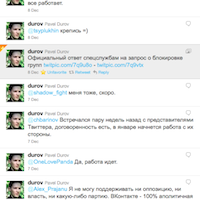
Russia: Social Network In-Between Security Services and Free Market
As social networks in Russia like Vkontakte play an ever increasing role in communication between post-election protesters, so too grows the interest of the security services to limit them. This conflict leads to a hard choice: whether Vkontakte should respond to security service requests, or allow its users uncontrolled protest activity.
Russia: Kremlin Removes Re-Tweet From Presidential Account
RuNetizens were surprised to see president Medvededv re-tweet a message [ru] with cursing against bloggers. The re-tweet was removed, but Kremlin published an explanation that “illegal engagement with presidential account has been made” and that “those responsible will be punished.” Vedomosti reminded [ru] that recently Medveved had complained he couldn't respond to...
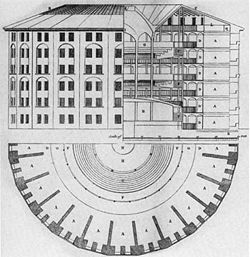
Russia: Election and the “Other Side of the Panopticon”
The protests of recent days in Moscow were triggered by the common feeling of many Russians that the parliamentary election results are not legitimate. Gregory Asmolov analyzes the role of the Internet in exposure of falsifications and the power change between state and citizens in the new information environment.
Russia: Massive DDoS Attacks Against Independent Websites on the Election Day
An unprecedented wave of DDoS attacks [ru] against independent websites on the election day in Russia: sites affected include thenewtimes.ru, echo.msk.ru, novayagazeta.ru, kommersant.ru, publicpost.ru, slon.ru, Bolshoy Gorod (bg.ru), golos.org, ikso.org, ridus.ru, zaks.ru (Saint Petersburg), pryaniki.org (Tula), crowdsourcing platform “Karta Narusheniy” and the LiveJournal platform. Many media organizations are using Facebook and...
Russia: Detained Member of Parliament Uses Live Mobile Broadcasting
Ilya Ponomarev, member of Russian Duma, who was detained by Novosibirsk police [ru] due to “illegal distribution” of his party newspaper conducted live broadcasting via his mobile phone from the police station and responded to text messages from viewers. Finally, he was released by a police officer in front of his mobile...
Russia: President's Visit to Journalism Department Under Attack of Social Media
The New York Times explores the role of social media in exposing staged nature of Dmitry Medvedev's visit to the Moscow State Univerisity. The Twitter hashtag #журфак (shortened for Journalism department) as well as many posts on LiveJournal and Facebook made the controversy a trending topic and forced the president's spokesperson...
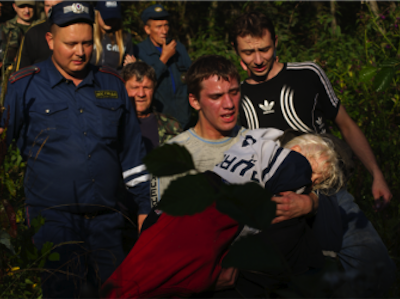
Russia: Networked Volunteers Save Lives of Missing Children
In September 2010, 4-year-old Liza and her aunt went missing in the forest and were found dead. Liza's volunteer rescuers decided to establish a network called "Liza Alert" whose members would engage immediately once a child was lost.
Russia: the First Twitter Account Officially Registered as Media Outlet
Federal Service for Supervision in the Sphere of Telecoms and Communications (RosKomNadzor) officially registered [ru] Twitter account of a microblogger Denis Plenin (@Dplenin) as the first mass media outlet on the platform.
Russia: Facebook Bots Massively Vote for Putin
Russian online magazine “Slon” exposes [ru] significant increase in activity of Facebook fake accounts who vote for Putin in online opinion polls. The bots are active not only on Facebook but also on online media websites that allow to use Facebook profiles for voting.
Russia: Investigative Journalists Expose Security Services Monitoring Internet
Andrey Soldatov and Irina Borogan, famous investigative journalists, describe [ru] software and methods used by Russian security services to monitor the Internet. Journalists argue that while Federal Security Service (FSB) can easily monitor Russian social networks (like Vkontakte, Odnoklassniki and others), it has problems with monitoring foreign platforms (like Facebook and...
Russia: Putin Gets Twitter Hashtag for His Birthday
#CпасибоПутинуЗаЭто (“Thanks to Putin for This”) hashtag that resembles the Soviet “Thanks to the party for this” became a “Twitter sensation” according to the Wall Street Journal and a “Twitter storm,” according to The Moscow News. The campaign that was started [ru] by a pro-Kremlin blogger Vladimir Burmatov as a way...
Russia: A New Online Game Might Change Offline Moscow
A graduate of Strelka Institute Andrey Goncharov gave an interview about his final project an online game “Crowdsourced Moscow 2012″. According to the interview the game can contibute to real democracy and allow people to participate in reshaping the offline public space of their city through online.
Russia: Pro-Kremlin Youth Movement Leader Seeks New Internet ‘Activists’
A journalist from “Afisha” magazine had succeded to attend a secret meeting in the underground Moscow bunker dedicated to the training of a new generation of pro-Kremlin Internet activists organized by a leader of “Nashi” youth movement Vasiliy Yakemenko. Yakemenko demanded from pariticipants to initiate citizen Internet-based campaigns and argued that the main goal...
Russia: Expert Analyzes RuNet's Role Under Putin's Presidency
Nikolay Kononov, a columnist of Russian “Forbes,” says [ru] that the Internet will be the only space where real politics will take place in the era of new Putin's presidency. In an article “12 Years in the Internet” [ru] he predicts that the virtual politics will be able to penetrate to...
Russia: New Legislation to Allow “Creative Commons” License
Russian Communication Ministry submitted to President Medvedev a project for legislation update that would allow using “Creative Commons” (CC) copyright license in Russia, newspaper Vedomosti reports [ru]. The project is a follow-up to a meeting between Medvedev and leaders of Russian Internet community [en] where the president promised to support...
Russia: President is Critisized for New Open Data Initiative.
Russian expert for open data criticized President Medvedev's initiative [RUS] to put more government data online. The criticism revolves around the lack of transparency, a question of what data should be published and the lack of public discussion around this issue.
Russia: One Million Twitter Accounts in Russian
The number of Twitter accounts in Russian crossed the point of one million, according to recent reseach [ru] by Russian Internet company Yandex. Now, Russian speakers publish around 370,000 tweets a day (comparing to 150,00o a year ago). The percentage of daily active Twitter users (of the total Russian speakers)...
Russia: New Legislation Against Online Extremism
Russian government submitted a new anti-extremism legislation for approval to the Russian Parliament. News agency ITAR-TASS reports that according to the news legislation, distribution of extremist content online can be punished with 5 years in jail. Vzglyad website explains the legislation treates the publication of content in blogs as public...
Russia: Bloggers Initiated Day of Garbage Cleaning
Thousands of people participated in the event “Bloggers against garbage” that happened in dozens of Russian cities. A special community was created in Livejournal that includes many reports about the event. People used Twitter, Facebook, Vkontakte and other online platforms to coordinate the blog-based subbotnik [ENG]. The event was an...