Archive for
May 4th, 2009


Stories

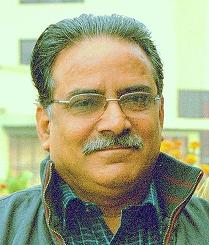
Nepal: Prime Minister Prachanda resigns

Image credit Wikipedia: released in public domain

Image credit: Wikipedia

Today (Monday, May 4, 2009) at 3 PM local time, Nepal’s Prime Minister Pushpa Kamal Dahal (Prachanda) announced his resignation through a press conference, pushing the already troubled country further into crises. His resignation comes after President Ram Baran Yadav reinstated the sacked army chief Rookmangud Katwal.

Only ten days ago there were allegations that the generals of Nepal Army were making plans of a ’soft coup’ to tackle Maoist’s plan to dismiss the Army chief.

Binaj Gurubacharya at The Huffington Post provides the background:

“Dahal, a former Maoist rebel leader, sacked army chief Rookmangud Katawal on Sunday after the two quarreled over the enlistment of former rebels into army ranks. President Ram Baran Yadav, who officially commands Nepal's military, rejected Dahal's decision and ordered Katawal to return to work in a late night notice.

Nepal's Maoists fought a bloody, 10-year war against the government before joining the political mainstream in 2006 and winning the most votes during elections last year after the Himalayan country abolished its centuries-old monarchy. However, many of the former Maoist fighters remain restricted to U.N.-monitored barracks under a peace accord.

Dahal wanted them freed and integrated into the military, as prescribed under a U.N.-brokered peace agreement. But Katawal resisted those efforts and sparred repeatedly with the government over the issue.”

Here is the video of the Prime Minster’s press meet [In Nepali], where he announced his resignation and accused the President of staging a “constitutional coup” by reinstating sacked army chief Katwal.

Prachanda said that the President's action is unconstitutional and alleged that foreign powers and his political rivals pushed Nepal’s figure head President to defy his decision.

Neil's Nepal explains the constitutional issue regarding the President's letter:

What should be plain to all here is that there is nothing unconstitutional about the defense ministry sacking the army chief. However, there is nothing constitutional about a ceremonial president giving orders countermanding such a proposal. This letter is tantamount to authorization to conduct a military coup. We shall see how the Maoist contingency plans hold up.

At United We Blog, readers seem divided over Prachanda’s decision to quit. Some have praised him for keeping his word but some accuse him of being reckless.

Ahimsa comments that:

“(Royal) Army has taken over!. By blocking the integration of PLA into the National Army, the (Royal) Army has successfully spoiled the peace process in Nepal. They will most likely now try to enrage and radicalize the Maoists to get the public consent to impose martial law. Bye, bye Republic of Nepal.”

Nepali’s views are very different from Ahimsa:

“when pm dares to make such foolhardy and reckless decision , what a general Nepali can expect from him…….except resignation”

Nepali language blog Mysansar is also covering the ongoing political crises in Nepal. In a post on the Prime Minister’s resignation, it claims that now the main opposition party Communist Party of Nepal (United Marxist and Leninist) (UML) is in the race to form new government under the leadership of its former General Secretary Madhav Kumar Nepal.

A reader, Lax, at Mysansar, commenting on Prime Minister’s resignation says that the people’s aspirations for better future are being quashed for political goals:

“It’s the same game again, we have seen over and over in the Nepali politics. A selfish and power hunger struggle in the name of general public’s interest. It’s even a sad tragedy to see the same public being played and swayed again and again by the same so called corrupt leaders who have already deceived and shown their true colors in the past. Nepali Janta never learns a lesson. As long as these leaders are alive, nothing is going change at all. Don’t let anybody use you. Come out of that unconsciousness and decide your fate yourself.”

Late breaking news from Kathmandu, as reported by Republica, says that the Maoists have announced new round of protest against the President.

“A secretariat meeting the Unified Communist Party of Nepal (Maoist) has decided to intensify struggle in the parliament and the street until President Dr Ram Baran withdraws his “unconstitutional” move. [..]”

DR Congo: Baby Gorilla Rescued in Trafficking Bust

On Sunday, 26 April 2009, ICCN Rangers, led by the Virunga National Park Director -  a former WildlifeDirect CEO - Emmanuel de Merode arrested a suspected gorilla trafficker and recovered a concealed baby eastern lowland gorilla.

The suspect was accosted and arrested as he disembarked from a plane at Goma International Airport where the rangers had been waiting for his arrival from Walikale in the interior of the country and close to gorilla habitat. Eastern Lowland Gorillas are only found in the Democratic Republic of Congo.

The baby gorilla, which had been hidden under a pile of clothes in a bag was weak, dehydrated and suffering from over-heating after spending long hours in the poorly ventilated bag.

This video shows the sequence of events just before and after the trafficker was arrested.

The Gorilla Protection blog says that this is evidence that there is indeed a market for gorilla babies and talks of an incidence where “we (WildlifeDirect) were approached by someone commissioned by a rich citizen of a middle eastern country, who wanted to know how to go about purchasing a baby gorilla.”

Emmanuel de Merode confirms that this market exists and that it is a very lucrative one at that. He is quoted in a blog post at Gorilla.cd saying:

Our work has revealed a significant upsurge in the trafficking of baby gorillas in recent months, possibly as a result of the war last year. Investigations have yet to reveal where these animals are being sent and who is buying them, but on the ground sources tell us that a baby gorilla can fetch up to $20,000

This arrest was the culmination of three months of investigation into this racket. The Gorilla Protection blog rejoiced at the news and hoped that “justice will be served and the baby gorilla returns to it’s natural habitat.”

Southeast Asia: Reactions to the H1N1 virus

Early this year, I wrote about the virus scare which swept the Southeast Asian region. Rising cases of dengue fever, chikungunya, bird flu and ebola viruses were registered in many countries in the region. There is another threat in the region: H1N1 virus (formerly known as “swine flu”)

So far there have been no high profile cases of individuals acquiring the dreaded H1N1 virus. But there are rumors that a “swine flu” case has been detected in Malaysia. The Professional Bum also writes about a suspected H1N1 virus outbreak in Malaysia:

A Malaysian acquaintance shared with me over dinner how he lost an uncle to Swine Influenza. He mentioned some very compelling details with regard to how errant Muslim members of government service might have contributed to the global-wide Swine Flu Crisis. While I cannot ascertain the authenticity of his claims, his account is highly plausible. I don't think anyone would just lie about a relative dying.

Singapore has implemented various measures to prevent the entry of H1N1 virus in the global city state. This message is displayed in the Singapore Public Library:

NOTICE : NLB is monitoring the H1N1 Flu situation closely and is following the Ministry of Health guidelines on the precautionary measures to take. Library users are advised to adhere to the precautionary measures set out by MOH in the interest of public health.

Photo from the blog of Melon Syrup

Photo from the blog of Melon Syrup

A Facebook fan page was created to instruct Singaporeans about the virus. DK writes

No, I’m not going to be a fan of Influenza A (H1N1). Why should I be a fan of a virus that is spreading in the wild and killing hundreds of people?

OK, jokes aside. Although the term used in Facebook might not be the most suitable, being a “fan” of Influenza A (H1N1) in Facebook isn’t that bad. That facebook page is setup to keep us informed about the latest happening on Influenza A (H1N1).

Mr. Wang Says So explains why Singapore is vulnerable to the virus outbreak

The problem isn't merely that we are the most globalised country in Southeast Asia. The problem is also that Singapore is the second-most crowded country in the world.

absolutely Bangkok reports how the Thai government is using the “swine flu” scare to win some diplomatic points

It’s flabbergasting how fervently the Thai government embraces the swine flu, - in a globally acclaimed attempt to show that a) Thailand is clean; b) Thailand is very safe to travel to (to fill those emptied tourism coffers again; c) Thailand will host a regional swine flu summit (to reenter the world of international politics); to d) divert from the political mess; to e) have an Asean photo opp after the Pattaya fiasco; and to finally f) quietly celebrate that other countries can be humiliated too.

Spruiked criticizes Indonesian authorities for spreading false information about the H1N1 virus

It is embarrassing how stupid we have become. Proof? In reaction to the outbreak of swine flu, the Government has banned pork imports. Um, the virus is spread by humans!

My Busy Brain, also from Indonesia, blogs about the “swine mentality” of many leaders in the country

Until when will Indonesians be a laughing stock for the foreigners? Until when will the government stop coming up with stupid statements?

The reaction of people to swine flu is even more entertaining though silly, and as expected, they blame that pigs are ‘haram’ anyways so stop consuming pork. It seems like the blind leading the blind here, doesn’t it, and wonder how this rich country is managed. Pretty scary.

Tan Kin Lian's Blog from Malaysia thinks the reactions of some people are exaggerated

A few friends have cancelled their overseas holidays, losing the money that they paid for the tours. It is rather wasteful and the risk is quite low. Perhaps, they are alarmed by the coverage in our newspapers and the advisory given by our Government.

Out of my mind from the Philippines reminds authorities that more measures are needed to secure the health of Filipinos

Installing controls at airport terminals cannot be the extent of our response to the swine flu pandemic because lest we forget, we are an archipelago composed of more than 7,000 islands and that not everyone who enters the country goes through the Ninoy Aquino International Airport where the high-tech equipment to detect higher body temperatures is located. Also, it might help to be reminded that we have back doors in the south as well as a number of ports that are open to international and regional voyagers.

Clearly, relying purely on control measures in a few terminals is not enough. It probably assuages some people suffering from extreme paranoia but we must not lose sight of the fact that prevention is always a far better and more effective course of action than control. The best way not to get infected is to protect one’s self against being infected rather than putting the responsibility solely in the hands of other people such as government.

Noting that virus outbreaks in the past involve animals - mad cow disease, foot-and-mouth, chicken flu and now swine flu – a blogger suggests that we go vegetarian.

Caribbean: On Press Freedom

Yesterday - May 3 - was World Press Freedom Day - declared by the United Nations General Assembly in order to raise awareness of the importance of freedom of the press. Many Caribbean bloggers noted the significance of the occasion in their posts…

Signifyin' Guyana tried to rally a call to action:

For at least one day (today) many hope the eyes of the world will focus on places where persons in the media–bloggers included–have been jailed, and even killed for writing about injustices.

She went on to call the names of some offending countries and the “journalists in peril”, adding:

To a lesser degree of injury, but certainly just as important in the matter of restrictions on press freedoms, is what's taking place in Guyana. What I see in Guyana is a less evident condition of press freedom restriction.

Now one can easily point to President Jagdeo as a major offender. His rantings against the press who dare to criticize the government of Guyana are well documented…but even more freedom-restricting than Jagdeo's actions, are the actions of some top media Personnel in Guyana.

The post also laid part of the blame squarely at the feet of irresponsible journalists:

Here's what I propose we do in true support of those media persons around the world (and in Guyana as well) whose freedoms are being stifled by abusive powers: Don't read or buy Kaieteur News and The Guyana Times–and while we're at it throw in the Guyana Chronicle as well–for at least one week. And let's go here instead to add [our] voices to the calls for action.

Further north along the archipelago, Cuban bloggers Uncommon Sense and Along the Malecon noted the irony of the occasion in light of last week's arrest of two dissidents in eastern Cuba:

Cuban authorities on Wednesday detained Rolando Rodríguez Lobaina and his brother Néstor, leaders of the Cuban Youth Movement for Democracy in Baracoa…dedicated to helping free Cuban prisoners.

Even though Uncommon Sense later posted an update confirming “that the Rodríguez brothers were released from detention this weekend”, Along the Malecon continued:

Press freedom advocates say you don't have to have formal studies to be a practicing journalist. What's certain is that a disproportionately high number of journalists are in jail in Cuba. There were 125 journalists in jail around the world in 2008, according to the Committee to Protect Journalists, or CPJ. Roughly 20 percent were Cubans. The CPJ also says Cuba is one of the 10 worst countries to be a blogger, according to this April 30 report.

Antilles, the weblog of the Caribbean Review of Books, supported the move by the international writers' association PEN to launch its Freedom to Write in the Americas campaign, which “aims to highlight the persecution of writers and journalists and the issue of impunity in the region, provide direct support to colleagues in trouble, and raise awareness of trends of repression and censorship threatening writers' rights”:

In the Caribbean, like everywhere else, we need our writers–not just journalists, but novelists, poets, playwrights, historians, critics–to ask unpopular questions, reveal uncomfortable facts, and compel us to consider those crucial matters that our political leaders would rather we ignored.

Finally, in Trinidad and Tobago, Media Watch published a statement by the Media Association of Trinidad and Tobago, while The Secret Blog of Patrick “Patos” Manning, which purports to be from the mind of the country's media-embattled Prime Minister, posts a tongue-in-cheek excerpt from his most recent Twitter feed:

T&T journalists, as you observe World Press Freedom Day on May 3, hope you remember how good allyuh have it down here.

Americas: Region Responds to the H1N1 Virus

Even though the epicenter of the H1N1 virus outbreak has been in Mexico, other countries in the region are finding ways to prevent and combat it. Bloggers have been keen on taking a close look at what their governments are doing to alleviate fears, or whether they are responsible for adding to the concern. Others Latin American bloggers are observing the behavior of their fellow citizens, often using humor to cut through some of the tension.

As a result of the outbreak, many events and planned activities expected to draw large crowds were canceled and postponed, such as the New Winds Festival scheduled for April 23 - May 3 in the Mexican city of Ecatepec. Guatemalan blogger Alan Mills of Revólver [es] suddenly needed to find alternate plans, since he had been planning to attend the festival.

Photo of the Mexico Metro by Eneas and used under a Creative Commons license http://www.flickr.com/photos/eneas/3471986083/

Photo of the Mexico Metro by Eneas and used under a Creative Commons license http://www.flickr.com/photos/eneas/3471986083/

Many citizens are looking at the actions being taken by their governments amidst the heightened public awareness of the possibility of the virus arriving to their countries. In Costa Rica, which was the second country to report a case in the region, Hazel Feigenblatt of Quien Paga Manda [es] writes that the Ministry of Health is cracking down on pharmacies trying to capitalize by selling false medicines or fake vaccines. The Ecuadorian blogger at Dejálo Ser [es] questions the purchase of 150,000 doses of Tamiflu by a country that has yet to see the virus and whether the money might be wasted if they are not used and allowed to expire.

Luis Aguirre of Bloodyhell [es] criticizes the actions of the Peruvian Ministry of Health that announced that an Argentine citizen had entered the country with the H1N1 virus, but it was proved to be incorrect after testing [es]. However, the damage was already done because the government entity had also released the name of the person suspected of having the virus [es], which is something not done in other countries.

Photo of Tourists in Cancún by El Enigma and used under a Creative Commons http://www.flickr.com/photos/marca-pasos/3494017972/

Photo of Tourists in Cancún by El Enigma and used under a Creative Commons http://www.flickr.com/photos/marca-pasos/3494017972/

The behavior of others around them is a subject often written about in blogs. In Bolivia, Azael of Abre Los Ojos [es] recently came across a car with four passengers wearing face masks in the city of La Paz. The virus is not known to have reached the country of Bolivia, but he notes that the same people are not doing other simple things to prevent other mishaps, “What is difficult to find is people wearing their seat belts inside their cars.”

Velvet of Piso Tres [es] in Medellín, Colombia notes a particularly frustrating day riding public transportation due to the reactions of people around him.

Resulta que soy alérgico a los olores fuertes. Percibo un aroma de prefume muy concentrado e inmediatamente suelto el estornudo. Un estornudo de los clásicos, de los que no matan sino que te dejan aliviado y con sensación de placer. No tiene nada que ver con la gripa de los marranos. Claro, eso no lo saben los que viajan conmigo en el metro.

Hoy estornudé por culpa de un perfume malísimo que olí en el metro. Un señor del frente me miró con rabia asesina. Un niño miro a su mamá con mirada de mártir y abrazó su pierna. La señora me miró como diciéndome “¡homicida”! y se fue. La joven a mi lado -entre otras cosas la culplable de mi delicioso estornudo- se paró y se cambió de vagón. Otro señor cerquita sacó un pañuelo del bolsillo trasero y se tapó la nariz y la boca. En unos treinta segundos se formo un círculo imaginario a mi alrededor y sentí lo que debe sentir un leproso o un paria hindú.

Turns out that I am allergic to strong odors. If I catch a whiff of a strong perfume, I immediately sneeze. One of those classic sneezes, which doesn't kill, but leaves you relieved and with a sensation of pleasure. It has nothing to do with swine flu. Of course, those riding with me on the metro do not know that.

Today I had to sneeze because of a bad perfume that I smelled on the metro. A man in front of me looked at me with a killer contempt. A child looked at her mother with a look of a martyr and hugged her leg. The woman looked at me as if she were saying “murder!” and she left. The teenager at my side - in addition to being the one guilty for my delicious sneeze - stood up and changed metro cars. Another man close by took out a handkerchief from his back pocket and covered his nose and mouth. In a time period of 30 seconds, an imaginary circle formed around me and I felt what it must feel like for a leper or an Indian pariah.

Others try to use humor to put a lighter touch on the worry. Gandica of Venezuela writes about the “new image of death” and imagines what it might be like to be questioned in heaven about the cause of death [es]:

- ¿Y usted de qué murió?
Entonces la respuesta correcta debe ser:
- De la gripe AH1N1.

No vaya pues a cometer el garrafal error de mencionar que murió de influenza o gripe porcina -ya sabe AH1N1-nueva-gripe / H1N1- porque la industria-de-alimentos-carne-de-cerdo está muy sensible y pidió el cambio de nombre.

Joder. Como si el nombre gripal tuviera mucha importancia en estos momentos sobre lo que se nos viene encima.
¡Son pues vainas de nosotros los humanos, siempre tan cuidadosos con la imagen-relaciones-públicas!

- And what did you die of?
The correct answer should be:
- of the AH1N1 virus

Don't commit the monumental error of saying flu or swine flu - you already know AH1N1 - new flu / H1N1 - because-the-pork-industry is very sensitive and asked for the name change.

Damn. As if the name of the flu is important in these times. They are the dumb things human do, always so careful with our image and public relations!

Julio Córdoba of Ciencia Ficción [es] in Costa Rica publishes a fictitious advice column responding to readers concerned about the virus.

“¿Usted cree que me muera?” Anónimo, San José.
R/: De la gripe no, en un asalto en San José sí.

Do you think I'll die? Anonymous, San José (the capital city)
Response/: Of the flu, no…in a robbery in San José, yes.

Costa Rica: Band Releases Citizen Collaboration VideoVideo post

malpaisthCosta Rican band Malpais has released the video for their first single of their latest CD. What makes the video of The Butterfly Effect different is that it includes video clips that were sent in by their fans and uploaded on their website. This new video, part of the Un Dia Lejano (A Day Far Away) album was released online.

Cristian Cambronero wrote back in February about the group's request for participation in his blog, Fusil de Chispas:

Es la primera vez que una banda nacional incursiona en un modelo que ya ha sido explotado ampliamente gracias a las posibilidades de la red. Habrá que pelar los ojos para ver el resultado.

It is the first time that a national band takes on a model that has already been extensively used thanks to the possibilities of internet. We will have to keep our eyes peeled for the result.

Malpais means Bad Country in Spanish, and that is the name of the small coastal hamlet which is the band's namesake. The town of Malpais has become popular recently with tourists, both domestic and international, and is a lively community of artists, musicians and travelers who decided to stop their journeys there. The next video shows the band's call for fan submissions illustrating the song The Butterfly Effect. The fans were asked to submit videos shot on any sort of gadget: from professional cameras, point and shoot digital cameras or mobile devices.

Those who sent in videos which were later selected to be a part of the official video could win the band's CD, tickets for the video concert launch and getting credit for their video submission. The winners are listed here, and the official video follows:

You can hear more music by Malpais on their myspace page, and on their official website you can also download the guitar tablature for some songs in case you wish to play along or on your own.