People from across the Arab world are lamenting the fate of Gazans, after a wave of Israeli aerial attacks, which have killed more than 200 Palestinians and wounded more than 700.
The silence of Arab governments in particular is hitting a raw nerve.
Ayhamjzzan from Syria writes in Arabic:
نصف الشهداء ال200 نساء وأطفال
100 طن متفجرات من 100 طائرة أطلقت على غزة اليوم
أين العرب والشعب العربي هل هذه حرب ضد حماس أم إبادة لأهل غزة
أين الكرامة العربية ولماذا نقف متفرجين كما الأنظمة العربية البائسة تتفرج ولاتفلح إلا بالتنديد
Still in Syria Qunfuz says that the massacre was easy to foresee. The blogger adds:
This is a deliberate, cruelly organised crime. And nobody notices.
This morning, with children in school, people on the streets and in offices, policemen at a graduation ceremony, the sky screamed and roared. There are reports of general panic, and of streets clogged with corpses.
I know the writing becomes a whine when these simple sentiments are expressed: but, again; imagine you are living, or dying, with your children, in such a place. And imagine that the world ignores you.

Jordanian Mohammed Badi posts this image and writes:
Gaza… Don't Cry, We Are With U
Label Ash [fr], a Moroccan from Barcelona, is swamped by a sense of doom:
La ligue arabe dit qu'elle va se réunir lundi pour contrer l'offensive israélienne. Ils arrivent à garder un sacré sens de l'humour.
La ligue va juste condamner avec des joutes verbales stériles.Y a-t-il quelque chose à faire? Non.Pardon pour la froideur sentencieuse de la formule, mais cela ne sert plus à rien. La Palestine s'éteint, petit à petit, mais elle s'éteint.
“La Palestine appelle le monde, mais ça sonne occupé” (Amazigh Yacine)
Jordanian SimSim is also appalled with Arab and international reactions to the suffering of Palestinians. The blogger says that every time such a tragedy strikes, history seems to repeat itself - with the same reactions and statements.
On Arab government reactions, SimSim notes:
Turning his attention to the international arena the blogger says:
ليش اسرائيل متى هدت اللعب ؟ ولكن الآن تقتل بموافقة الأغبياء العرب … طبعا بحجة توحيد الصفوف وايجاد حكومة واحدة لفلسطين
احلى اشي البيت الاسود ….. تدعو اسرائيل الى تركيز ضرباتها بعيدا عن المدنيين ….. هاي الحنان ولا بلاش
The best thing is the Black House, which has called on Israel to focus its attacks far from civilians. This is what I would call compassion.
SimSim also describes Arab people as follows:
A fitting finale to this round up can be found at On Olives and Sake, where Syrian blogger Yazan Badran posts a headline which reads:
Happy Bloody New Year.
For more reactions, stay tuned to Global Voices Online.
Filipinos are unleashing online vitriol at Mayor Nasser Pangandaman Jr., son and namesake of President Arroyo's agrarian reform secretary, who reportedly mauled two persons last Dec. 26 at a golf course in Antipolo City.
(Photo of Secretary Nasser Pangandaman Sr., courtesy of USM.)
Vicissitude witnessed the incident and could not hide the shock and disgust that she saw her own father and younger brother beaten black and blue by purported “public servants”.
A Filipino Mom Blogger asks bloggers to read up and take concrete action.
The D Spot wrote:
A lot of politicians have been lording it all over in cases of graft and corruption which is already unforgivable, now here they are lording it over, as if they own the world, as if they can go over the law, as if they can just maul and poke their guns on people—the old and the young, and the very old and the very young.
Misteryosa described the incident as “appaling” and “just about the most outrageous things I’ve ever heard this year”, and laughed at news that the Mayor actually received an award for “effective leadership”.
Random Detoxification is angry at the Pangandamans and the officials of the golf club where the incident happened:
What's worse than a group of armed politicians beating up an unarmed old man? The management and staff of a golf club who were there THE WHOLE TIME and did NOTHING! Nothing but watch and then afterwards tell the beaten up family to LEAVE!!! The old man was bleeding and half-unconscious but no doctor was called, no assistance offered. Only an order to leave the premises. As if the old man and his children were the perpetrators of the crime and not the victims.
lux-lucis.net contemplates:
What fuels my outrage — apart from the violence of the incident itself — is the fact that it happened in the first place. Monsters would not be able to do this if they weren’t so confident in the protection of their power; if they were not so absolutely certain they would get away with it, eventually. There are people who say that punishment is not a good deterrent for crime: I say it is, as long as people know that the punishment will be meted out regardless of the status of the offender. This… is not the case here, where the rich get away with everything from rape to murder and former presidents somehow find a way to re-establish their positions in power despite charges of plunder. Ours is a system that fosters injustice.
And I refuse — I refuse — to simply accept this. I refuse to say, “this is the way things work, we just have to survive and hope we don’t get crushed by the unfair system.” We don’t have to tolerate injustice. Acceptance, resignation, apathy — these things will just propagate it. But we need people to actively fight against it. We have voices, we have eyes with which to see, ears with which to hear, hands with which to write messages the world can see. Time to make use of them.
Mistervader writes:
I can't believe the gall of these people. I don't care if you're powerful, or influential, and I don't care how much clout you have. When you commit something this atrocious, you deserve more than just a slap in the wrist for it.
It's high time we stopped allowing people like these from getting away with their shenanigans, acting as if they are above the law. I have nothing but vile words to spare for them, and I have no sympathy for them whatsoever.
Let's see what happens next, and whether the elder Pangandaman gets to keep his post as cabinet secretary and what would happen to the case to be filed by police on Monday.
Looking back on the events that rocked South Asia in the year 2008 we see that terrorism took the center stage in many places in this region. This was also a year of crucial and decisive elections in many South Asian countries.
The Global Voices coverages of the blogospheres of this region highlighted important perspectives on various news that dominated the international press. They also brought up those issues which were less highlighted by the press. We will look at some of the most important issues or news makers of 2008 in the eyes of the Global Voices authors and the bloggers of the region.
Bangladesh:
Bangladesh was effected with the world food price hike and subsequent shortage of rice. Bloggers debated whether Bangladeshis were facing a hidden hunger as a consequence.
The freedom of press was much questioned in Bangladesh. Bangladeshi bloggers had heated discussions on media repressions in the country.

A collage of photos (click on the image for full display), which were displayed in the Sidr Aid Photography Exhibition 2008. By: Russell John
The use of citizen media flourished in Bangladesh in 2008. A moderate earthquake jolted Dhaka city on the 27th of July and almost instantaneously citizen journalists from Dhaka started to report on this via tweeter and blogs.
Some Bangla bloggers demanded justice for a poor worker, who was abused and killed and justice was delayed for her as evidences went missing and the case was stopped. Something unprecedented was seen:
An online campaign was launched, which included blog , Facebook group, an i-petition etc. Offline, there were protests and human chains organised to raise the public's awareness of the case.
These prompted the mainstream media to bring this issue alive. The case was finally re-started.
An AFP story claimed that a wealthy Bangladeshi has constructed ‘an exact copy' of Agra's legendary Taj Mahal spending 58 million dollars which was relayed by many international media across the world. Some Bangladeshi bloggers went there to investigate and reported via blog posts, pictures and videos that the claims were far from truth and it is probably a money making scam.
The long awaited parliamentary election of Bangladesh will take place on December 29, 2008. Global Voices will highlight the citizen journalists' efforts during the election.
Bhutan:
In Bhutan tourism is discouraged to protect the culture. However some bloggers hoped that a “Miss Bhutan” Competition would set a new trend breaking the ice.
A visitor blogger claimed:
“The whole country is a photographer’s paradise. The dzongs and monasteries are all beautiful. But so are the people. So calm and friendly.”
Bhutan has now entered a new era of democracy after the elctions in December 2007 and March 2008. On several occasions Global Voices has linked to Tshering Tobgay, a Member of Parliament of Bhutan and the leader of the opposition party, who is blogging on different issues.

His Majesty, Jigme Khesar Namgyel Wangchuck: Image by grassvalleybrent, used under a Creative Commons License
The coronation of the new Bhutanese King His Majesty Jigme Khesar Namgyel Wangchuck was held in November. Some Bhutanese netizens used blog to pay tribute to the king. However, a debate also sparked as the Nepali refugees were ignored in the King's coronation speech.
India:
On the happier side, India unveiled the super mini $2500 car Tata Nano and the blogosphere were buzzing with pride and commented that cars should no longer be luxury goods. Much to the bloggers delight the Tata Motors of India later acquired Jaguar and Land Rover from Ford Motors.

Tata Nano by Flickr user Incrediblesyurveda used under a creative commons license.
The India-US nuclear deal was also a much debated but positive development for India.
But the year 2008 was particularly a bad year for India. On 13th May, serial blasts rocked Jaipur and 60 persons were killed. In July, India was rattled and bled by more bomb attacks in Ahmedabad & Bangalore with barely a gap of 24 hours. The bloggers sounded their frustration on the government's failure to address lapses of security.
On September 13th Delhi was rocked and terrorized by serial blasts. A month later India's northeastern state of Assam was rocked by a series of bomb blasts which killed at least 76 people and injured hundreds. Some bloggers asked whether bomb blasts are becoming normal affair for Indians and wondered which city would be next.
Their prediction came true as on November 26th, 10 terrorists landed in Mumbai via boat and large-scale terror attacks using a combination of gun fire, blasts, grenade blasts were started simultaneously in various locations. Global Voices was breaking the news thanks to Neha Viswanathan, former editor and regular contributor for GV, who started updating from the citizen media channels like blog, tweeter, Flickr, etc. in the early hours of the tragedy when everybody was searching for news. A special coverage page was soon up. Global Voices also highlighted voices from other countries of South Asia and Middle East who opined on this tragic event.

CNN displaying the home page of Global Voices while reporting on Mumbai terror attacks. Image taken by medea_material from Columbia and used under creative commons license.
In this year radical Hindu nationalist mobs have rioted and attacked Christians in a number of Indian states, claiming that lower-caste Hindus and tribal peoples are being forcibly converted to Christianity. The bloggers critically debated on the issue and the post attracted many comments.
Maldives:
On January 8th, Maldives president Maumoon Abdul Gayoom survived an assassination attempt. In August the constitution of the country was amended and a debate among the bloggers ensued as the new constitution prevents non-Muslims from becoming citizens of Maldives, curtailing freedom of religion in the country.
Maldives held its first multi-party election in the country in October. The outcome of the first round of election on October 8 was not enough to decide so the polls went to the second round. The election was the hottest topic in Maldivian blogosphere who hoped for a change ending the long tenure of Maumoon Abdul Gayoom. Mohamed “Anni” Nasheed had won the run-off poll and became the new president.
Thumbnail image of Mohamed Nasheed by Flickr user NiOS used under a creative commons license
Nepal:
Nepal held its parliamentary election in April where the Maoist party had the surprise majority. The monarchy was dismantled and Nepal had been declared a republic. The new government faced some challenges early on.

Tihar, festival of lights in Nepal. by Flickr user Monkey Images used under a Creative Commons license
There was a huge debate over the issue of integration of the former Maoist guerrillas with Nepal Army. The IDPs (internally displaced people) were ignored in the peace process in Nepal.
Even after the restoration of democracy in Nepal, the country’s press has not been freed from repression, the bloggers say.
On the positive side Nepal jumped ahead of many countries on Gay and Transgender Rights.
Pakistan:
Pakistanis voted on February 18th and we highlighted the bloggers' reactions on that day. Some bloggers were not hopeful with the outcomes but as the results were coming out they started to realize that the vote was not rigged as thought and they will be able to get rid of the incumbent president Musharraf.
Global Voices highlighted the lawyers protests and the bloggers take on the issue.
In August president Parvez Musharraf resigned and the bloggers were engaged in a speculation what future awaits for Pakistan.

Hotel Marriott burning after a massive explosion. Image by Flickr user Jawad Zakariya, used under a creative commons license
In September Pakistan capital Islamabad was rocked by a massive explosion outside the Hotel Marriott.
Pakistan's misery was increased by a massive quake in Baluchistan region in October. A Wiki page on the quake was quickly up by a renowned blogger iFaqeer which listed the relief and rescue efforts and provided donation.
Pakistan was also rocked by a deadly car bomb in Peshawar in the first week of December.
Sri Lanka:
The internal conflicts troubled Sri Lanka the whole year. A blogger had this to say about the ethnic conflicts in Sri Lanka: “It is being prolonged by misconceptions born (out) of prejudice, parochialism and rivalry.”

Temple car festival in Rakwana, Sri Lanka by ‘Irakuwanai' Nirshan
Another blogger criticized the Sri Lankan Army's ongoing efforts to gain control in Killinochchi and warned Sri Lankans of dire consequences.
In March, Arther C Clarke, the British author who lived in Sri Lanka since 1956 died. Many Sri Lankan bloggers paid their tributes to him.
In the end I thank all the fabulous authors from South Asia for bringing all these news and views from the blogosphere to the readers of the world.
Following the end of the ceasefire between Israel and Hamas, violence and tensions have escalated between Israel and Gaza. Today, Israeli airstrikes hit Gaza in what the AFP calls “one of the bloodiest days of the decades-long Middle East conflict.” So far, the death toll in Gaza is at 210 and rising.
The Palestinian blogosphere, which is made of Palestinians and supporters around the world, is furious with what they perceive to be needless actions from Israel. No Justice No Peace…The Big Picture, an honorary member of the Palestinian blogosphere, spoke out:
200 dead, 750 wounded, and for what? For Qassam rockets which have killed < 10 people in 8 years. If ever there was an epitome of disproportionate use of force this attack by F-16's (paid for by US tax dollars my fellow Americans) is it.
All in the name of “self-defense”. Please. This is immoral offense, and indiscriminate killing, and, by god, if you hold elections and call it a democratic process then deal with the results in a civilized manner, but not quarantining Gaza, withholding funds, petrol, electricity, medical supplies, humanitarian ships, ad UN mandated observers from entering Gaza and then wonder why home-made rockets are being fired (with no sophisticated guidance chips or any chance of doing massive damage).
PalestineFreeVoice points out that Israel used internationally banned weaponry in the attacks and reports:
On Saturday noon in the first wave of air strikes,the Israelis targeted Gaza City government buildings. Casualties are confirmed and include the Commander of Gaza Police Force Tawfiq Jabir, the Commander of Security and Protection Services in Gaza police, Ismail Al-Ja'bari and the Governor of the Al-Wusta (central) Districts Ahmad Abu Aashur.Islam Shahwan, a Hamas police spokesman, said that the Israeli attacks have destroyed most of the Gaza Strip police headquarters and that a police graduation ceremony was being held during the Israeli assault.
Global Voices' own Bahrain author, bint battuta, shares a text message from a friend in Rafah:
Text from teacher friend in Rafah: “They struck the whole Gaza Strip at the same second. Many of the casualties are school children. My colleague told me he has seen 8 cases of death in the street. He picked his son alive. I am in my school now and the horror is everywhere in Gaza.
Palestinian bloggers are already ensuring that this most recent airstrike will spur the blogosphere into action. Ali Abunimah, writing for The Electronic Intifada, notes that demonstrations are being planned around the world:
On top of the intense anger and sadness so many people feel at Israel's renewed mass killings in Gaza is a sense of frustration that there seem to be so few ways to channel it into a political response that can change the course of events, end the suffering, and bring justice.
But there are ways, and this is a moment to focus on them. Already I have received notices of demonstrations and solidarity actions being planned in cities all over the world. That is important. But what will happen after the demonstrations disperse and the anger dies down? Will we continue to let Palestinians in Gaza die in silence?
Palestinians everywhere are asking for solidarity, real solidarity, in the form of sustained, determined political action. The Gaza-based One Democratic State Group reaffirmed this today as it “called upon all civil society organizations and freedom loving people to act immediately in any possible way to put pressure on their governments to end diplomatic ties with Apartheid Israel and institute sanctions against it.”
Global Voices will continue to offer coverage from a variety of blogospheres. Check our Gaza bombings Special coverage page often or subscribe to the Palestine RSS feed for further reports.

Besides the traditional celebration of Christmas, Guadeloupean people have recently taken up a new celebration: Kwanzaa, which starts on December 26 and lasts until January 1.
This new phenomenon is made all the more interesting since Guadeloupe, which is historically Roman Catholic, celebrates Christmas as a part of a strong cultural heritage - even non religious people mark the occasion. So how come they have recently been including the celebration of Kwanzaa as part of the season? To answer this question, Shaka Zulu in Gwafakwika tutors his readers [in Creole] about “what exactly is Kwanzaa?”
Ka sa yé ankò Kwanzaa? On mak fabrik? Awa sé sélébrasyon kiltirèl a tout nèg a si latè. E sé osi sélébrasyon a tout kominoté é tout fanmi nèg. Ki moun ki kréyé sa? Sé on dénonnmé doktè Maulana Karanga ki sé profésè a étid afrikenn an péyi mériken. I kréyé sa an 1966. Pou ki i kréyé-y? Sé padavwa tout nèg ka apwann tout kilti a dòt pèp é ras andéwò dè ta yo. Kwanzaa a pa on rèlijyon mé on sélébrasyon kiltirèl
Another explanation is given by Allain Jules in leflingueur [Fr]:
C’est un évènement majeur, le plus important même pour les negro-africains. Importé des Etats-Unis depuis peu, il a déjà commencé à faire jaser sérieusement en France.
Jules goes on to reassert the non-religious and comprehensive dimension of Kwanzaa:
Kwanza est donc un ensemble permettant à la fois de se retrouver pour mieux se connaître, de parler pour mieux s’apprécier, de manger des mets de l’océan indien, les saveurs africaines ou caribéennes, de partager des idées d’innovation, de vocation, de créativité, de découverte, de coopération, tant politique, sociale, qu’économique, et de mettre en place, des entraides.
…which begs the question of who brought this celebration of Kwanzaa, “created” in the USA, to Guadeloupe. Part of the answer could be the massive influx of the Guadeloupean youth into the United States of America (about a decade ago, the younger generation of Guadeloupeans began to consider North America as an alternative to Continental France for their university studies.) But Shaka Zulu answers the question most precisely through this reference to Ama Mazama [Fr]:
Ama Mazama est également connue sous le nom de Marie-Josée Cérol. Native de la Guadeloupe, elle est docteur en linguistique (Sorbonne Nouvelle, 1987), et enseigne au Department of African American Studies de la Temple University (États-Unis).
As we can hear from this video from the French Swiss media, le Matin.ch [Fr] Ama Mazama is well-known for her commitment to Pan-Africanism and her view on the history of the colonization in Africa and the Caribbean. That is partly why she took up a new name, shedding her previous Guadeloupean name for an African one. No surprise then, to discover that she is the one who decided ten years ago, to make Guadeloupeans understand what the celebration of Kwanzaa is all about.
This year, as in previous ones, Ama Mazama is back in Guadeloupe to celebrate Kwanzaa with family, friends and a growing number of people who have discovered and taken up the tradition. The big event in Guadeloupe is taking place on Saturday, December 27th 2008 following this schedule:
1/ Conférence-débat (vidéo-projection)
Thème : Les implications de l’Election d’OBAMA pour le monde noir.2/ Présentation des 7 préceptes du Kwanzaa
3/ Festivités : Echanges culturels, poèmes, Gwo Ka…
…and of course the traditional Kwanzaa feast!
Bloggers in 2008 showed all the ways in which global health is interconnected with other issues, by covering health stories that touched on everything from poverty and women's rights to the environment and economics. They shared stories such as the prohibition of cannabis in Japan, how ads for children's food products that were banned in the UK are still being aired in many South Asian countries, and whether the Singaporean government should legalize organ trade. Here's a further glimpse at what bloggers discussed in 2008:
Global Food Crisis
Prices of the world’s most popular food staples – wheat, corn, sugar, and rice – soared in many countries this year, for reasons ranging from changing diets and bad weather to rising oil prices and the decline of the U.S. dollar, the currency most of these staples are traded in. The crisis was felt in many countries, with consequences such as demonstrations, riots, and many health concerns. Bloggers discussed how to cope with the soaring cost of rice in Southeast Asia, videos showed how people in Haiti were eating mud cakes to survive, and others explored how the food crisis impacted Tajikistan.
Reproductive Health and Abortion Debate
Reproductive rights, including the right to an abortion, continues to be a hot topic among bloggers around the world, whether it's debating legalizing abortion or loosening existing laws. In the Philippines a proposed bill mandating couples to be informed about birth control methods, maternal health care, and other reproductive health concerns, sparked the debate on reproductive health issues. In Brazil abortion is considered a crime, unless the pregnancy is the result of sexual abuse or puts the mother's life at risk, but 70,000 women die of complications from clandestine abortion attempts each year. Abortion also continues to be a controversial issue in Ecuador, India, and Kenya, where the procedure is currently illegal unless the pregnant woman's life is in danger.
AIDS 2008 Conference
The XVII International AIDS Conference took place in Mexico City from August 3rd to 8th this year. The event occurs every two years in a different city and this was the first time it was held in Latin America. However, two internationally recognized Iranian HIV/AIDS specialists were prevented from attending the event, as they were accused of planning to overthrow the Iranian state and held in prison. Bloggers, including those at Global Voices, closely followed the conference, discussing topics such as youth's involvement in the event and how HIV/AIDS disproportionately impacts marginalized communities such as men who have sex with men and sex workers. Another area of focus were the travel restrictions imposed on HIV-positive people. The restrictions were condemned as being discriminatory and shameful.
China Toxic Formula Scandal
There were a series of tainted-food scandals linked to China this year, raising many questions about China's food safety policies. One health scandal in particular had bloggers talking up a storm. It erupted in September when Sanlu, China's top-selling infant formula manufacturer, publicly recalled its products. The baby formula was deliberately contaminated with melamine, an industrial chemical that can cause kidney problems. It resulted in thousands of children becoming sick and a number of infant deaths. The incident caused enormous public outrage in China and around the world, particularly after claims about the media's manipulation of the scandal. Bloggers in Southeast Asia and Africa expressed concerns about the safety of Chinese products, while others discussed the alternative to formula — breastfeeding.
World AIDS Day
December 1st marked the 20th anniversary of World AIDS Day. Though the impact of HIV and AIDS is felt by millions of people globally every day, the day provided an opportunity for people to raise awareness of and share their experiences about this devastating disease. While the global percentage of adults living with HIV has leveled off since 2000, 33 million people are still living with HIV, and 2 million people died of the disease last year. To commemorate World AIDS Day, Global Voices created a map of HIV-positive bloggers and caretakers who have bravely shared their stories. Bloggers from Armenia to Jamaica to Madagascar observed and reflected on World AIDS Day.
Global Health Videos
This year videos also became a more common way to raise awareness about health issues. Renowned war photographer and photojournalist James Nachtwey used his TED Prize to create a video of his photos that show the global impact of XDR-TB (extensively drug-resistant tuberculosis). In Cambodia sex workers took to the Internet to bring attention to how the 100 percent condom use law, which states that condoms must be used during sexual exchanges with clients, is being turned against them. Several videos were also created to propose solutions for supplying clean water and making it easier for people to have a healthful liquid to drink.
Outbreaks and Hope
Bloggers also wrote about outbreaks that occurred this year, such as a yellow fever scare in Paraguay and the more recent cholera outbreak in Zimbabwe. Fortunately, not all news was bad news in 2008 though. The year ended on a hopeful note with U.S. President-elect Barack Obama's victory in November. Many people globally are hopeful that his victory will mean a boost for global health issues. Time will tell. In the meantime, bloggers such as My African Diaspora caution that we should remain hopeful about next year, but also be patient:
“Temper expectations. Change won’t occur overnight. We’ve got so many pressing priorities: the economy, healthcare, the war, foreign policy and a slew of others. He won’t be able to wave a magic wand and make it all better. To expect him to would only demonstrate our own ignorance of the political process. Instead, reserve judgment and criticism and engage in the governance of your country. It is our right and our responsibility.”
Dubai's new Palazzo Versace Hotel is set to feature the world's first refrigerated beach, reports Norma of Bloggin' Banat. She comments: “Clearly, nature is no obstacle for this lavish playground. The beach’s sand will be cooled via an underground system of heat-absorbing pipes and giant wind blowers… Apparently the refrigerated beach might generate enough carbon to affect the climate.”
“If I believed in God, my prayer would be that I never see the star of David again as long as I live, so help me God,” writes Yasmin of The Angry Arab Comments Section blog. “It is impossible for me to separate it from the Israeli flag, which represents racism, hatred, and violence.” Check out the comments on this post for a diversity of reactions.
Ramzy of MidEast Youth observes: “Ever since Hamas went to power the Palestinian people’s living conditions are from bad to worse with every day because it is internationally recognized as a terrorist group and can’t be endorsed as part of the world system without renouncing violence and recognizing Israel and therefore a tight siege has been imposed on Gaza Strip.”
Free Gaza announced that a relief boat carrying medical supplies landed safely in Gaza's port. Among its passengers were representatives of 15 different nations. The Palestinian Video Blog has live footage.
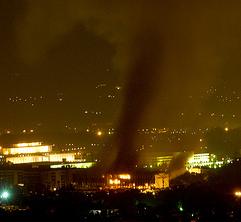
Israeli aircraft launched air attacks across Gaza on Saturday, killing at least 100 people, including the Hamas police chief, according to Israeli and Palestinian sources. Zeinobia wrote a new post about the “Ongoing Massacre in Gaza“.
KZBlog analyzes the controversial new law on religion which passed Parliament is waiting for the President’s signature. The law is clearly created defensively to prevent cult-like activity or terrorist cells from working in the country. However it effectively criminalizes religion by demanding that religions prove themselves innocent before being allowed to work.
Joshua Foust reviews the Kazakhstan's new Religion Law, which is still pending presidential approval, and says that without any leverage—say, threatening their OSCE chairmanship—there is little influence the West could exert.