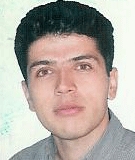
A Tunisian court threw out a case against the censorship facing Facebook, brought about by blogger and journalist Ziad El Heni against the Tunisian Internet Agency (ATI).
Writing in Arabic, Journaliste Tunisien, who lodged the case, reports that:
The ruling in case number 68787 on November 25, 2008, which I lodged in protest against the illegal censorship, did not include any explanations.
This verdict was made after the trial was postponed three times. The plaintiff was also asked to pay all the costs the civil proceedings entailed.
Despite this setback, Tunisian Facebookers and bloggers won their union against censorship and their national day for the freedom of blogging.
Recent terror attacks in Mumbai have seriously disturbed and complicated the on-going peace dialogues between India and Pakistan. Where Indian officials are not hesitating to point fingers to Pakistan, the Pakistani officials have been denying Pakistan's involvement in the attacks. Pakistan authorities have further requested not to play the blame game and have offered their full support in the investigation. While all these are happening the Pakistani Blogosphere has a lot of important things to say:
Dr. Awab Alvi at Teeth Maestro says:
What has also sadly transpired within the following day is that the ‘official’ blame game circus is in full swing, contrary to my initial message where I expressed my relief that Pakistan was not being blamed since Deccan Mujahideen were taking the blame, but much to my dismay the good news [?] was short lived and very soon the Indian government was livid at the Pakistani intelligence agencies for having masterminded this attack, in all honesty it might even had been the ISI [ironically we cant trust them either] but whosoever created the mess, Indian or Pakistanis it must be condemned at all costs.
M Junaid Khan at Pro-Pakistan publishes a newsletter that was being distributed publicly:
Even when the shootings were going on in hotels, Indian media and army were blaming ‘Pakistan' for the attacks. The game is clear and sinister. The Indian Intelligence have diverted the global attention towards another issue where they would blame Pakistan for this slaughter and use Barack Obama’s doctrine of attacks on Pakistan to encircle Pakistan from both sides. It is such a shame that Pakistani media is not highlighting this issue and is only repeating what Indians want the world to see and believe.
tperacha at Lahore Metblogs writes his reservations:
Times of India is already reporting that Pakistani militants have been captured and that this whole incident could not have happened without support from across the border. Now I am sure that similar to 2001 Indian Parliament Attack, NADRA issued ID cards will be found in possession of all these terrorists and then it requires not much wit to figure it out! The western media are also jumping on the bandwagon and trying their best to portray this as another al-qaeda attack.
Maybe we should also borrow a page from our neighbor’s book and God forbid, next time when we have a terrorist attack in Pakistan, simply blame it on RAW and get on with our lives. In fact a lot of analysts believe that foreign elements have played part in the recent attacks in Pakistan, but unlike the Indian government, our government doesn’t have the balls to blame any external element.
Adil Najam at Pakistaniat shows his solidarity with Indians in these words:
I, too, am a Mumbaikar today.
I wish I could reach out and for just one moment hold the hands of the woman in this AP photograph. Maybe shed some tears on her shoulder. But I do not know what I would say to her. I do not think she would want me to say much. The expression on her face matches the feeling I have at the pit of my stomach and in the depth of my heart. I think - I hope - that she would understand how I feel. I can only imagine what she is going through.
Rana at The Pakistani Spectator tries to unfold the facts in his opinion:
1. They came on speed boats from Pakistan. WOW :). Indian coastguards intercept fisherman that cross the maritime borders into Indian waters everyday. Thousands rot in Indian jails and here we have guys with sophisticated weapons entering India and their coast gaurds were fast asleep…….hmmmm fishy.
2. Mumbai police intercepted calls made to/from Pakistan….what idiot would do that?? maybe the Mumbai police. Hey there is my number…come get me.
3. They had the “footprints” of the ISI…..did the ISI leave behind its footprints….hmmm
Jokes apart…so who were behind the attacks?
Where all these rumors were flying around, the Indian mainstream media has nonetheless been irresponsible with the blame game. At my blog Guppu.com I have posted a video of a sensationalist reporting by the Indian media speculating about accents of the terrorists.
On a request of the Prime Minister of India a representative of ISI is to visit India for sharing of intelligence. The Prime Minister of Pakistan has promised his country's full support in the investigation. But still fingers are being pointed out towards Pakistan and the blame game continues. A portion of Pakistani media is playing along with the game inciting rumors.

Several human rights activists and bloggers warned that Farzad Kamangar, a teacher and trade unionist may be executed in the near future in Iran. Farzad Kamangar, who is from Kurdistan province in Iran, is accused of being affiliated with the Kurdistan Workers Party (PKK).
On February 25, the Tehran Revolutionary Court sentenced Kamangar to death on charges of “endangering national security” and “enmity against God”. Human rights watchdog Amnesty International reported that in 2007 Iran made more use of the death penalty than any other country apart from China, executing 317 people during the year.
A campaign on Facebook has been launched to inform people about this teacher's dangerous situation and invite them to send a message to Mahmoud Ahmadinejad to stop Kamangar's execution. According to his lawyer, Khalil Bahramian, there is no evidence to justify the judgment that Kamangar has “endangered national security”. His lawyer, who was not permitted to defend him, says Farzad’s trial was not in accordance with article 168 of the Iranian Constitution: “Political and press offences will be tried openly and in the presence of a jury, in courts of justice.” In this case, only one judge reviewed the case within five minutes and the defendant was not allowed to speak. This campaign also condemns the use of torture against Kamangar.
The Facebook campaign page also provides more information about whole story:
A support committee composed of members of the Teacher Trade Association, former colleagues of Kamangar and human rights attorneys, including Nobel Prize winner Shirin Ebadi, was established on July 21, 2008 to defend the civil rights of Farzad Kamangar and to undertake legal actions to have his death sentence commuted… In addition, Iranian trade union colleagues and human rights activists who show solidarity with Farzad are being subjected to pervasive intimidation by the Iranian authorities.
So far 485 people have joined this campaign.
View from Iran who is based in Europe says:
I don't normally call for political action on this blog, but we just heard that there is a strong possibility that a Kurdish teacher and activist may be executed tonight
She shares the instructions on how to act from the site of the International Campaign for Human Rights.
A letter from prison
Farzad Kamangar describes his prison days in a letter where he explains that he was tortured. The letter was published on a website called Freedom for Kamangar and was translated to English on Canadian Coalition for Democracies Public Message Forum.
The letter says:
In July of 2006 I came to Tehran to follow up on my brother's medical treatments. My brother is a Kurdish political activist. Upon my arrival in Tehran I was arrested and taken to an unknown place, it was a very small, dark basement. The cells in this place were empty, there were no blankets or rugs or sheets.
They took me to a room and as they were interviewing me they asked me about my ethnicity. When I told them that I was of the Kurdish Ethnicity they lashed my entire body. They also lashed me because of the Kurdish music which I had saved on my mobile phone. They would tie my hands, make me sit on a chair and put pressure on the sensitive areas of my body. They would also strip me naked and threaten me with rape by various objects such as wood.
My left leg was injured badly during this time. Also due to the beatings I received on my head as well as electric shock I would lose consciousness. I have lost control of my body and shake uncontrollably for no reason. They would chain my feet together and give me electric shocks on sensitive parts of my body which was extremely painful. Later on I was transferred to Section 209 of the Evin Prison. From the moment I entered the Evin Prison they blindfolded me and took me to a small room where they beat me by punching and kicking me.
Iran has a sad record of torture and was condemned several times by international human rights organizations.


Somewhere on a dusty soccer pitch in Mozambique, a group of boys are playing a game of soccer. Suddenly a man runs onto the field shouting. He stops the game and accuses the boys of stealing his condoms. There are different ways to use condoms. In Mozambique, young boys are great consumers of them…
In a country which struggles to combat AIDS, twenty million condoms are distributed every year. Considering that at least 4 million Mozambican men are sexually active from a population of 17.4 million inhabitants, this makes a personal allowance of five condoms for the whole year. Directed by Mozambican filmmaker Orlando Mesquita, The Ball was one of the films showcased on PangeaDay and presents a lighthearted - and surprising - view of condom use in Mozambique: thousands of them are ingeniously turned into footballs, only one of the examples of how children use condoms for fun.

The Ball is part of the Steps for the Future video collection, a collaboration between international and Southern African filmmakers with three main aims:
“To produce a collection of 40 documentaries and short films that examine the lives of people living in Southern Africa whose lives have been affected by the HIV/AIDS pandemic.
To provide invaluable training to Southern African filmmakers with the support of some of the best filmmakers drawn from around the world.
To distribute the films to regional AIDS organisations for use in AIDS education and training.”
It is estimated that 16% of the population, around 1.5 million Mozambicans, are HIV positive. According to the UNAIDS website, the estimates for HIV and AIDS are:
Number of people living with HIV: 1 500 000 [1 300 000 - 1 700 000]
Adults aged 15 to 49 prevalence rate: 12.5% [10.9% - 14.7%]
Adults aged 15 and up living with HIV: 1 400 000 [1 200 000 - 1 600 000]
Women aged 15 and up living with HIV: 810 000 [690 000 - 960 000]
Children aged 0 to 14 living with HIV: 100 000 [87 000 - 120 000]
Deaths due to AIDS: 81 000 [67 000 - 98 000]
Orphans due to AIDS aged 0 to 17: 400 000 [280 000 - 590 000]
The most at risk group are young women aged between 15 and 24. A shipment of 700 million female condoms, acquired under the government's partnership with UNAIDS, is due to arrive in Mozambique and will be distributed free of charge throughout the country. Vasikate va Moçambique [pt] welcomes the method and pleads with other woman to resort to it:
Mas, sendo que não há bela sem senão: ele pode fazer um pouco mais de barulho durante a relação sexual. A colocação não é tão simples quanto a versão masculina, exigindo um pouco mais de concentração na colocação. Depois de colocada, uma pequena parte fica visível fora da vagina, criando uma aparência um pouco esquisita para quem não está acostumado tal como o preservativo masculino que também já deve ter causado quando começou a ser utilizado! Mulheres, joguem com os vossos trunfos! Se na hora da negociação não conseguirem se impor, usem a única alternativa para a mulher se proteger quando um parceiro não quer usar preservativo masculino: o preservativo feminino pois o poder de decisão na hora do sexo, que é uma escolha de vida, ainda está em nossas mãos.

The female condom. © Asian Community AIDS Services. The question may be: do they make good footballs too?
When Jordan's government proposed adjusting fuel prices according to the rise and fall in the international markets on a weekly basis, gas station owners protested and for a period of about 10 days refused to buy fuel from the main refinery demanding that prices are to be adjusted on a monthly basis. That, in turn, resulted in a severe shortage in fuel from many gas stations in Amman. Bloggers picked up the issue, and here is what some of them had to say…
In a post entitled ‘Falling Short: Amman’s November Gas Crisis!‘ on 7iber.com, Naseem Tarawneh writes:
What is perhaps interesting, at least from my point of view, is that this sudden crisis comes nearly a year after the government decided to lift fuel subsidies. The result has been a painstaking year for the average Jordanian as globally, a barrel of oil reached over $120 driving up local prices to unbearable amounts. The digits on the pumps have only very recently sunk to less than half that figure, in line with the impact of the global financial crisis. However, since the controversial lifting of fuel subsidies in Jordan, some might argue that station owners enjoyed a relatively decent killing in the market for a fairly long time. It is only now that stations are forced to sell consumers at the government-set rate, meaning a relative loss for them, that the industry’s muscles are being flexed. One important question remains: will we see a return of a limited subsidy granted by the government to station owners in order to get them back running, or will we simply see bankruptcies in the industry flowing like tumbling dominoes? Will stations be fined or is another compromise in the works?
Jad Madi said:
Two hundred and sixty gas station owner were able to impose their wishes on the government while the last found itself compelled to switch back to the monthly pricing system although they were about to install the weekly pricing system in favor of the six million citizen or we prefer to think like that.
For better coverage maybe you want to check Alghad or Jordantimes but my question is, do we have a government that is strong enough to protect the 6 million citizen from the greedy-businessmen starting from gas station business ending with shawerma?
And Jordanian popular cartoonist Emad Hajjaj brought up the issue in a humorous cartoon:

India’s largest city and economic hub are now target practice grounds; much similar to Kashmir. “We’ve all been watching TV till our eyeballs were emanating radioactive glow,” pings a friend and freelance Photographer from Mumbai, who adds:
“Media coverage is par for the course. We’re a very crassly inquisitive race, so why should our media be any different? And we don't have any survival instincts at all, everybody's milling around in Colaba, while there's shooting and explosions happening at the Taj. Bizarre country, it’s not resilience its apathy.”
The well-known, yet unresolved problems in Kashmir, some believe have lead to cause terror in Mumbai. While some others consider the blame game an unfair opinion. Let’s take a look at some underlying issues that are plaguing the blogosphere.
Elodie21, has set her current mood as angry in her livejournal as she comments under the post ‘Attacks Continue’. ‘It is time for Hindu Terror groups?’ she wonders.
“..I read how one terrorist called a TV station and asked if Indians knew how many Muslims had been killed in Kashmir? Let’s ask these men back if they know how many innocents have been killed because of terrorists? This will never end… Isn't it obvious, while Pakistan plays dirty politics (there is no denying that they help militants enter India when their army fires to protect their passage by distracting the Indian army) and these jihadists kill innocents, Indians will be bitter? They will retaliate too, take it out on Muslims, this Islamophobia will build up. Its natural and it will happen - it is happening. Taking hostages, murdering people, will not solve anything. If it could have, it would have done wonders by now. But it will not. It only serves to heighten violent reaction towards innocent Muslims. What these attacks will do is probably serve to bring the rightists to power. Like BJP. What they will do is create support for Hindu terrorist organizations. What they will serve to do is convince more youths like my friend, to join Hindutva. And they will end up worsening the situation for Muslims.”
But, do we really care, when terror strikes Kashmir and bomb blasts are an everyday affair? Rama is skeptical in his blog “Khamosh sa afsana” writing under the post ‘Cycle of Violence’.
“…we are human selectively. We are not shocked when a large number of people die or kill themselves due to starvation. We are not human when violence of such magnitude take place quite frequently on the streets of Kashmir and are undertaken by these very ATS guys. What were the demands of these pathological creatures? That killings of kashmiris is stopped? Mumbaikars have nothing to do with the other killings yes, they were chosen coz they count — their losses creates an impact. There is so much pathos in this country of ours. Disposability of certain bodies viz-a-viz the nationwide mourning of some”
At Idealistard’s weblog the post is titled ‘Mumbai attacks and Kashmir connection?’ He believes the BBC prediction has come true:
“I maybe the only one who is making this connection, but i remembered reading something about recent protests in Kashmir valley where Indian Security forces gunned down 40 unarmed civilians. What this program on BBC predicted over a month ago is chilling and right on the spot. I’ve included the BBC Article and highlighted the prediction of Al-Qaida style attacks in eventual transition of militancy.”
But in the end, Kashmir Portal is left with questions in the post ‘Only questions and concerns after Mumbai attacks’, that only time can answer. Here is one of the few.
“The Indian PM, Dr. Manmohan Singh, was quick to point finger to India’s “neighbors” (read Pakistan) and their involvement in the attack. Pakistan quickly replied that it was too early to put blame somewhere and stated that the Pakistani government did everything to stop the terrorism in its own country. Now it is proved (or at least alleged) that at least some of the gunmen had direct links with Pakistan. The blame-game has started. How will this affect the ongoing CDP (the bilateral peace process that partly deals with Kashmir, but also nuclear proliferation and other issues)? Was the purpose of the attacks to disturb this slow but forward moving process? Hardly anyone has noted that the attack happened on Wednesday, the same day as the Pakistani Foreign Minister went to New Delhi to continue the peace talks.”
This post is part of the Global Voices special coverage on the terror attacks in Mumbai, India on November 26, 2008.
Armenia: Higher Education & Sciences prepares its readers for the 20th anniversary of World AIDS Day and highlights the situation with HIV infection in the country. The blog also notes that this year marks the 10th anniversary of Armenicum, a locally produced drug which the authorities initially announced could cure AIDS. Controversially, the drug has not even been proven to relieve symptoms in clinical trials and the blog comments on a recent article that says not only is it being paid for by the tax-payer, but also costs three times more than proven anti-retroviral treatments.
In Mexico, there are complaints regarding the high Ticketmaster service fees tacked on to the price of Radiohead tickets for the concerts to be held in Mexico City in March 2009 writes El Nahual of México Para Los Mexicanos [es].
The Q-dra project is launching a campaign to collect electronic waste, such as old computers and televisions in San José, Costa Rica writes Bloqueverde [es].
West of Igdir comments on the latest developments in Armenia including a second victory for the country in the International Chess Olympiad, speculation over negotiations to resolve the conflict between Armenia and Azerbaijan over Nagorno Karabakh and last week's visit to Istanbul by the Foreign Minister.
The Under Dog at the Sri Lankan citizen journalism initiative Groundviews has this to say to the Indians on the Mumbai terror attacks: “Here’s a word of advice from a Sri Lankan to our big neighbor. Don’t go down the path we have taken. Don’t be tempted to sacrifice the freedom of another for your own safety. Be smarter than us. Look within and find the disease that is causing this fever called terrorism.”
Blogger Takashi reports [jp] on the Second International Congress of Asian Hemp Industry (第2回アジア大麻産業国際会議) held in Donghae (Korea) at the Hangzhong University from the 20th to the 23rd of November, 7 years after the first congress took place. Participants from Japan, China and South Korea [jp] debated the hemp industry in their respective countries and the necessity for new regulation, stressing the importance of creating an Asian “hemp road” which places emphasis on the use of the plant as a textile and a medicine, as well as on its traditional values. [VIa i-morley]
David Bandurski from China media project quoted from South China Morning post on a news about two Chinese students reporting to the police on a professor at Shanghai’s East China University of Political Science and Law concerning his “anti-government” speech. The incident has been widely discussed in local forum, such as Tianya [zh].
ESWN translated Chinese dissent Zeng Jingyan's Thanksgiving message. Zeng's husband Hu Jia is still in prison and Zeng herself is under monitored.