Archive for
November 23rd, 2008


Stories

Egypt: Uproar as Lawyer Suggests Raping Israeli Women

Voice of Egypt is ashamed of Egyptian Lawyer Nagla Al Imam, the same lawyer who made Egyptians angry, for encouraging Arab men to sexually harass Israeli women during her interview on Al Arabia TV (Ar).

The Egyptian blog says:

 نجلاء الإمام المحامية و رئيسة جمعية لحقوق الإنسان تدعو الشباب العربي للتحرش بالإسرائيليات و اغتصابهم كنوع من المقاومة و بعد كده بنتسائل ليه الغرب بيتهمنا بالتخلف و الإرهاب أما تكون دي رئيسة جمعية لحقوق الإنسان هيفتكروا المواطن العادي شكله عامل ازاي؟؟
Nagla Al Imam, a lawyer and head of a human rights organization, invited Arab youth to sexually harass and rape Israeli women as a form of resistance … and then we wonder why the West accuses us of backwardness and terrorism … if this is how the head of an NGO thinks, then what would an average citizen be like?

An Israeli blog, My Right Word, posted excerpts of the interview in English:

Following are excerpts from an interview with Egyptian lawyer Nagla Al-Imam, which aired on Al-Arabiya TV on October 31, 2008.

Interviewer: Egyptian lawyer Nagla Al-Imam has proposed that young Arab men should sexually harass Israeli girls wherever they may be and using any possible method, as a new means in the resistance against Israel.

[…]

Interviewer: We have with us the lawyer Nagla Al-Imam from Cairo. Welcome. What is the purpose of this proposal of yours?

Nagla Al-Imam: This is a form of resistance. In my opinion, they are fair game for all Arabs, and there is nothing wrong with…

Interviewer: On what grounds?

Nagla Al-Imam: First of all, they violate our rights, and they “rape” the land. Few things are as grave as the rape of land. In my view, this is a new form of resistance.

Interviewer: As a lawyer, don't you think this might expose Arab youth to punishment for violating laws against sexual harassment?

Nagla Al-Imam: Most Arab countries… With the exception of three or four Arab countries, which I don’t think allow Israeli women to enter anyway, most Arab countries do not have sexual harassment laws. Therefore, if [Arab women] are fair game for Arab men, there is nothing wrong with Israeli women being fair game as well.

Interviewer: Does this also include rape?

Nagla Al-Imam: No. Sexual harassment… In my view, the [Israeli women] do not have any right to respond. The resistance fighters would not initiate such a thing, because their moral values are much loftier than that. However if such a thing did happen to them, the [Israeli women] have no right to make any demands, because this would put us on equal terms – leave the land so we won't rape you. These two things are equal.

[…]

I don’t want young Arab men to be interrogated. I want these Zionist girls with Israeli citizenship to be expelled from our Arab countries. This is a form of resistance, and a way of rejecting their presence.

Egypt: The InterFaith Conference and Arab Israeli Relations

Saudi Arabia's King Abdulla sat in the same room with Israeli political leaders for the first time ever, during the UN Interfaith conference, held in New York, US.

Writing at Arabic Media Shack, Rob highlights reactions from a few Egyptian newspapers, on how this historic meeting would impact the Arab-Israeli peace process.

At the blog, which describes itself as a non-partisan site which analyzes political, strategic, and security issues of the Middle East, Rob states:

Fahmy Huwedi and Tariq Al-Bashri, top Egyptian commentators, have scathing columns in today’s Al-Dostor, criticizing the King for refusing to bring up violence in Gaza while handing the Israelis a major PR victory. Bashri goes as far to say that the King sitting in the same room as Peres is no less significant as Sadat visiting Jerusalem in 1977. However, he then goes on to undermine the credibility of his argument by saying that the US and Israel are behind attempts to instigate Sunni-Shia conflict in order to create a new enemy or distraction for the Arabs, so that they no longer focus on Israel. He compares this to how the US allegedly instigated conflict between Libya and Egypt following the Camp David treaty, creating a “new enemy” for the Egyptians other than Israel. How can the US can be blamed for instigating Sunni-Shia strife when the top Sunni scholars, such as Yusuf Al-Qaradawi, have been the most vocal in their anti-Shia rhetoric.

Egypt: Shaaban Sings for Obama

Shaaban Abdel Rehim, the illiterate Egyptian singer whose songs are mainly about political and social issues, has released a new song about the new American President-Elect Barack Obama.

The Rag Blog quoted Dr Hasan Qayed al Subaihi, an assistant professor of Mass Communication at the UAE University, saying:

Shabaan Abdel Raheem is a popular Egyptian singer who has developed a style inherited from the musicians of the Egyptian countryside. Abdel Raheem worked as a dry cleaner for many years while keeping his talents for the entertainment of his local neighbourhood. Now his songs are heard across Egypt and the Arab world. He sings about important issues that touch the hearts of the Arab people and many admire him for his openness.
He has sung about Israel, the Palestinian occupation and the Iraq war, and he now sings about Barack Obama. The lyrics of this enthralling song about the next President of the United States echo the way the Arab world relates to Obama’s presidency.

Also Zeinobia wrote here:

Shabola released a new song about Obama and the over joy reaction for his victory in the Arab World.Shabola believes that we should not put a lot of hope on Obama because the dream can turn in to a nightmare like what he chanted.

Zeinobia tried to translate the song into English in her post.

The Rag continues:

Before the US elections, the majority of Arabs were vigorously supporting Obama, putting a lot of faith in his ability to help to resolve the situation in Iraq and mediating between the Arabs and Israelis. This desperate hope derives from disappointing past experiences that have led Arabs to believe that the US, for a number of reasons, will side with the Israelis.

Now the Arab public is divided into a dozen or more schools of thought about Obama. The main group belong to those who believe that no American government is ever likely to show fairness towards the Arabs in their conflict with Israel.
After the election, this group has started to become even more pessimistic. They believe that it is better to deal with a clear enemy out in the open rather than a disguised, hidden foe – and Obama they identify as one of the latter. Their negativity increased when the President-elect chose Rahm Emanuel, his Jewish friend, as his chief of staff in the White House.
Emanuel has strong personal and family links with Israel, which leads this group to believe that the Obama White House is likely to be more supportive of the Israelis than even the Bush administration. These suspicions will only increase if Obama appoints other Jews to senior positions on his staff. After past disappointing experiences with Henry Kissinger, Dennis Ross and Madeleine Albright, many Arabs are now expecting the worst from Emanuel.

Venezuela: Following the Local Elections OnlineVideo post

Today Venezuela is taking part in elections for mayors and governors. These elections will paint the political map between States and Municipalities aligned with President Hugo Chávez or not. These results depends largely on Chávez' popularity and can determine whether he tries to reform the Constitution once again allowing for reelection in 2012.

Venezuelan bloggers and twitter users are covering the election with the tag #23N (November 23). One can see the various tweets that are already using this tag.

A few weeks ago, a campaign was launched to encourage people to vote, and to use citizen media to talk about the elections. This video is called “Create Your Own Network” and the translation:

Did you know you can be electoral observer on November 23?

You don't need to ask permission from the CNE (National Electoral Court) or any political party

You don't need to fill out a form or wear any credential

You just need to commit yourself with your network of friends, neighbors, family and colleagues

Circulate information of which you are a witness

Send messages from your cell phone or via the internet

Use your cell phone, your camera, internet connection, your blog, and if you don't have one, this is a good time to create one, your Facebook

Create your own network of citizens

Vote and Observe!

To see all of the videos, visit Hector Palacios at Rayas y Palabras [es], who was one of the organizers of the video campaign, along with Karelia Espinoza of Explikme [es], Luis Carlos Díaz of Periodismo de Paz [es], Naky Soto Parra of Zaperoco [es], Iria Puyosa of No Suma Cero [es], and Jogreg Henriquez of Circulemos [es].

Madagascar: South Korean Land Deal Sparks Controversy

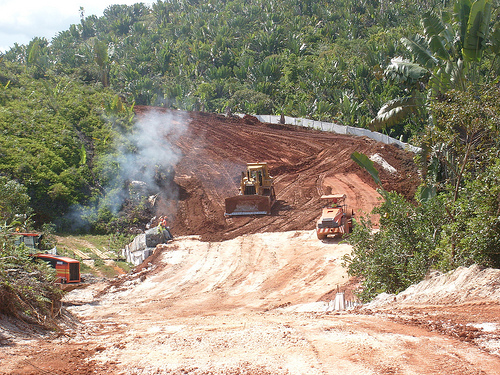
South Korea has just leased half of all the arable land in Madagascar according to the Financial Times. This has stirred quite a debate in the Malagasy blogosphere about land sovereignty and economic development. It is still unclear whether the land deal has actually been signed by both parties. Meanwhile, bloggers are arguing whether this sort of deal should be considered “neo-colonialism”.

Here is an overview of what is know so far.

On November 19, the Financial Times reported on the deal between South Korean company Daewoo Logistics and the Malagasy government.

On the Global Dashboard blog, Alex Evans summarizes the findings:

South Korea has just struck a 99 year deal with Madagascar to lease an area half the size of Belgium to grow palm oil and no less than half of South Korea’s corn demands [..] Carl Atkins, of consultants Bidwells Agribusiness, said Daewoo Logistics' investment in Madagascar was the largest it had seen. “The project does not surprise me, as countries are looking to improve food security but its size it does surprise me.”

A few hours later, a follow-up article in the Financial Times added that Daewoo Logistics would not have to pay fees for the lease, but would instead provide the means to allow exploitation and development of the land.

Alex Evans, quoting from the second article, says it's even worse news than he thought:

A few hours later, a truly astonishing new angle on the story emerged. Guess how much South Korea had paid for its 99 year lease? Answer: Zip. Zero. Nada. Not a cent. The sum total of the benefits for Madagascar, according to a Daewoo spokesman? “We will provide jobs for them by farming it, which is good for Madagascar.” This in a country where 3.5% of people are on WFP food aid…
The benefits for South Korea, on the other hand:
“We want to plant corn there to ensure our food security. Food can be a weapon in this world,” said Hong Jong-wan, a manager at Daewoo. “We can either export the harvests to other countries or ship them back to Korea in case of a food crisis.”


Photo by Foko-Madagascar

The Malagasy government has yet to release an official statement on the issue. Reuters reports that the deal is far from being finalized. Daewoo Logistics, however, has issued several statements that contest the veracity of the articles.

Robert Koelher, blogging from Seoul at The Marmot’s Hole, explains the points of contentions from the South Korean company:

In another report, the Maeil Gyeongje said experts believe the FT report, with its provocative talk of “neo-colonialism” and “pirates,” was intended as a warning against an increased Asian presence in Africa, long considered Europe’s backyard. The piece did include a quote from a Daewoo Logistics official, however, who said Madagascar was quite sensitive about this issue because when China invests, it only goes after its own profits [..]
The JoongAng Ilbo, meanwhile, released an editorial blasting the FT, asking why the paper was turning a blind eye to British Jatropha farms in Madagascar (used for biodiesel fuel) and French plantations on the island while going after a Korean company only. And besides, the land Daewoo is acquiring is undeveloped, the new farms will provide employment, and the Madagascar government will be taking a 30% cut of the farm profits in taxes.”

Reactions to news of the land deal were heated and diverse in the Malagasy blogosphere:

The Malagasy diaspora website Sobika reported on the deal (Fr) moments after the Financial Times and asked their readers to react. Over 100 comments were posted on the articles within a few days. In a follow-up article, Sokiba speculates that the outrage expressed on the internet has led the company deny the conditions of the deal [Fr].

The outrage is far from being unanimous though. Some bloggers feel that the land deal could benefit Madagascar by increasing productivity on parts of the land. Aiky on the community blog Malagasy Miray adds [Mg]:

Ny tombontsoa indray kosa raha jerena amin’ny saina tsy miangatra dia :
- ny fanomezana asa ireo tantsaha eny ambanivohitra ka miteraka fidiram-bola maharitra ho azy ireo izany.
- ny fanajariana ireo tany izay tsy noeritreretina fa afaka ambolena na ihany koa tany ngazana ka rahatrizay vita ny fifanarahana izany hoe afaka zato taona dia mba ho moramora ho an’ireo taranaka fara aman-dimby ny hampiasa sy hamboly azy (raha tsy lasa fanan’olom-bitsy indray avy eo)
- raha misy fidiram-bola maharitra ireo tantsaha dia mety ho hita ihany koa ny fiatraikan’izany ka mahasoa ho an’ny manodidina na “effet d’entraînement”. […]
-Asa na tafiditra ao anaty fifanarahana fa mety hihatsara ihany koa ireo lalana sy tambanjotra misy any amin’ireo faritra.
- afaka mifehy ny fiakarana an-tanandehibe ny mpitondra raha misy asa eny ambanivohitra (maîtrise de l’exode rural)

The advantages as seen from a less emotional perspective:
- The new employment prospects for the farmers which in turn would lead to additional source of revenues.
- The exploitation of lands that were thought to be of little value and that could be still exploited after the lease.
- the chain reaction from such increase in revenues [..]
- the potential improvement in the status of the national roads and other facilities in that part of the country.
- A possible incentive to stop the exodus from the rural areas

On The Cyber Observer, a lawyer and blogger in Antananarivo, Andrydago, had the the amazing foresight to raise the legal issue of the sovereignty of land and foreign investment in October, a full month before this controversy. It is striking that the laws that make this lease permissible were amended earlier this year:

Recently, the new Malagasy investment law: act 2007-036 of January 14th, 2008, has brought a very key change concerning the possibility for foreigners to own their land in Madagascar. This law provided that foreign companies or foreign investors (individuals who have been granted with investor visa), can buy Malagasy land under the following conditions:

1. the land has to be used exclusively for professional exploitation. Any personal use and exploitation which is different from the nature of exploitation he “promised” to the Malagasy governement, are forbidden. If there is a breach of such condition, the governement can legally withdraw its title of land ownership;

2. the foreign company or investor has to submit its business plan (investment planning in Madagascar) to a public body named EDBM (Economic Development Board Madagascar). Such plan has to describe and detail its intended business and its pertaining investment in Madagascar;

3. the foreign company or investor has to apply for a formal approval named “authorization for land acquisition” before the EDBM in order to be allowed to purchase legally a Malagasy land. Such authorization if granted, gives to the foreign company or investor the same rights as for a Malagasy entity to purchase and to own land in Madagascar.

Armenia/Azerbaijan: Journalists Under Attack

Beaten in Armenia and imprisoned in Azerbaijan, journalists in the ex-Soviet South Caucasus know the price of freedom. Some of them are even fighting from prison cells, wrestling state persecution and challenging societal intolerance for dissent. Bloggers tell the story of free speech in the South Caucasus.

Mark Grigorian [RU], an Armenian journalist in exile, blogs from England. Writing in Russian, he comments on the 17 November attack on prominent investigative journalist Edik Baghdasaryan.

Только что узнал: в Ереване трое неизвестных напали на журналиста Эдика Багдасаряна.

[…]

Эдик не боится говорить правду. Он говорит ее, открыто, спокойно, глядя собеседнику в глаза, подтверждая свои слова документами и фактами. Представляю, как это может раздражать. Но и рад, что в Армении есть такой журналист.

Дай Бог, чтобы это нападение не испугало его.

И дай Бог, чтобы ничего серьезного с ним не было, и он поскорее выздоровел.

Я очень высоко ценю цикл статей Эдика о трафикинге. Это было несколько лет назад. Группа журналистов под его руководством смогла проследить, как девушек из Армении отправляют в Дубаи, где они занимаются проституцией. Эдик прошел всю дорогу, начиная от сутенеров в Армении, потом через перевалочные пункты, где девушек снабжали фальшивыми паспортами, и до Дубаи, где они “работали”.

Just learned: three unknown [men] have attacked journalist Edik Baghdasaryan in Yerevan.
Edik is not afraid to tell the truth. He tells it openly, calmly, looking at one’s eyes, backing up his words with documents and facts. I imagine how this can upset [some]. But I am also happy that there is such a journalist in Armenia.

May God not let this attack scare him.

And may God help that nothing serious happens to him, and that he recovers soon.

I price Edik’s series on human trafficking very highly. It was several years ago. A group of journalists under his leadership were able to observe how girls from Armenia were being sent to Dubai, where they work as prostitutes. Edik documented the whole path, starting with pimps in Armenia then going through transfer points where girls were transported by false passports to Dubai, where they “worked.”

Another blogger, gago-berlin [AM], also offers admiration for Edik’s work. Writing in Armenian using the Latin keyboard, the blogger compares the journalist to a war hero killed during the Nagorno Karabakh conflict.

yes &anachm em Baghdasaryanin miayn ir site-ic u nyuteric, inq[ mec gorc a anum, inq[ mec mard a, yerevi qajutyamb kareli a iren hamematel Monte Melkoniani het…

I know Baghdasaryan only through the materials on his website; he is doing a great job; he is a great man; perhaps he can be compared to [Karabakh war volunteer] Monte Melkonian for his courage.

Unzipped posts YouTube video showing Edik Baghdasaryan getting first aid after the attack while former colleague Ara Manoogian at Martuni or Bust writes about the attack on his “longtime friend” by posting several articles detailing and condemning the assault.

Another US-born Armenia-based blogger, Christian Garbis at Notes from Hairenik, comments as well.

Edik, who is originally from Shushi, is perhaps the most widely respected investigative journalist in Armenia today. His gutsy, bold articles blatantly expose the corruption lying at the core of the Armenian government in the most minute detail, often citing financial figures of dodgy accounting reports released by businesses known to be owned by government ministers with ties to the underworld. His reporters have also written extensively about the hardships affecting the lives of thousands of people living in rural areas of the country as a result of poor governance and local officials skimming off the top of government funding. […]

[…]

Edik is so revered in Armenian society that even the presidential office released a statement condemning the attack. Prime Minister Tigran Sarkisian visited Edik in the hospital and also conveyed his concerns to the press, vowing to capture the assailants.

[…] These attacks have been going on for years, mainly against those reporters who try to expose the roots of corruption at the governmental level. It is an outrage and totally unacceptable that these attacks continue.

While the attack in Armenia has resulted in widespread anger and concern, blogs are almost silent on the continous persecution against journalists in Azerbaijan. On my Blogian I summarize reports from Russian-language Azeri websites.

While government-controlled AzTV says it will stop broadcasting “Voice of America,” an Azerbaijani court has sentenced Ali Hasanov, editor of Ideal newspaper, to 6 months in prison. According to the Russian-language Day.az, Hasanov was subpoenaed after Azerbaijan’s Press Union forwarded written complaints against Ideal to the prosecutor’s office. He was handcuffed during his November 14, 2008 hearing and placed behind bars.

The lawyer of another jailed Azeri journalist says the authorities are not letting him visit his client Ganimat Zahidov, the editor-in-chief of Azadliq.

In this wave of restricting freedom of speech, though, some imprisoned Azeri journalists are using all legal means to defend themselves. Eynulla Fatullayev, according to Azerbaijan Free Speech Foundation, is suing Azerbaijan’s Foreign Ministry for not providing him with a list of alleged foreigners who were cited in a case that sentenced the journalist to an 8-year imprisonment. The foreigners in Azerbaijan had supposedly protested an article Fatullayev wrote in jail (while serving another sentence) where the author discussed possible US-led strikes against Iran from Azerbaijan.

Moreover, Azeri journalists don’t seem to give up their fight. According to an Azeri-language announcement, a new newspaper - Ayan - is set to launch in Azerbaijan.

However, azerbaijan’s presidential election blog wonders whether the recent re-election of Azerbaijani president Ilham Aliyev will bring with it even more media restriction.

This further asks the question if Azerbaijan is going to lose more rights with Aliyev’s second term, and if the government is going to turn into a more authoritarian government. This leads me to believe that the opposition is going to have a sudden mobilization by the opposition that the government is not going to expect. When it happens there will be harsh repression from the government, leading Aliyev to more power.