Archive for
November 15th, 2008


Stories

Argentina: Wordcamp 2008 in Buenos Aires

Wordcamp Argentina 2008

Photo by Jorge Gobbi

On November 8, the second edition of Wordcamp Argentina took place in Buenos Aires. As was the case at the first Wordcamp, the most important guest was Matt Mullenweg, Wordpress' main developer. Matt told the attendees about the new features of WP 2.7, which has a lot to do with AJAX and includes a long awaited functionality: automatic updates with only one click -something that applies to plugins since version 2.6. Mullenweg also referred to “the death of blogs”, a polemic that has been making the rounds for the past few weeks, as Ezequiel Apesteguía [es] summarizes here:

“Matt también negó la muerte de los blogs y dijo que están en su mejor momento. Explicó que el futuro de WordPress radica en la posibilidad de ser móvil y social: deberíamos ser capaces de convertir un blog en nuestra casa, para publicar una foto allí y que se distribuya automáticamente a otras redes sociales, por ejemplo”.

Matt also denied the death of blogs and said they are passing through their best moment. He explained the future of WordPress resides in the possibility of being mobile and social: we should be able to transform a blog in our homes, to publish a picture there and have it automatically distributed to other social networks, for example.

Ezequiel also published a video, although a little shakey, of Mullenweg's presentation:

The morning started with the presence of Alejandro Piscitelli, professor and researcher of the Universidad de Buenos Aires, who spoke about many issues related to the Web 2.0 and the cognitive changes linked to the Internet and the media. There was a space for discussions such as how to earn money with your blog, the problems of getting advertising, how to develop corporate blogs, and how to measure the success of your site among many other topics.

There are summaries of what happened in the Wordcamp Argentina 2008 at Denken Uber [es]; Infoxicados [es]; Dotpod [es]; Optimizada [es]; I Wanna Be Sedated [es]; SEO; Ramiro Arturi [es]; DrGen [es]; PsicoGeek [es]; Fabio; and Cookieface [es].

DR Congo: Video call for actionVideo post

The crisis in the Democratic Republic of the Congo has flared up once again: 10 years of tension, on-and-off warfare and violence have taken their toll on the population, who are being displaced yet one more time. More than 5 million people have died during this warfare, thousands of women have been raped, and thousands of children have been recruited as children soldiers. On the following videos we bring you calls for action from the DRC citizens pleading with us to take a stand to stop the humanitarian crisis in the DRC.
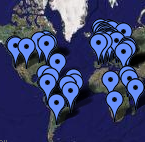
Previous Posts on Global Voices has focused on this resurgence of violence: D.R. of Congo: Blogging From the War Zone and DR Congo: Fighting Continues, giving us an overview of the dramatic human rights violations, the clashes and fights arising between UN forces, government and rebels, and the internal displacement of people leaving their villages, cities and towns, running away from the violence.

Bukeni Waruzi, a DRC native who is the project coordinator for the African and Middle East region for Witness.org, writes an article in The Huffington Post about the crisis in the Democratic Republic of the Congo, and also posts a video commentary explaining the political situation, the historical roots for the crisis, and a call to action for all citizens to bring attention to this crisis, and try and force the authorities to intercede in benefit of the civilians taking the brunt of the conflict.

A campaign by Médicins Sans Frontiers (Doctors Without Borders) to raise awareness on the stark state of the DRC will start on November 20th. The Condition:Critical project will collect voices from the war in Eastern DRC, starting off with a documentary to be published on the launch date. The trailer is extremely moving, starting with the poignant testimony of a child born and raised during the war, who perceives his future as a bleak path leading only unto death.

A first-hand account on the impact of this war is told in this interview on the Virunga National Park blog where Ranger Benjamin from the Kalengera Patrol Post, tells how he witnessed rebels killing his father and murdering twenty other people from his village, shooting them one by one. He ran into the forest and then decided to walk to the refugee camp and tell his story to peers and authorities. He makes a heart wrenching call for action for the international community to pressure the CDR's government to take action regarding the dire situation they are living in.

What can we do? Bukeni Waruzi has three suggestions for actions we can take:

* Write to President Kabila to urge him to stop mass rape, recruitment of children and bring an end to the conflict: http://hub.witness.org/DRCinCrisis
* If you're a blogger — embed this video interview talking about the crisis: http://hub.witness.org/DRCinCrisis
* Urge your local media to cover this issue — write to the editor and write your own opinion piece

On Witness' The HUB, there are many other videos providing different aspects of the humanitarian crisis: the violence, the refugee crisis and the epidemic rape of women and girls. The Ushahidi project has already deployed a taggable map to geographically locate and report incidents of violence and human rights abuses through SMS and web reporting

Syria: Love is in Stuttgart

Forget politics, Obama or the economic crisis. The new buzz in the Syrian blogosphere is about love.

Mariyah, a Syrian blogger from Damascus, has been playing with the hearts of her readers with the most delicate series of posts about the story of Ghassan and Alexandra.

It all starts on one cold evening in the winter of 1955 in Stuttgart, Germany:

There was something to be said for poise. As the other women became increasingly loud, a petite, fair skinned woman sat quietly watching and smiling. She was clearly enjoying the entertainment but seemed shy and reserved – too much so to become involved in the conversation. Her large, blue eyes glistened with intelligence and her diminutive features gave her a look of a porcelain doll. Her auburn hair glistened red as the light from the fireplace threw an amber glow around her. Ghassan observed that she was well dressed but not ostentatious. When she did speak, her voice was quiet - he couldn’t hear it from his table. Ghassan found, as the evening wore on, that he couldn’t take his eyes off of her.

We are never explicitly told, but we do sense that Ghassan and Alexandra are actually, Mariyah's father and mother, which makes the story all the more compelling.

“Guten tag. Can I help you sir?” she cooed from beside him. “Something for the pretty lady?”

Ghassan could not help but look surprised. Had his facial expressions reflected his thoughts of Alexandra to the extent an old woman, a stranger, could recognize? He had intended to buy flowers but only as a way to further his study of this woman whom he now believed far wiser than he could have imagined.

“Yes, yes of course. What do you suggest?” Ghassan attempted to speak as smoothly as he could muster.

“Red, dear, accented with a touch of purple. And, of course, blue to highlight her eyes.” The woman replied easily.

Ghassan was flabbergasted. “How? How did you know?”

Mariyah's beautiful writing, along with her most timely story breaks has captured the imagination of the readers, leaving them asking for more after each part.

She even decided to better set the mood with some music from those rosy days of the Ghassan and Alexandra's winter of 1955.

You can find all the published parts here. We are now at Part 5, and waiting, patiently, for part 6!

Nagorno Karabakh: Peacebuilding Goes Online

With stereotypes and alternate and usually contradictory as well as inaccurate perceptions of the conflict between Armenia and Azerbaijan over the disputed territory of Nagorno Karabakh still prevalent in both societies, a new online youth media project has been set up by the Bureau of Educational and Cultural Affairs of the United States Department of State to be implemented by Project Harmony.

Among the 90 students involved in the program, ten students from each country will be selected to participate in an advanced media education program in Vermont in the summer of 2009. American students will then travel to Armenia and Azerbaijan in the spring of 2010 to work with their DOTCOM peers to bring media action to a broader audience. Students will be selected based on their commitment to the program, grasp of media literacy and willingness to engage constructively in cross-cultural dialogue.

Students not selected for the physical exchange will remain in the program to continue their media work and civic activism through the online forums.

What will DOTCOM achieve?

• 90 participants from Armenia, America and Azerbaijan will work online to explore media literacy and the role that web-based social networking can play in changing stereotypes and perceptions.

• 30 participants from Armenia, America and Azerbaijan will travel on overseas exchanges to work with their DOTCOM peers to motivate change in their communities.

• Media produced during the program will be released via the Internet and through a network of global NGO’s and media organizations, using Web 2.0 tools such as personal blogs, mySpace, Flickr and Youtube to reach audiences worldwide.

• Community service projects with youth and community groups in the U.S. and abroad will provide an opportunity for students to engage in community service in a tangible, concrete way with their DOTCOM peers.

• A participant-run weblog and online community will provide an open exchange of news and images from participants’ communities and countries, allowing for dialogue and exchange among participants on current events and social issues.

The deadline for applications for children aged 15-16 is 1 December 2008 and more information can be found at http://dotcom.ph-int.org/. There is also a Facebook Group for the project here.

China: Too much time online? You got psychosis.

Facebook, twitter, blog, facebook, email, online game, then blog, how long have you stayed online? If you have stared at your computer screen and clutched your mouse for over 6.13 hours a day (not including work time), you are, I am sorry, a person of mental disorder according to the latest official definition in China.

China will be the first country to define internet addiction as a type of mental disorder. The national Ministry of Health has accepted a manual by Chinese psychologists which categorizes obsession with internet as a mental disease, and it is expected to turn into a guideline for all the hospitals in China very soon.

Symptoms of net addiction, as the manual introduces, include impulsive use of internet, irritation and unreasonable distress when offline, and the failure to concentrate.

According to the leading expert Dr. Tao in the country’s first addiction treatment center, of the young group that takes the majority of 253 million netizens in China, about 10% have been inflicted by the addiction, most of them male. His research on 3000 patients shows they might have strong psychological dependence on internet, which undermine their normal social activities and daily life. It is pointed out that online games which now totally take up over 4800 million users in China, such as World of Warcraft, are a great problem that they weaken users’ ability to distinguish virtual world from the real.

Also, internet may contribute to crime rate. 76% of juvenile offenses in the capital city of Beijing are related to the Internet, said Dr Tao.

It is not the first time, however, for the Chinese government to regulate the booming online industry. It has ordered an “anti-obsession” system compulsorily installed on public computers to limit game players' time online.

Netizen reaction

A great number of internet users are thrilled at their first glance of the definition, recalling their overnighters online.

Is such a categorization ridiculous? Someone think it not at all. An opinion published 4 days ago on New Beijing Daily justifies the regulation.

这些年上了网瘾毁了孩子的报道可是铺天盖地不胜枚举。而且,关乎
成瘾医学的研究与防范是科学,不仅网瘾被纳入精神病范畴,工作成瘾、购物成
瘾、饮食成瘾、性成瘾、烟酒成瘾等都被看作是成瘾疾病。所以,网游成瘾纳入
精神病管理不是人格歧视,而是科学界定。

In these years, the number of children spoiled by addiction to internet is almost huge…..addiction to work, shopping, food, sex and smoking are all treated as disease. So, taking net addiction into the category is not meant to humiliate, but to make a scientific classification.

And the writer states why it should be taken as a disease:

确立网瘾属于精神疾病,就可以在专业医学的指导下进行药物、心理双管齐
下的戒断治疗,根除心魔,涤荡蛰伏于意识深处的网游诱惑。精神病学的实践证明,网络成瘾是可以治疗的,一般治疗时间为3个月左右,80%
的患者都可以通过治疗摆脱瘾病。

To confirm the addiction as psychosis, professional medical methods would then be employed to sever people from the online games and resist the internet's temptation. Psychiatry practice has proved that the disorder is curable. 80% patients are likely to recover within 3 months.

In bullog.cn, blogger Xiaoyao 逍-遥 cited the opinion above with a title:

奇文 网瘾=精神病

Freaking article: net addiction=psychosis

Netizen “Cold” replied:

我们都是精神病

We are all psychosis.

Baiyongbing 白咏冰3 said:

同性恋也需要治疗、上网时间长也需要治疗、吃得多要治疗、吃得少也要治疗……

Gay need to be cured, staying long time online need to be cured, eating too much need to be cured, eating too less need to be cured too…..

And Li qingchen 李清晨 opposed the new categorization because the label might be a lifetime trauma to the kids:

孩子一旦进入这个地方,等于给他打上了一个标签,因此而造成的心理影响也是无法估量的。

Once a kid has been to the place (treatment center), he is labeled. The degree of mental trauma the kid suffers from would be immeasurable.

Poland: Racist Flyers Given to Children in a Catholic Church

One of the Catholic churches in Poznań, Poland's fifth largest city, generated a lot of online buzz yesterday, when the media (POL) published articles about a religious flyer printed by a Catholic weekly Mały Gość Niedzielny and distributed to children. On the flyer's cover, there is a quote from the Bible - “A lamp without oil is dark, a human without a prayer, too.” Right above it is a drawing of a black child, who is saying: “What a pity that the prayer does not brighten the skin.”


(Image source: Ateizm na wesoło)

The chief editor Gabriela Szulik, when confronted (POL) with the fact, responded:

It’s a mistake, an unfortunate one. We had no intention to offend anyone, because we are not racist. The thought that this can carry racist meaning does not even enter my mind; I simply have no associations of the kind.

Later on, she responded to allegations of racism with a promise of an online statement, also referring to the company's involvement in charity work in Rwanda and their article about Zambia.

Online reactions vary. Some discussion board users, like maczimo (POL), agree with Gabriela Szulik:

Only a complete idiot can say that we are dealing with racism.

Others - like lucenty (POL) – stay supportive and objective:

I am also convinced it was a mistake. Someone who does not think in terms of prejudice can be careless to ‘pronounce’ this pseudo racist sentence. I am far from the sick view on every single statement like that and seeing bad intentions. We, Poles, are not really so bad!

Still others express rather cynical (POL) thoughts on the issue:

It’s not that I am anti-Catholic, but the whole situation, mainly in the context of the Church, is slightly ridiculous. […] ;-)

One of the Polish London-based bloggers writes (POL):

[…] This Sunday we will pray for [the 15 black children out of the total of 26 in the blogger's child’s school group]. So passionately, so Polish-way. Will it help? […]

The majority of commentators on discussion boards find the flyer highly racist. Mecz-k (POL) said on Gazeta.pl Forum:

Oh, yes, Polish Catholicism is a religion of hate and despise. Pity that there is nothing left of Jesus preaching. Now we have Father Rydzyk [a very controversial leader of the Catholic Radio] preaching… Shame, shame really.

Jww commented on a post about the issue on this blog (POL):

I am not surprised by the content and the level of the flyer. I know more examples of that type or even worst acts of ‘tolerance’ and ‘freedom of speech’ within the church, sadly most of them stay away from political scandal similar to the one about the flyer.

One of the parents involved in the incident happens to be an outspoken blogger. After describing (POL) the day when the child came home with the flyer, she wrote:

I confiscated the flyer discreetly, but there is no way to cheat on my son: Mom, why did you hide the flyer in the pocket? Did you dislike it for some reason? Is there something wrong with it? This text is bizarre, isn’t?

Yes, a little bit. After one hour of serious thinking whether I am overreacting and consultations with Kuba’s parents: do you also agree that someone was thoughtless? Do you see it too? I am calling the parish office:

Dear Father, I understand you meant no harm, but this joke is tasteless, since all kids take such messages seriously, they do not see the intentions behind them; and you can see here clearly: the black baby regrets having dark skin, meaning being black is the worst…

I do understand where you’re coming from, but I believe the priests who ordered those pictures aimed to stress Christian values, the message of the Holy Bible…

Dear Father, you can be a Catholic and not a racist, you cannot promote messages of the kind, especially amongst children, for whom the Church sets example…

The discussion continues. On Wykop.pl, a Polish version of Digg bookmarking site, an article on this topic is on the main state category and has generated over 100 comments and gained 783 ratings so far.