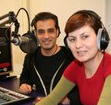
Radio Zamaneh (Persian: رادیو زمانه) is an Amsterdam-based Persian language radio. “Zamaneh” is the Persian literary term for “time”. Radio Zamaneh (RZ) is an independent broadcasting organisation, registered as a non-profit organisation in the Netherlands, with headquarters and a studio in Amsterdam. The coordinator of the radio is the Dutch NGO Press Now. It launched about two years ago and calls itself a ‘radio for bloggers'.
Kamran Ashtary, blogger, photographer and Zamnaeh's director of Communication & Development shares Zamaneh's challenges, hopes, achievements and Iranian citizen media.
RZ has called itself a radio for bloggers. Why such a slogan? How much influence have bloggers had at RZ ?
In Iran many journalists have turned to blogging to communicate since many newspapers are continually harassed and shut down. Most of Radio Zamaneh's contributors were, and still are, bloggers. Our director, Mehdi Jami, started blogging several years before joining Radio Zamaneh.
As Radio Zamaneh has based its media policy on Citizen Journalism, reaching out to bloggers is natural. Since August 2006, when Radio Zamaneh started, we have actively promoted bloggers on our site and in our radio programs. Many were involved in the development of RZ.Radio Zamaneh in many ways is connected to bloggers and blogging. Just take a look at our extensive blogroll. Radio Zamaneh aims for two-way communication. This is something that blogs are known for. This is why our site is working like a set of blogs. Each regular contributor has their own page/blog and readers can comment on every page.
There are several news sites, outside of Iran, such as Deutsche Welle (DW) Perisan site, covering Iranian blogs. Is there a difference between RZ's approach toward blogging and theirs?
We don't just cover bloggers, we are bloggers and our style is bloggish: friendly, informal, different, personalized, and diverse. Blogging is a part of our daily life. We are talking on blogs and quoting blogs. We see them as a source of information about how people think about politics and social issues. We see Iranian youth culture as a culture promoted by blogs and we are working to make the informality of blogging a trend in media making. Radio Zamaneh is derived from and inspired by blogging. That is very different from just covering blogs by other media outlets.
How have Iranian bloggers reacted to RZ? Collaborating or criticizing?
A search at Technorati, will show you that there are more than 30,000 links to the items we publish on our site.
In addition, Canada-based Iranian blogger, Arash Kamangir's Didish Report, which searches Iranian site feeds for links to other sites, consistently shows that we are at the top of the list for receiving links. These show that many bloggers are interested in RZ and referring to us. Many of them work with us in different ways and some are critical too. Bloggers are not ignoring what we publish.
We welcome both collaboration and criticism. In fact, one of our contributors thinks we could use more people poking fun at us.
We invite criticism of Radio Zamaneh and even sponsored a competition with a review of the site as its focus. This competition helped us discover some of our current colleagues. Radio Zamaneh has a solid record of publishing differing opinions.
RZ has a list of bloggers in its first page. Some have criticized RZ for only listing “politically correct” blogs, and not ones that are against the Islamic Republic. How do you answer them?
The Berkman Center at Harvard University reports that more than 60,000 blogs in Iran are continually updated. Obviously, we cannot link to all of them.
Radio Zamaneh does not promote bloggers based on their political views. While we try to remain independent, we link to blogs with strong political points of view, including those that can be seen as *for* or *against* the regime. We read many blogs and do not limit our list to a select group. That said, Radio Zamaneh tries not to link to blogs with strong affiliations to political groups or extremists.
Some news sites are afraid to give more voices to citizen media because they consider them as unreliable sources of information. What do you think?
It's hard to give up control. Fortunately, most of us have been bloggers ourselves, so we see both sides. What we normally get from blogs are views, not news. Any news from blogs must be checked against other sources. Blogs may be a starting point for a news story, but we do not rely on them as a source. At the same time, we try to do training and work with citizen journalists so that they can provide reliable information. In fact, we are currently working on a special training site for citizen journalism which will be for our network and for registered users.
Outside of Iran many Persian sites covering politics, such as DW or Gozarr, have blog sections. Inside Iran very, very few mainstream news sites have such a section. Why the difference?
Inside Iran, they want to have more control over what people read. They just don't have the habit of presenting points of view that they cannot control. To be fair, major Western news sources have been slow to embrace bloggers as well. It's not normal for a news organization to link to competing sources of information.
What has been RZ's most important added value to Iranian media?
RZ has proven that it is possible to present an independent take on Iran and the news. It provides a voice for the unheard, and highlights marginalized groups in Iran: writers, Sunnis, women, bloggers, Armenians, Zoroastrians, and other ethnic and religious minorities. Radio Zamaneh republishes, highlights, and links to articles written on the web by domestic critics of Iranian politics, which are ignored by domestic media in Iran.
In addition we run programming that challenges the taboos of Iranian society such as relationships and sex. Sometimes, the challenge is with the official reading of politics and news; sometimes it is with the dogmatic views held by many inside and outside Iran.
What are the most important challenges?
If we want to stay on top of the game and hold on to our audience, we constantly need to stay in communication with them. You have to have an open communication channel. We need to encourage more reader and listener participation. We need to keep our ears open. We have to stay fresh and be our own harshest critic, and we have to work hard to remain fair and independent.
A lot of people would like us to take sides, whether it's against the government in Iran or for them, but we work hard to remain independent despite whatever personal beliefs we have.
The other major challenge for us is how to survive and make a sustainable media. We believe that for a sustainable civil society in Iran we need sustainable democratic media in and for Iran.
How does RZ deal with filtering?
It's a cat and mouse game. We have to continually find new holes to hide in. We have changed our domain name 5 times! We send our newsletters every day to many people who want to read RZ and have no direct access. But we cannot say that we can evade filtering. Many pages are blocked. Despite that, more than 60% of our readers are from Iran.
Sometimes a piece gets published from provincial or local bloggers. Are there any sharp differences between what Tehran-based bloggers write and provincial ones?
In many ways those who live outside the capital feel isolated and ignored. For many, Iran means Tehran. Tehran is very important, but we do not ignore cities in Kurdistan, Khorasan, Azarbayjan, Khuzistan, Fars, and the rest of the country. We try to see them all and give them voice and confidence and support.We have a program designed to find good provincial blogs and promote them by quoting from them and talking to them. We always welcome contributions from provincial areas even though we cannot spend as much time covering them as we do major cities.


Extreme car customizing, dangerous drift racing and incomprehensively dangerous stunts on the highways straight from Saudi Arabia.
Mona from Rebellious Arab Girl in Only in Saudi Arabia posts this terrifying stunt she found on YouTube of a group of Saudis skating on their sandals besides their moving car:
On the dangerous stunt area, Saudi2k6Boy brings us Saudi teens drifting their cars on closed roads as well as highways with other drivers.
Captive107 shows us a Saudi man climbing out of a window, walking on the hood of the car, opening it and then climbing all the way to the trunk, all this with the car in motion.
Finally, a customized car, Saudi style, where the front doors slide up, the back doors open to the back, the trunk opens on the side and one of the doors swivels on its axis.


As World Suicide Prevention Day approaches on September 10, a new study reaffirms that suicide is frequently committed by ingesting pesticides in many Asian countries. The study analyzed preferred suicide methods across the world to help policy makers devise the best strategies for suicide prevention.
On average, almost 3000 people commit suicide every day. Pesticide ingestion is one of the leading suicide methods. It's estimated that globally three million cases of pesticide poisoning occur every year, resulting in an excess of 250 000 deaths. Reports, including this new study, suggest that this problem is particularly significant in rural areas, especially in Asian countries, such as China, India, and Sri Lanka.
In India, much has been reported on the agricultural crisis, which is causing many farmers to take their own lives.
kerala8821 explains the farmers' predicament in his blog:
“India has seen a lot of farmer suicides in recent years. We may be in the throes of an economic boom, but more than 25,000 farmers have killed themselves in India, mostly by consuming pesticide since the year 1997. Debt and the resulting harassment at the hands of money lenders is a major cause.
Farmers fell into debt because of a combination of high farming costs (exorbitantly priced hybrid (so-called high yielding) seeds) and pesticides sold by multinationals and a lack of a good price for their produce, partly due to imports. Drought added to their woes. Irrigation was too expensive for these farmers and the state government didn’t help.”
A post by Veena Seetharama Annadanaa says the number of suicides is actually higher:
“The rising costs of seeds, pesticides and fertilizers have pushed peasants into mounting debts, and led untold thousands of them to commit suicide by drinking the same pesticides that created their liabilities…
…By the government's own admission, over 100,000 farmers committed suicide in the last decade in the four states of western Maharashtra, central Madhya Pradesh and southern Andhra Pradesh and Karnataka.”
brianc79, posting on CaseIndiaTrips 2, speculates that many who attempt suicide don't even make it to the hospital.
“This morning on rounds, our last discussion was about methods of suicide attempts in India compared to the U.S. What rolls into our medical wards and ICUs are things like Tylenol, anti-depressants, and prescription medication. Here it tends to be more things in the community — pesticides, poisonous berries that are used as decorations, etc. Just imagining how many people attempt, but don’t make it to the hospital for care, or cannot afford care is just mind-boggling.”
Sarthak Gaurav, blogging on the India Development Blog, says that easy availability of these chemicals is partly to blame.
“In places like Vidarbha where we have the highest density of pesticide consumption in India, proximity to highly subsidized state provided pesticides are rampant and in such conditions there is bound to be higher incidence of suicides by pesticide consumption for the distressed farmers. In U.S it could well be thought of to be substituted by shot-guns!”
This photo captures the suicide problem among Indian farmers.
Pesticides are also contributing to suicides in China. One study reports that they account for over 60 percent of suicides in rural China, while another estimates that 175 000 deaths occur each year from pesticides, most in farming communities, in China alone.
A post on the Please Help Burma blog explains how China's suicide rates reveal a unique social pattern:
“China is the only country in which the suicide rate for females is higher than for males. Around 90 percent of Chinese women who end their own lives live in the countryside, where they have ready access to poisonous pesticides.”
Chinabounder, posting excerpts from his book, reveals that the most common causes of suicide in rural China are poverty and domestic abuse, which affect women more. He posts:
“Acknowledging this problem, Liu Denggao, a vice-director at the Ministry of Agriculture, said his ministry would restrict production of the most poisonous insecticides, change the color and smell of poisons, package chemicals in small amounts, and educate the public about appropriate uses and storage of pesticides.”
However, he adds:
“Lethal pesticides today are freely available off the shelf, are inappropriately stored in home environments, and this inexpensive answer to a moment’s anger or feeling of depression too readily is the answer taken.”
In response to its high suicide rate, South Korea will be announcing preventative measures, some which are related to pesticides. In 2005 South Korea's suicide rate was the highest among the Organization for Economic Cooperation and Development countries.
honeydhynnes discusses some of the reason's for South Korea's high suicide rate.
“Jumping under subway trains and taking pesticides are some of the things, to name a few, of killing themselves…
…Suicide as per my research is the fourth cause of death in South Korea. It is a reflection of changing and conflicting gender roles, economic hardships and domestic violence. However, this plays down the role of mental illness and other social conditions that significantly contribute to the statistic.”
Alex Schadenberg outlines the new measures in his blog.
“The government has decided to activate measures in 10 different government departments to lower their suicide rate. The complete plan will be released next week.
Actions will include:
- building screen doors on platform stops at train stations.
- tighter regulations on the sale of pesticides and other poisons.
- welfare payments will be improved.
- internet sites that encourage suicide will be blocked.”
Simon Hatcher, blogging on Pacific Thoughts, points out, though, that some essential measures are still missing.
“Curiously no mention at all of the role of mental health services or primary care in suicide prevention. The strategy will be announced on world suicide day on September 10th – hope they’ve looked at the ways other countries are doing it.”
Photo of Danger, Pesticides by colinbrown on Flickr.


This Friday September 05 was a special day in Angola. After lukewarm elections campaigning, the population was excited to vote for a new parliament in the first elections in 16 years. For many people, this was the first opportunity to exercise their right to vote. Most of the population went peacefully to about 12,000 polling stations, however voting is to continue today at 320 stations in the capital Luanda, due to yesterday's logistical problems that caused delays in the delivery of ballots.
As reactions start to appear on the blogosphere, a full report is on its way. For now here are some pictures showing the run up to the historic day, registered by José Manuel Lima da Silva, Flickr user Kool2bBop, along with his own remarks:
Unidade Nacional. Angola está a provar ao mundo que, apesar das diferenças, é um povo UNIDO.
UM SÓ POVO, UMA SÓ NAÇÃO.
Esperemos que tudo acabe como até aqui! - civismo
“National Unity. Angola is showing the world that, despite differences, it has a united people. One people, one nation. We hope it will be like this in the end - public spirit!”

There are many more pictures of the actual big day at Tiago Sousa's and Sam.Seyffert's flickr galleries.
Around 8.3 million people have registered to vote, choosing from among over 5,000 candidates from 10 parties and four coalitions. There are in total 220 parliamentary seats.
The fallout from the closed trial given to Yang Jia after he murdered six Shanghai policemen in July continues to bear down on the blogosphere as one of the most discussed topics.
Discussion has been intense and reactions to the verdict have varied; at least one YouTuber took it upon themselves to interview Shanghai residents on their thoughts on the trial and verdict:
Reads the introduction to the video:
“法律已经不是人民的法律,对杨佳的审判简直就是对中国人民的侮辱 !!!!”
For establishment artist and Olympic venue designer Ai Weiwei on his Sina blog, posting videos which have since been deleted of the crowd assembled outside of the Shanghai #2 Intermediate People's Court on the day of Yang's trial just prior and after the trial was held, after having having applied to attend it himself and then denied, were all decisions made after having written a post [zh] calling on his readers to take action in support not just of Yang, but for rule of law in China itself:
太多的任性,愤怒和漫骂,伴随太多的不信任,放弃和死亡。
如果放弃,依然失望,说没有办法,即是坐以待毙,成为被人诅咒的罪恶腐朽的一部分。
九月一日,杨佳在上海被草率的判处死刑。地方政府和公检法系统,无视宪法赋予公民的神圣权利,践踏法律的尊严,扰乱司法程序,显露出上海公检法体制的严重综合缺陷。
事情还没有那么简单,杨佳案已经不再是关于一个可以被忽视的普通人,一个公民用赴死的意志,考验了中国实践司法公平和社会正义的信心与立场,唤起中国民权意识的觉醒。上海搞不明白的是,中国不是十里洋场,这要比你想象的宽阔复杂的多。
杨佳案并没有结束,对杨佳的宣判,表达了舞弊者蔑视法律尊严的愿望。污浊的灵魂决定了猥亵的命运,他们最终没有逃出背叛人民的逻辑,对权力的滥用和对法律的蔑视。应该提醒他们,这一次,他们依然会因为愚蠢而付出代价。
为了杨佳,为了每一个有尊严的活着或是死去的,杨佳一样的青年,杨佳的母亲一样的母亲。
呼吁国家重审杨佳案,通过公开透明的司法程序,进行公开合法的审判,是对宪法的维护,是对中国司法改革的决心和力量的检测。
你与我一样,作为中国人,相信国家为社会公正司法改革所做的不懈努力,相信具有最高司法权力和荣誉的最高人民法院的公正和严谨,通过合法手段,再次履行职责。
请使用你的宝贵时间,写下你对杨佳案的看法,用行动呼吁公平正义。
要求最高人民法院,撤销杨佳案原审判决,指定异地法院,重新公开审理,维护国家法制,维护公民权力。
呼吁国家领导人,责成中纪委、中央政法委、最高检、最高院、公安部、司法部成立联合调查组,介入杨佳案起因、审判内幕等违法作为的调查,整顿上海市公、检、法,扫清与国家对立、无视国法的地方势力,维护国家法制统一和宪法权威地位。
以快递方式寄给
最高人民法院
北京市东交民巷27号最高人民法院 邮编100745,
此时此地,我对你的努力充满敬意。
Indie blogger Robert Mao takes a look [zh] at the logic of Yang's case having been held in secret:
杨佳被判了死刑,说实话对此没有人感觉到惊讶。由于审判是秘密进行的,没有媒体和非官僚阶层的人能了解其内幕,因此只有“据说”。比如据说:“杨佳及其辩护人在宣判全程中未发一语,也未表示是否考虑上诉”, 杨佳一语不发,可以理解,因为他已经对这套系统失去了信心所以才自己去寻找说法了;而律师居然也一语未发,实在是让人感慨,的确公安局这个法律顾问的钱没白付啊,不但可以做顾问,还能帮自己的官司对手当不说话的辩护律师。
其实结果大家是能预料的,这些事实只不过进一步再次强化了大家对目前这套体系的认识而已。 对于类似我过去那样,或者类似杨佳过去那样,对司法体系的公正性还存在一丝幻想的人,可以说是进一步的棒喝 --该醒醒了。
More on the ‘legal consultant' mentioned by Mao comes from lawyer and elected official Xu Zhiyong has also written [zh] on this, offering an analysis of the case and all the legal and constitutional holes in how it has been handled. Xu starts by pointing out that Yang's appointed lawyer, Xie Youming, as legal counsel for the People's Government in Shanghai's Zhabei district, where the crime took place and the trial was held:
…属于利益冲突,违反了《律师法》第三十九条关于”律师不得在同一案件中为双方当事人担任代理人,不得代理与本人或者其近亲属有利益冲突的法律事务”的规定。谢律师在接受媒体采访时说出明显不利于杨佳的言论,也受到民众的广泛质疑。
此案名义上是公开审理,但在8月26日开庭审理 “杨佳故意杀人案”时,法院把旁听席位全给了上海市公安局,前来旁听的国内外二十多家媒体和一些市民都被拒之门外。上海市第二中级人民法院的做法,违背了审判公开原则,也违反了《最高人民法院关于加强人民法院审判公开工作的若干意见》规定(”对群众广泛关注、有较大社会影响或者有利于社会主义法治宣传教育的案件,可以有计划地通过相关组织安排群众旁听,邀请人大代表、政协委员旁听,增进广大群众、人大代表、政协委员了解法院审判工作,方便对审判工作的监督。”)迄今为止,上海有关部门并没有对此进行任何解释。
拒绝披露真相,禁止媒体讨论,拒绝敢言律师介入,拒绝异地审理,不准记者和公众参加,不准被告亲属参加,所有这些,进一步加剧了公众对司法的不信任。
[…]
杨佳案很可能会成为中国司法史上具有标志性的案件,对转型中的中国社会来说意义重大。比复仇更重要的,是真相;比结果更重要的,是程序正义;比死刑更重要的,是对法治的信仰。有关政府部门应该深刻检讨警察执法的问题和警察制度的弊端,检讨秘密审判、新闻和网络管制给公众心理带来的巨大伤害,检讨社会冲突和危机的制度原因,反思我们如何才能建成一个健康的、开放的、人道的法治社会。
US Secretary of State Condoleeza Rice arrived in Libya today, where she will be meeting with Libyan leader Muammar Al Gaddafi, who was once described by President Ronald Reagan as “the man dog in the Middle East.” The visit, the first by a US Secretary of State in more than 50 years, was welcomed by one blogger, but raised questions among others.
On the Edge runs the headline: Hell Has Finally Frozen Over.
USA Secretary Of State Condoleeeza Rice is visiting Libya today to meet with Gaddafi, so reports Reuters news service . So , I guess this means that Hell has finally frozen over !
The American blogger who is married to a Libyan and lives there, talks about rumours of an American Embassy opening in Tripoli.
There are all sorts of rumors of a embassy opening with a actual ambassador to go in it … soon . That's the what we have been told . It will be a full service embassy , that means women like me , married to a Libyan national will be able to get service too , not just the mainland US citizens that are working here for American companies
This will be a exciting improvement over the past , after the way we have been treated , like a step child hidden in the attic . If you can picture happy dancing , then you see many of the American women married to Libyans happy to know maybe now we be counted as a citizen again by our own country … even though we live here in Libya.
Egyptian Mona Al Tahawy has another issue on her mind during this historic visit. She is concerned about the fate of a democracy advocate held in Libya. She writes:
As Condoleezza Rice becomes the first U.S. secretary of state to visit Libya in 55 years, Fathi al-Jahmi will still remain in the cockroach-infested hospital room where he has been held against his will for months.
You don’t know who Fathi al-Jahmi is? Ask vice presidential candidate Joe Biden. In a statement to the Senate at the end of July, he called Jahmi “a courageous Libyan democracy advocate with serious health problems whose only crime was to speak truth to power.”
Rice knows who Jahmi is, because the State Department has issued various demands that Libya release him. But I wont hold my breath that she’ll make an issue of him during her visit.
For Al Tahawi, Rice's visit is for another reason:
Rice joins a slew of western leaders and officials trekking to Tripoli with eyes on deals aimed at tapping into Libya’s oil wealth. One after another they’ve donned rose-tinted glasses to see how Gadhafi has improvised his role as the dictator who came in from the cold.
And speaking of Libya's rich oil and gas resources, Saleem Al Ragihe [Ar] wonders how much his country makes from oil and when information on its income from gas and foreign investments will be released to the public. He writes:
من المعروف أنه خلال العقود ( الإستثنائية !؟) الماضية - وإلى وقت قريب - كانت كمية النفط المصدر من ليبيا ودخل ليبيا اليومي أو السنوي من النفط من أسرار وألغاز الدولة الأمنية !! أو بمعنى أدق من أسرار الخيمة !! .. أما اليوم وبسبب ثورة المعلومات من جهة ومن جهة أخرى بسبب ضغوطات تقارير الشفافية العالمية المستمرة التي وضعت الجماهيرية (العظمى) على قائمة الدول الأكثر فسادا ً والأقل شفافية في العالم ! .. وبسب يقظة المواطن الليبي من جهة ثالثة .. فإن ( العقيد/ النظام) - لهذه الأسباب الثلاثة - إضطر أخيرا ً إلى الإفراج النسبي عن المعلومات فيما يتعلق بكمية النفط الليبي المصدر ودخل ليبيا من هذا النفط ! .. فقد ذكرت المؤسسة الوطنية الليبية للنفط أن الكميات المصدرة من النفط الخام الليبي خلال الفترة من 29 اغسطس الماضي وحتى 4 سبتمبر الجاري 2008 بلغت عشرة ملايين و955 ألف برميل .. وذكرت المؤسسة في نشرتها الأسبوعية اليوم ان متوسط سعر البرميل بالدولار بلغ 05ر107 دولار للبرميل الواحد.
ونحن إذ نشيد بهذه الخطوة الإنفتاحية وبداية الدخول إلى عصر الشفافية خصوصا ًفيما يتعلق بهذه الناحية البالغة الحساسية بالنسبة للمواطن الليبي - المالك الشرعي لا الفعلي للنفط - فإننا نطالب بالمزيد من الشفافية والإنكشاف وإظهار الحقائق بالأرقام سائلين المولى عز وجل ونحن نرفع أكف الضراعة في هذا الشهر الكريم أن يتم الإفراج قريبا ً عن المعلومات الإقتصادية الحساسة والمهمة الأخرى والمتعلقة بدخل ليبيا من الغاز (!؟؟؟) وكذلك دخل ليبيا من الإستثمارات الخارجية الضخمة (!؟؟؟) في أوروبا خصوصا ً وأن الكثير من الليبيين بات يتحدث اليوم على أن أبناء القايد وأبناء رفاق القايد يتمتعون بقضاء العطلات في النعيم الأوروبي البديع على حساب دخل وأرباح هذه الإستثمارات الخارجية !!؟؟
It is well known that during the extraordinary previous decades, until recently, the amount of oil exported from Libya and the country's income from oil sales have remained a national secret and riddle! However today, thanks to the information explosion on the one hand; pressures placed by the international transparency reports on Libya which was placed on the list of the most corrupt and least transparent states; and the alertness of Libyan citizens, the Colonel/regime - for these three reasons - there has been a relative release on information regarding the amount of raw Libyan petroleum exported and Libya's income from its sales! The National Libyan Oil Company announced that the amount of oil exported from August 29 to September 4 totalled 10,955,000 thousand barrels. The Company's weekly newsletter also stated that the average oil price was $107.05 per barrel.
And while we applaud this step and the entry of Libya into the era of transparency especially in this sensitive area for Libyans - the legitimate and not actual owner of oil - we call for more openness and information on other sensitive economic information, such as Libya's income from natural gas sales, as well as its income from the huge foreign investments, particularly in Europe. A lot of Libyans are now talking about the sons of the leader and the sons of the companions of the leader, who are enjoying holidays in Europe, paid for by these foreign investments.
American Bedu asks why the Saudi government doesn't control extreme sports, and shows two videos of racing as an example: “The Japanese version is done on proper tracks design to minimize injuries, the spectators are out of harm’s way, cars with cages to protect the driver, and most importantly the drivers wear their seat belt and helmet. The Saudi version none of these safety precaution are taken. The result is fatality accidents in Saudi.”
The Cyprus Blog posts a video of a humorous, yet innovative, way of solving the water shortage problem in Cyprus. Of course it does involve stealing the water from your neighbors' water surplus tank and putting it into your own tank, but as long as no one has a video camera to catch you doing it at the break of day you're fine, right?
Talk Turkey remarks on the historic World Cup qualifier match that will be held between Turkey and Armenia: “Although there have been opposition in Turkey about this historic visit, and no doubt the same on the Armenian side, this visit couldn't have come at a better time.
Local media yweekend did an investigative report on the Iphone Girl issue and it is yet a mystery whether the story is a public relation plan. ESWN has translated the local report.