Archive for
March 10th, 2008


Stories

Cuban Videos: media ploy or example of free speech? This is a Video post

a small portrait of this author Juliana Rincón Parra · 21:27
lingua → es · pt
sample image for this post

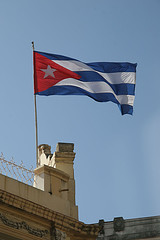
Flying the flag by exfordy
An online 4 minute video excerpt posted by international media taken from a 2 hour meeting between the president of the National Assembly and students from the Computer Science University (UCI [ES]) has brought forth contrasting reactions and debates regarding free speech in Cuba and the direction of the Cuban Revolution.

About a month ago, the BBC was handed an anonymous recording of a meeting between the UCI students and Ricardo Alarcón and they showed a 4 minute video which later spread through YouTube [ES] showing a few students asking Ricardo Alarcón de Quesada, president of the National Assembly (ANPP) of Cuba, about the reasons why there is a peso convertible, when workers in the fields earn their salary in national currency, with is worth 1/25th of the former, among other questions. The president´s answer was also shown on the BBC's edited video [ES]. Some of the first impressions garnered from this video were that these debates are something new in Cuba, sure signs that things are changing now that Fidel Castro has stepped down, as reported in The Cuban Triangle and the Havana Journal.

Cuban bloggers answered back with the full and unedited videos, some of them attempting to show that this meeting between students and government was an example of free speech that is not uncommon, and a way in which students which hold political positions inside the university could pose questions to Mr. Alarcón so that other students could hear the answers from a better source.

In Mexico, Cuba and other things [ES], the author believes these students belong to an elite: because they are studying computer sciences they have access to the internet that other students probably don´t have, making them more critical of the system. The author of Cuba, the truth comes out into the light[ES], believes the opposite: because these students study completely free of cost in the top university of their country, regardless of their humble origins, they probably support the revolution and ask questions because they can get answers. She writes:

Yo no quiero convencerlos de nada solo quiero que analicen, si es verdad lo que dicen los medios de prensa que dicen que los jóvenes cubanos cuestionaron el gobierno y ellos no manipularon la información, Por qué no ponen el video completo del intercambio y si solo lo que les conviene?

I don´t wish to convince you of anything, I just want you to analyze, if it is true what the media and press is saying that these Cuban youth were actively questioning the government and they don´t manipulate information, Why don´t they show the complete video of the exchange and only show what suits them?

In Yohandry´s Blog [ES], which he has on the Spanish El País platform, he states that it was the coming February 24th parliamentary elections which spurred this “anti Cuban” campaign. He also posts the complete 11 part video so that viewers can make their own minds, and thanks bloggers and the youth groups for getting together and helping get the full length videos out into the open. Below is the 1st part of the conversation, you can see the other 10 videos on Yohandry´s blog [ES].

In Pascual Serrano . net [ES], the Spanish journalist of the same name analyzes the meaning behind the videos: he states that the media portrays it as a case of mutiny against the Cuban government due to its inefficiencies, and he thinks otherwise. For Mr Serrano the video demonstrates that the government creates spaces where all citizens can ask any question to the ones in power, and those questions will get answered. He even mentions a previous event that she took part in that followed the same dynamic. He also scoffs at the thought that freedom of speech and the right to ask questions to the government is anathema in Cuba: in turn, he uses the example of the student who asked an uncomfortable question to John Kerry and was tasered and pulled outside of the room [Video link EN]. On a follow up post [ES], Pascual Serrano mentions that the international media was reporting that the student who spoke against Mr. Alarcón was detained, and that this was proven absolutely false by the same student, who was interviewed by a reporter in the same university and who, along with others, explained that they have been able to move freely and that the news of Eliécer Ávila´s arrest was completely false.

The two part video of the interview made by Cuban journalist Rosa Miriam Elizalde was uploaded by cubadebate [ES]:The comments on any of these posts and videos show how divided the population is: ones cry out that in the same way the information was manipulated by the BBC, perhaps the students were prompted to answer as they did during the interview. Others counter that the complete unedited videos are the best example of what really goes on in Cuba. Even Ricardo Alarcón Himself has commented on what he calls media manipulation of transparent political processes, as posted on Lapolillacubana´s Weblog [ES]:

Pensé en Mills cuando el domingo 24 de febrero al concluir la sesión del Parlamento cubano una periodista europea me expresó su sorpresa pues, según ella, las decisiones que acabábamos de tomar no correspondían con lo que se suponía debía ocurrir. No entendía que “un desconocido” como Machado Ventura pudiera ser elegido Primer Vicepresidente del Consejo de Estado y del Consejo de Ministros y tampoco comprendía que yo hubiese sido reelecto Presidente de la Asamblea contradiciendo ciertas especulaciones mediáticas. Con la mayor dulzura posible le respondí que los medios pueden manipular la realidad pero no son capaces de crearla.

I thought of Mills [C. Wright Mills [EN]] when as we wrapped up the Sunday February 24th parliament session a European journalist expressed her surprise, since according to her, the decisions that had just been made didn´t match with what was supposed to happen. She didn´t understand how an “unknown” like Machado Ventura could be elected First Vicepresident of the State Council and Ministry Council and she didn´t understand either how I had been reelected as President of the Assembly, in contradiction with certain media speculations. With the greatest sweetness possible I answered that media can manipulate the reality, but it isn´t capable of creating it.

1 comment · »»

Israel: Bloggers Mourn Terrorism at Religious School This is a Video post

a small portrait of this author Maya Norton · 16:29

Terrorist Attack on Mercaz HaRav Yeshiva–

On Thursday, March 6, eight teenagers were killed and many more wounded in a terrorist attack on a Jerusalem religious school. The perpetrator was identified as a Palestinian from East Jerusalem in possession of an Israeli identity card. Sources say he posed as a student in order to enter the building.

The Jerusalem Post reports: “The 8:45 p.m. shooting at the yeshiva in the Kiryat Moshe neighborhood broke a two-year lull in terror in the capital and sent students scurrying for cover from a hail of gunfire - a reported 500-600 bullets - that lasted for several minutes.”

“The Mercaz Harav Yeshiva [where the attack occurred] is considered the leading national-religious yeshiva in Israel, with hundreds of elite students. Among its thousands of graduates are leading public figures including senior rabbis and IDF officers… [Rabbi David Stav states] “Mercaz Harav is the flagship of the entire religious Zionist movement. The terrorist targeted a place that symbolizes love for the land of Israel, love for the people of Israel and love for the Torah. No Jewish soul can remain indifferent to the horrible thought that a despicable terrorist attacked a group of young men who were busy studying the holy Torah.”

Remembering Those Lost–

Israeli bloggers ask us to remember the names of the victims:

  • Neria Cohen, 15
  • Segev Peniel Avichail, 15
  • Avraham David Moses, 16
  • Yehonatan Yitzhak Eldar, 16
  • Roi Rote, 18
  • Yohai Lifshitz, 18
  • Yonadav Haim Hershfeld, 19
  • Doron Mereta, 26

Reflections from the Israeli Blogosphere–

Maurice of OneJerusalem offers a detailed explanation of what happened that night:

Thursday’s terror attack on students of the Merkaz HaRav Yeshiva in Jerusalem is being called one of the worst terror incidents in Israel’s capital since the beginning of the Second Intifada. The attack, which now appears to have been carried out by a lone Arab gunman, resulted in 8 students being killed and close to 40 injured, including 5 still listed to be in critical condition at the time of this writing. Some of the students killed and wounded were as young as 14…

Police were notified shortly after 8:30 p.m. local time, after a man dressed similar to a yeshiva student appeared at the entrance carrying a “parcel” that carried the AK 47 assault rifle and numerous magazines of ammunition which he began to fire indiscriminately at the students who were attending prayers in the library. During the pandemonium that followed, scores of screaming students tried to escape the hail of bullets, including jumping out of the yishiva’s second and third story windows. Many of the injuries sustained by the students included broken bones caused by jumping to the ground below.

One of the students, who identified himself as Ariel, called out on his cell phone and said that the assailant “just started shooting at everyone indiscriminately”. Police and army personnel who arrived at the scene were hampered in stopping the carnage due to the confusion caused by the student’s panic. “Bodies and blood were everywhere” another student said. An IDF officer who was familiar with the Yishiva’s layout, entered the building by a back door and managed to kill the attacker when one of his ammunition magazines ran out…

Talks may continue, but now who will listen to them?”

Please note that all of those in critical condition are now considered safely in recovery.

YouTube user DeusVult777 created “The Attack on Mercaz HaRav” to bring us a broader perspective of the evening's effects. [Warning: video contains graphic content.]

Amir Mizroch, news editor of the Jerusalem Post and author of Forecast Highs believes that the style of the attack was a deliberate message to the religious Zionist population. In “Attack Will Be Seen in Messianic Terms,” he writes:

Many of the top leadership of the religious Zionist movement, speaking at the funerals, spoke of revenge of the blood. The fact that the Jewish students were killed in a house of God touched the most basic nerve of many Israelis, and especially of the religious Zionist public…

Very few people outside the religious Zionist population have even heard of Merkaz Harav, let alone know somebody who studies there. This was not an attack aimed at the wider Israeli public, but a strategic attack against a very vocal public who will be demanding action of the government. There may even be some on the fringes of the settlement movement who will want to take the law into their own hands and carry out a revenge attack, maybe even against targets in East Jerusalem, where it looks like the killer came from.

The fact that the attack was carried out in the way it was - live fire, chasing down the students and shooting them at point blank range, as well as confirming the kills - and not by a suicide bombing, will add to the sense of brutality, of the narrative of good versus evil.

In “A Chilling Reality,” Rashi of OneJerusalem contemplates the effect of terrorism on Israeli morale:

In the face of this overwhelming nightmare and shock, its even more frustrating to realize that you really don’t know what to do. The greater evil is that we’ve come to realize that the tragedy hits too close to home.

There aren’t many more words for me to say on this matter. The fact of the matter is, the enemy is now able to penetrate into the heart of Israel and though the IDF and security forces have been doing an incredible job on protecting her citizens, nothing is yet fool-proof. We also live in a very small country and the concept of six degrees of seperation is very real.

Sometimes, its frightening.

Ilan Cohen of the Bits of Ink blog compiled his friends' reactions upon hearing the news. They include:

_____’s family is all safe.
_____ is mad, angry, frustrated, and at a loss. I hate our government!
_____ feels transported back to Jerusalem, circa 2001.
_____ is wondering how long the Israeli government is going to keep trying to make peace with our enemies instead of throwing them out of Israel!
_____ is falling asleep to a lullaby of ambulance sirens.
_____ is in pain for her nation.
_____ is playing david broza to get some clarity.
_____ is praying for those hurt by the terrorists in Israel today.
_____ is crying to hashem ..*
_____ is sad and can’t fall asleep. may Hashem avenge their blood.
_____ decries the cowardly Jihadist attack on Mercaz HaRav.
_____ is waiting for the requisite post-bombing UN cycle of violence statement.
_____ Can’t believe what happened tonight. I was scared for the first time EVER to walk around Jerusalem. What is going on here? Anyone in charge here????
_____ is deeply saddened by the shooting in the Jerusalem yeshiva and is disgusted by others rejoicing this.
_____ is literally sick from looking at the news.
_____ is shocked and sad at the murder of 8 young yeshivah students in Jerusalem by an Arab terrorist. Jews, wake up!!!
_____ is still trying to comprehend…
_____ is mourning with the families.
_____ simply has no words.
_____May God protect Israel, since our government certainly can’t.

(* Note that Hashem is one of the Hebrew names for G-D.)

In an entry entitled, “Murdering Children,” Michael Eisenberg of Six Kids and a Full Time Job reflects from a parent's perspective:

I have many questions, but no answers to this tragic and unfathomable tragedy. I try to fathom what could move any human being to murder 8 kids in a school library? I try to fathom what country would not seek to change or do something in order to protect its citizens in the wake of this barbarian act? Looks like I will have to ponder this for even longer….

I am a father of 7 children. I will be sending my kids to a school like this in the coming years. How should I feel? How should they feel? Where is the deterrence? Where is the humanity?

I mourn the loss of these precious kids with all of my heart and continue to ponder this unthinkable predicament.

In “Echoes of Gunfire,” David Bogner of Treppenwitz mourns a family friend lost in the violence as he embraces his own child:

I lay awake for hours with Yonah sleeping next to me. I tried to find sleep myself, but for the most part I alternated between checking the news on my laptop and covering Yonah's face with enough kisses that I would never be able to look back and regret having missed even one. But even my small attentions to my sleeping son were bitter sweet because of the knowledge that just a few hundred yards away there was a family whose young son would never again awake.

As the time for Yonah's school bus came and went (and emails arrived with funeral details), I continued to hold his sleeping form next to me. There will (G-d willing) always be time enough for school and play and army service and life. But with the echoes of gunfire, past and present, ringing in our ears this morning, I'm sure many Israeli parents had trouble letting their children go.

The anonymous authors of Life Must Go On in Gaza and Sderot are Hope Man and Peace Man, one of whom lives in Sderot, the other in Gaza. Hope Man questions the point of the violence:

Retaliation or Terrorism? defense or offense? Does it really matter to the relatives and neighbors? To the friends and acquaintances?

Hope Man and Peace Man have started a petition, which they urge us to sign. The One Month Petition calls for:

“An Urgent call for a One Month cease fire! - Give us a break - We, citizens of Gaza, Sderot and people all over the world desperately call you, our leaders and decision makers, to completely cease fire immediately. Both sides are in a dead lock and One Month will give all parties an opportunity to rethink their policy and to find new paths out of this senseless and hopeless reality.

Rahel Jaskow of the Elms in the Yard blog turns her attention to politics, questioning the United States' official reaction:

I just read that US Secretary of State Condoleezza Rice said in her condemnation of the attack: “This barbarous act has no place among civilized peoples and shocks the conscience of all peace-loving nations.”

I beg to differ, Madam Secretary. The perpetrators of this barbarous act have no place among civilized peoples. Nor do those who handed out candy and fired weapons into the air to celebrate it.

Ginrod Isus of the Collective Thoughts of a Ginrod responds to the United Nations' reaction:

“The UN has failed to agree on a response to the Jerusalem massacre” Really? Failed to agree? I always thought the UN would condemn terrorism. I watch the television in disbelief. Not in disbelief of the incident. But the footage of those celebrating, kissing the ground below them. Pure joy and celebration.”

Despite all, Jameel of The Muqata reminds us that the Hebrew month of a Adar is a time for celebration, saying:

I heard on the radio this morning one of the rabbanim from the Merkaz HaRav high school who said, “human beings were created to endure pain…death and mourning is part of life.”

No one ignores the pain of the terror, no one forgets the mourning. But we can't forget the message of Adar. We survived our enemies back then on Purim and we will continue to survive and flourish, today, and in the future. A Joyous Month of Adar to all of Israel.

Lastly, Lirun of East Med Sea Peace, asserts Israel's fortitude:

its very much a tradition in israeli psychology to not let conflict stifle life.. and to fight through it by living to the fullest..

Moving On–

The Israeli blogosphere's thoughts are with the victims of terror and their families, as well as the survivors. We wish them a full and swift recovery.

I leave you with the words of Mother Teresa, who said: “If we have no peace, it is because we have forgotten we belong to each other.”

Also on Global Voices Online:
Israel: Palestinian Gunman Kills 8 Students in Mercaz Harav, Jerusalem

0 comments · »»

Israel: Palestinian Gunman Kills 8 Students in Mercaz Harav, Jerusalem 

a small portrait of this author Gilad Lotan · 16:14

A gunman entered the prominent Jewish seminary, Mercaz Harav, in the heart of Jerusalem on Thursday night, killing at least eight students and wounding some nine others. It was the deadliest attack on Israeli civilians in nearly two years and the first attack inside Jerusalem in four. The attack comes at a time of increased Israeli-Palestinian tension, after a rise of violence in Gaza that has seen longer-range rockets reach the Israeli city of Ashkelon, a medium-size Israeli military operation in Gaza, and the deaths of nearly 130 Palestinians since February 27. Four Israelis have died, including a soldier last Thursday.

In Gaza, the radical Islamic movement Hamas did not take responsibility for the yeshiva attack but praised it. In a text message, Hamas said: “We bless the operation. It will not be the last.”.

Police confirmed that the Palestinian terrorist who opened fire at Jerusalem's Mercaz Harav Yeshiva carried a blue Israeli identity card and came from East Jerusalem. Daniel Seaman, head of the Israeli government press office, said: “Jerusalem is a town where Jews and Arabs live together. The terrorist took advantage of the fact that he could move freely in west Jerusalem.”

Doberman's reaction:

When I was in High School I remember an event where a terrorist stabbed a soldier to death in the Old City. Schools were stopped and instead we held discussions on the topic, on the attack, life in Jerusalem and coexistence. Instead of the usual broadcast, there was constant programming coming from the ground, accompanied by moving songs and discussions. Almost like memorial day.

Nowadays? There is an attack, and three hours later the broadcasts stop. Except some headlines in newspapers and talk show interviews of bereaved parents, we easily return to our regular routines. From the amount of terrorist bombings, shootings and missiles, we developed elephant skin and created a filter. We learned to repress. We are angry and sad only as long as the topic hits the headlines. The next day we chat about American Idol while sitting at cafes.

And only families of the dead cannot move onwards.
There is a saying in the army that goes: “whatever doesn't kill you makes you stronger. Whatever kills you makes your mother stronger”.
Well, from our blood-drenched experience we learned that we might be “stronger” from one attack to another, but a mother who loses her child will never get stronger.

Ze'ev writes:

A wedding and an attack. Happiness diluted in sorrow.
This was supposed to be a very happy post in which I tell about my good friend's wedding.

During the seven blessings, the person next to me said “fire” and “mercaz”. I thought perhaps a fire broke out in the Mercaz Harav Yeshiva. I looked at him as he was immersed in his mobile internet and suddenly realized: a terrorist opened fire in Mercaz Harav… I decided against stopping the celebration. When the couple entered the designated room, everyone else already knew. We called our friends who study there. A friend's brother is fine. Another friend is also fine. A third is not answering, his phone closed. But in his house they say he called and that he is fine. Then the bride and groom return, and you need to enter a wedding atmosphere - dancing and anything to make them happy in their big day. They did not know about it until the end of the evening.
I am so sad about the attack. It took me time to comprehend. But when I did, I walked upstairs and started reading the book of psalms.

So sad about the dead.

Many voices, such as this one, request the government to react harshly to the attack:

There is a strategic importance for such an attack in the Israeli capital. The other nation (Palestinians) consider the success of the Jerusalem attack a day of celebration. In any case, when someone succeeds to hurt your capital, it is as if they are harming the head of your country.
I think the IDF needs to react harshly to this event. All the people in Israel shall call out and say - no more silence!

On the opposite side of the scale, in his article published in Haaretz, Gideon Levy provides context regarding the Yeshiva's extreme right wing views, and the Rabbis which were educated and educate there:

It is still unclear if the terrorist knew exactly where he was heading when he entered Yeshivat Mercaz Harav and killed eight of its students.
“The flagship of religious Zionism” was among the used phrases, along with “holiest of holies” and even an exaggerated comparison to the Al-Aqsa mosque in terms of its holiness as a location. Some of the crowns tied to the school's name are indeed appropriate. There is nothing that can justify the horrid killing of youth in a library. But it is important to remember, even in this difficult hour, what came out of this school.

Many Rabbis who led some of the more damaging steps in the history of Zionism were educated there. Many right winged, Arab-hating instigators came from this “flagship”. Religious leaders such as Moshe Levinger, Haim Drukman, Avraham Shapira, Yaakov Ariel, Zafania Drori, Shlomo Aviner and Dov Lior, all admired by their students, were raised and raised generations of nationalistic youth within the walls of this school. For instance, how do we grasp Rabbi Lior's words from the past, who ruled in 2004 that the IDF is permitted to kill innocent people? That only we can? Lior declared that “one must not be blamed for the ethics of gentiles”. He ruled that the Knesset cannot decide to evacuate settlements, and that soldiers can refuse to obey orders to evacuate settlers. Rabbi Drukman made similar claims. Rabbi Aviner, another graduate of the school, called out to kill those refusing the compulsory draft. At that time there were mostly refusals from left-wing youth. In addition, Aviner claimed that soldiers who die in wars are not a reason for national mourning, and requested to cancel the Memorial Day. He compared the “road map” plan for peace as if conceding to Hitler. Evacuating settlements, he claimed, is an unlawful sin.

My heart is torn with the killing in the yeshiva. No one deserved it. Not the innocent in Gaza and not those dead in Mercaz Harav, Jerusalem. They all died in vain. They already paid the heaviest price. Their families and surrounding will surely gain more radical views, which will continually lead us through this never-ending cycle of bloodshed.

Palestinian defense sources estimate that the gunman was acting on instructions from Hamas leaders in Damascus, in coordination with Hezbollah. Pinhas Inbari describes a collaboration between Hizbollah, Islamic Jihad and the Al-Aqsa Martyrs Brigade in planning the attack:

According to current data, it is reasonable to assume that behind the attack at Yeshivat Merkaz Harav in Jerusalem stand several terrorist organizations: Hizbollah, Islamic Jihad and the Fatah's Al-Aqsa Martyrs Brigades.
Immediately after the attack, IDF acted against Islamic Jihad foundations in Bethlehem, carrying out house searches and arrests. Initially, it did not seem to be connected to the attack since the Islamic Jihad took responsibility that day for a previous attack in which an IDF soldier was killed. It became clear that the main target was Muhammad Shehada, who was not captured, but whose home was demolished by Israeli security forces. Shehada, who recently converted from being Sunni to Shi'ite, is directly linked to Hizbollah. This proves direct involvement of Hizbollah with the Islamic Jihad, through the connecting factor, Shehada. Usually, Hizbollah prefers to operate within Israel in a discrete manner, but Shehada's connection with this attack makes their involvement clearer than they had wished for.

The Kalashnikov rifle used by the Palestinian terrorist in the attack most probably belongs to the Palestinian Security Forces, which brings us to Fatah. One must not reject the possibility that the Al-Aqsa Martyrs Brigade, who operate closely with the Islamic Jihad, helped get the weapon to the terrorist's hands.

Hanan Cohen posts a piece he wrote five years ago after a lethal terrorist attack in a Jerusalem cafe, which is still astoundingly relevant today:

It is a moral declaration, which you do not hear these days.
The right wing accuses Arabs of violence. The left wing accuses the Israeli government of occupation. Both sides justify death on one of the sides, every one with a different excuse. The Israeli left and right react similarly to the expression ‘death does not justify death' by saying “true, but…”

They are both morally rotten. The left justifies those “fighting against occupation” and the right supports the IDF actions. Both left and right justify the killing of people - of babies or soldiers. As the conflict escalates, we will see an increase in their moral stench, which will prevent any opportunity to find a solution.

“Death does not justify death” - this is the moral foundation for a solution. Both left and right wings must remind themselves, so they can reach an agreement… We need Jews and Palestinians to understand and internalize this fundamental difference between justifying violence and explaining its reasons. The move from “justifying” to “explaining” is complex and difficult, yet hidden within is true hope for a solution.

Throughout the many pessimistic voices reacting to recent events, Yohay carries a dab of hope for the cessation of hostilities on both sides:

Up to now, it seemed that our government just didn’t give a damn about those people living in the south. Their voice isn’t heard in Tel Aviv or in Jerusalem. Protests have done little to move Israelis that live outside of the rockets’ zone.
The media usually doesn’t find reports about Qassams to be news.

It seemed convenient to live with a regular share of rockets and casualties, and to use this issue as an excuse for not making progress in any peace process.

The rockets on Ashkelon, the student that was killed in Sapir college and the rising frequency of rockets probably moved the media and the government. The action wasn’t the promised “Big Operation”, and I hope that such a big operation won’t go through.

I hope that the recent raid will trigger some talks about a cessation of hostilities as some Israeli politicians have suggested. These suggestions are now spoken by the politicians and also voiced by the media.
These voices wouldn’t be echoed without the raid on the weekend.

Will we see an end to this war of attrition?

2 comments · »»

Bolivia: Twittbo Twitter Community 

a small portrait of this author Eduardo Avila · 00:39
lingua → mg · bn · zht · zhs · es
sample image for this post

The Bolivian community of Twitter users is growing slowly, but it received a big boost with the creation of the page TwittBo [es], which hopes to provide a little more publicity to this popular form of communication. In addition, a Facebook group has also been formed to gather the Bolivian twitter-ers. Two of the original founders, Ricardo Zuna (@masaco) and Diego Wara Fernandez (@teufelabgott) answered a few questions regarding this new community.

pic2.jpg

Global Voices: How did the idea for Twittbo come about?

Diego Fernandez: The idea came about between twitts with @masaco (Ricardo) and I. We only recently met and soon realized that we had ideas to show the world. Even though it was inspired by TwittMX (the Mexican twitter community), I think our project wanted to go beyond just holding a Twitter meeting. Later Sebastian (Molina) said that he had a similar idea, and since one can never have too much help, we decided to make him a fundamental part of the team.

Ricardo Zuna: The idea came about through the exchange of twitts with @TeufulAbbgot, since we were initally the only 2 active Bolivian users of twitter and we saw the need to create a community of users of this technology. After developing the idea for approximately 1 week and inspired by other communities like TwittMX we decided to officially launch the blog on January 29, 2008. Almost immediately after launching the blog, we became in contact with Sebastián Molina, a young entrepreneur so that he could be a part of this ambitious project. He also has the same enthusiasm for Twitter.

GV: What plans do you have for the site?

DF: Currently we are looking for support from Bolivian bloggers in order to start a campaign of links and invitations. Even though we have not surpassed 30 or so members, we are aware of their support thanks to the direct messages and emails that are sent. For the future, we hope to make Twitter, not only to be microblogging amongst ourselves, but to provide better communication, which includes information, blogs and other related things.

RZ: Currently we are concentrating on the socialization of twitter in order to increase its use in Bolivia because it is a form of communication that is relatively new and seldomly used in Bolivia. We are listening to the ideas of the twitter users and contributions from friends, and we are thinking about putting on a Bolivia Twitter Gathering, which does not have date as of yet, and is subject to the increase in the number of users in Bolivia.

GV: What other things can be done in Bolivia with this “micro-blogging” or “twitts”? Are there other possible uses other than entertainment/social?

DF: The fundamental part of Twitter is its social nature, but we should use that factor so that our Bolivians become more in touch, and do not become dependent on the famous MSN Messenger, but there are alternative forms of communication to express ideas and/or conclusions regarding what we are calling “the cradle of ideas.”

RZ: It is an interesting application that could inform Bolivia through this medium with small twitt headlines like CNN, La Tercera, Global Voices, Ahora Bolivia and others. Regarding the alternative use of Twitter, it is only limited to our imagination, now that there are precedents that Twitter is used in many areas including political campaigns, student communities, and businesses that use it as internal communcation or in the commercial to promote or place a brandname, and as a personal diary, etc.

GV: Can you recall a funny or interesting experience related to your use of Twitter?

RZ: Something interesting that I found in twitter is that you can find all types of people, such as: Evo Morales, Barack Obama, Fidel Castro, Steve Jobs, and the list goes on and on, but the interesting things that anybody can say - what they are doing at that moment in 140 characters.

0 comments · »»
Funders
Sponsors
Korea content
supported by
OutBlaze Japan content
supported by
SanrioTown