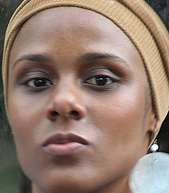
From 1550 to 1888 at least 3 million Africans were brutally shipped to Brazil by the slave trade, making nearly half of all the slaves brought to South America. Most of them came from Angola and Mozambique, then Portuguese colonies in Africa, and were subjected to forced labor in the north-east's sugar plantations.
Throughout the years of slavery, thousands managed to escape and set up liberated communities known as quilombos. The most famous of them was the Quilombo dos Palmares, in Alagoas, led by a runaway slave called Zumbi, who became a symbol of resistance for defending it against attacks from colonial forces. Zumbi was killed in 1695 and on the anniversary of his death, November 20th, the country renews its ongoing fight against discrimination.

(Picture by Iberê Thenório)
Bloggers reflect on social exclusion, racism and pride
The African cultural influence remains strong in Brazil, a country where people of African descent form nearly half of the country's 180 million population. Even so economic, social and other forms of racial discrimination remain the main legacy of the enforced mass migrations of the slave trade. According to the latest census, in 2000, Brazilans of African descent account for 63% of the poorest section of society although only 5% of this group declare themselves ‘of black origin'. Roice, Leandro and Milena, students from the secondary state school Jair Toledo Xavier, take a look at the numbers [pt] and reflect on the causes of discrimination:
A lei proíbe o racismo, mas mantém estruturas sociais e econômicas que o alimentam. Pode evitar que um viole o direito do outro, mas não tem como levar brancos e negros a se amarem e menos ainda como ajudar cada pessoa a se sentir bem em sua pele e em sua identidade cultural. No Brasil, os dados oficiais mostram que as desigualdades sociais são mais profundas à medida que as pessoas pobres não só são empobrecidas, mas são negras.
The law forbids racism but maintains the social and economic mechanisms that feed it. It can stop people from violating the rights of others, but this can't make blacks and whites love each other, and it is even more hopeless at making people feel good inside their own skins and with their cultural identities. In Brazil, official numbers show that social inequalities are deeper inasmuch as poor people are not only impoverished but black.

(Picture by Iberê Thenório)
Is the law really working at all? Aldo Cerqueira Santos [pt] publishes a collection of accounts by people who have been discriminated against and poses some questions for reflexion. The last of them is:
Estes depoimentos aconteceram há dez anos. Por que até hoje existe preconceito racial.
These accounts happened 10 years ago. Why is there still racial prejudice nowadays?
But is there in fact racism at all in such an ethnically mixed country as Brazil? This is still a much debated and highly controversial issue. Edu amasses more than 50 comments on his three posts on the subject. In one of them he writes [pt]:
O único tipo de preconceito que existe é o preconceito SOCIAL, relacionado à condição financeira e os símbolos de status ostentados pelo indivíduo. Neste país, não se olha cor antes de se julgar uma pessoa - se olha o que ela tem no bolso. No pulso. O que ela veste. Um negro rico é mais respeitado e bem tratado que um branco pobre - como se fosse uma pessoa melhor apenas por ter grana.
The only type of prejudice that exists in Brazil is SOCIAL prejudice relating to personal financial conditions and displays of status symbols. In this country, one doesn't judge others by their color - one looks what there is in people's pockets. On their wrists. How they dress. A rich black person is more respected and better treated than a poor white one - as if they were better people because they have dosh.
Zélio Luz [pt], who reports that he still faces racism after establishing himself as an engineer, is among those commentators who disagree with this post, inviting the author to put himself in black people's shoes for one day and listing some of the situations he has been through in a racist Brazil:
Muitos como o dono do texto, dizem que temos complexo de perseguição… imaginemos que você seja negro, e que entre em um desses cursinhos preparatórios, depois de trabalhar o dia inteiro, para pagar é claro o tal cursinho. Vai ao banheiro e se depara com a seguinte mensagem: “SAI FORA PRETO AQUI NÃO É SEU LUGAR” o que você faria? Imagine-se caminhando em um bairro nobre, vestido “arrumadinho” indo para o trabalho, alguém o vê se aproximar e percebendo sua negritude, atravessa para o outro lado da calçada segurando sua bolsa desesperadamente, o que você faria? Imagine-se agora em uma balada na vila olimpia, arrumadinho novamente, alguém lhe entrega as chaves do carro e lhe pede para que guarde no estacionamento, o que você faria?
Many people, such as the one who wrote this post, say that we have a persecution complex… imagine that you go on one of these courses [to prepare for the university exams] after a whole day's work to pay for said course. You go to the loo and stumble upon this message: “GO AWAY NIGGER, THIS IS NOT A PLACE FOR YOU”, what would you do? Imagine that you are walking through a posh neighborhood, all “dressed up” to go to work, someone sees you getting close and perceiving your “blackness” crosses to the other side of the road, holding their bags desperately tight. What would you do? Now, imagine you are going out in Vila Olímpia, again dressed up, and someone gives you the car keys and asks you to find a car parking space, what would you do?

(Picture by Iberê Thenório)
One of the highlighted topics of the above debate was a legal measure approved in May 2004 that allowed federal universities to use a quota system, according to skin color and social class, in order to improve access for people of African descent in further education. This is referred to as 'soft racism' and is the worst kind of discrimination, according to Reality is out there [pt]:
Falo daqueles que acham que, sim, os negros são inferiores e precisam de um tratamento diferenciado por parte dos brancos privilegiados senão nunca chegarão a ser nada na vida. Aqueles que não acreditam que, dando-lhe consições iguais, um negro é capaz de disputar uma vaga de trabalho em igualdade de condições ou até mesmo levar vantagem sobre um branco.
I am talking about those people who think that, indeed, black people are inferior and need to be treated differently by white people otherwise they will never get anywhere. Those who don't believe, given equal conditions, a black person is capable of competing in the job market in parity or even in an advantageous situation over a white person.
Truth be told, in Brazil the term ‘racism' is mostly used regarding discrimination against people according to the color of their skin. Sérgio Mendes [pt] reminds his readership that the word racism should not only have this connotation:
Já que tanto se batem pela questão do racismo contra os negros, poderiam, sensatamente, perceber que o inverso também o é. A palavra racismo não tem um componente “negro” no seu significado. Racismo é o preconceito que determinada raça ou etnia tem contra outra, independentemente se são brancos contra negros, negros contra brancos, portugueses contra espanhóis, paulistas contra nordestinos ou sérvios contra croatas: é racismo da mesma maneira, independente de qual parte parta.
As the question of racism against black people is often targetted, one could, reasonably, acknowledge that the inverse idea is also racism. The word racism does not have any ‘black' component in its meaning. Racism is a prejudice that a certain race or ethnic group has against others, regardless whether they be white against black, black against white, Portuguese against Spanish, people from São Paulo against people from the Northeast or Serb against Croat irrespective of which side it starts on.

(Picture by Iberê Thenório)
Eduardo Peret goes further, reflecting on discrimination of all kinds, against homosexuals, women and races concluding [pt]:
Então, vamos todos nos educar para a verdadeira perfeição, alcançando as virtudes da tolerância e da aceitação mútua. Aí, sim, as paradas, os dias internacionais e as comemorações de consciência e de orgulho serão desnecessários. Porque todos nós seremos verdadeiramente iguais, tal como quando nascemos.
So, let's all educate ourselves for real perfection, reach the virtues of tolerance and mutual acceptance. Then, indeed, the pride days, international days and commemorations of pride and awareness will be unecessary. Because we will all be truly equal, as we are born.

(Picture by Iberê Thenório)
Jaqueline Lira, a teacher and blogger, has the last word on this debate saying she is proud of her descent [pt]:
Tenho orgulho de ser negro. Não sou marrom, nem furta cor, nem camaleão. Sou negra.
I am proud of being black. I am not brown, nor iridescent, nor chameleon. I am black.
If you read Portuguese, Valeu Zumbi [pt] is a new blog that has been set up to spread information about the Black Pride celebrations accross Brazil.
All the pictures that illustrate this feature have been kindly provided by Iberê Thenório. See his full set from last year's Black Pride in Avenida Paulista, São Paulo.
Marakkesh is regaining its days of glory as the Mecca of tourists. With new mentions in international media, what do Moroccan bloggers have to say about the influx of tourists into their country? Here are the views from two of Morocco's louder bloggers.
Laila Lalami is appalled with the damage some tourists bring to ancient sites.
“The New York Times has a travel piece on Marrakesh, which I fear will result in even more tourists crowding the city. When we were there last spring, I saw a moronic British tourist sticking his ass out of one of the windows of the Ben Youssef Medersa. The floors of the seminary's student rooms were damaged by all the activity, and one of the guides kept touching the exquisite plaster work in the inner courtyard with his bare hands. (The photo above gives you a small idea of what you'll see on any given day at the famous medersa.) The tile floors at the Bahia palace were completely falling apart, and people had no regard for the artifacts. The Menebhi palace was also starting to show signs of wear. Sad,” she laments.
Meanwhile, A Moro in America (Ar) counters the argument saying that targeting the ‘right' type of tourist will bring much needed money to boost the tourism industry and other trades linked to it.
It seems as if it's activity week in Kuwait. With cooler weather, Kuwait's bloggers are out of the doldrums and writing about their everyday activities.
We start with bb q8 over at Kuwait Advertiser, who shares with us his pictures of an event in the Light House Church in Kuwait.
Today at the Light House Church in Kuwait City, a Harvest Festival was held.
This fundraising event is held once a year as a Thanks-Giving Festival.
Image courtesy of Kuwait Advertiser
Marzouq over at zdistrict brings us the latest from Gulfrun, an annual event in which Kuwaitis drive their sports cars to Bahrain and race over there.
My hat goes off to the gulfrun organizers for making this happen, I was really surprised how many cars there really were, you can’t tell how many there are when its at night. I came directly from work to the parking lot on the Gulf Road but it turns out I am one of the few that came directly from work, everyone went home and changed, then came. Many cars met up on the way there and you could hear them coming. I met up with one of the support vehicles and a Monster of a Porsche, and we were searching for the parking lot.
Yo_ghurt over at stillkuwaiting informs us about a new environment friendly change in Kuwait.
Maybe I just found out, as I don’t shop at the big Co-ops much: I was in Mishref Co-op yesterday and I’m glad to see that they are offering a choice of paper or plastic bags now. The paper bags are made of recycled paper and are sponsored by various companies under the Environment Friends Campaign
Meanwhile, Hellraiser is going on a road trip on a bike from Kuwait to Beirut, Lebanon, and started a new blog and named it Kuwait to Beirut to document everything that happens to him on the trip. He has just reached Beirut but that's not the end of it. We are awaiting for his return trip.
Well I guess my plans on resting went out through the window, the gang decided to go to Beirut, I guess this is why I am able to blog again. We left marmarita at 13:00, and arrived to Beirut around 17:00.
EXzombie over at exzombiesm draws to our attention another event - Project Turtle 2007.
As always, same as every year since 2000, Project Turtle is now a 7 year old Kuwaiti/Japanese project that is carried out by the Japanese society in Kuwait……!!!
same as last year the Project will target Shuwaikh Beach Park, where all the Japanese people in Kuwait JOIN in to clean the beach in order to enhance Kuwaiti people’s awareness of environmental protection…..!!!
Last but not least,
Forzaq8 wonders why there wasn't any attempt to advertise that there is a book fair at the Kuwait Fair grounds.
As far as i know ,, and according to the Kuwait international fair company [ KiF ]
The book fair is from 13th till 23 of November
of course i haven't noticed any ad or even a small bit in the newspapers


Levon Ter Petrosian, Opposition Rally, Liberty Square, Yerevan, Republic of Armenia
Without a doubt, the most significant event this winter has been the return of the first president, Levon Ter Petrosian, to the political scene in Armenia. Resigning in 1998 and living virtually as a recluse, Ter Petrosian came out of self-imposed retirement on 21 September — the 16th anniversary of Armenia's independence — to launch a blistering attack on the government and his successor as president, Robert Kocharian. Most observers took the criticism as indication that Ter Petrosian intended to again run for office.
On 26 October, at his first public rally, he confirmed such speculation by declaring that he would indeed run, but not everybody was happy. While considered an educated and formidable politician and statesman, many Armenians still hold Ter Petrosian responsible for the dire economic situation they found themselves in during the early to mid-90s when electricity shortages were commonplace, and corruption and cases of political persecution sky-rocketed.
In 1996, it is widely believed that the presidential election which secured his second term in office, was falsified.
In the wake of opposition protests following the ‘96 election, Ter Petrosian sent the tanks out onto the streets of Yerevan and opposition activists were persecuted and harassed. No wonder then, that not only did many expect the first president to account for his time in power, but they also demanded it. A rally staged Friday in the capital's Liberty Square was billed with that intent. Unzipped sets the scene.
Friends report from Yerevan that there are leaflets all over the capital inviting people for a (second) mass rally by ex-President and presidential hopeful Levon Ter-Petrosyan on 16 November. The main expectation of people who plan to go to the rally is that Levon at last will answer to the criticism over his period of presidency. They hope to hear his reflection over such issues as corruption, 1996 presidential elections (which many consider was a green light to all subsequent election frauds), Karabakh and so on. People expect and hope. Will Ter-Petrosyan deliver? We have to wait and see.
Even those opposed to Ter Petrosian's return such as Raffi K at Life in Armenia were intrigued.
Today is the 2nd Ter-Petrossian speech at the Opera (tonight). I don’t know if I’ll go - most the people I know who have gone have been rubberneckers, not supporters, and I am not sure I want to contribute to the swelling of his supposed ranks with rubberneckers. However, he is supposed to provide an explanation for his shortcomings today, which would be quite interesting - though I’m not sure I’d understand all the academic Armenian.

Opposition Rally, Liberty Square, Yerevan, Republic of Armenia
Setting the scene for the event, and inadvertently adding to the intrigue, the government did all they could to disrupt the meeting. An open-air pop concert scheduled for the next day in the same location, even though such events are unheard of in the winter, meant a huge stage erected would take up a significant amount of space. The concert was sponsored by the Yerevan municipality and the ruling Republican party of the main government candidate for next year's election, prime minister Serzh Sarkisian, as Unzipped explained.
Election period is the best for Armenian pop music loving crowd, more specifically youth, and it is officially started. We've seen it during parliamentary elections. We've already seen an introduction for presidential elections on 26 October.
This Saturday, just a day after ex-President Ter-Petrosyan 2nd rally, there will be an open-air free concert in Opera square (Freedom sq) with invited pop stars from Russia, including Dima Belan. Formally, concert is organised “for students”. However, it is sponsored by Yerevan mayor and Republican party.
“You go do your rallies, we will do concerts. Now see who will have more numbers.” […]
As it was, however, the stage was used by Ter Petrosian and his political allies as The Armenian Patchwork explains.
Once again opposition parties supporting the candidacy of Levon Ter-Petrosyan for president organized a rally on 16 November.
Ter-Petrosyan spoke from the stage on Freedom Square, from which Russian singer Dima Bilan and Armenian singers would perform the next day, a concert sponsored by the ruling Republican Party of Armenia.The crowd reached more than 10,000 […]

Khachatur Sukiasian, Opposition Rally, Liberty Square, Yerevan, Republic of Armenia
Local multi-millionaire businessman Khatchatur Sukiasian, also known as Grzo, was subject to tax inspections due to his support for the former president. Ironically, it has been frequently alleged that Sukiasian has evaded taxes during his time at the top of the pile under Ter Petrosian. His family is also reportedly related by marriage to former Minister of the Interior Vano Siradeghian still wanted by Interpol for masterminding several political assassinations in the 1990s.
A few days before the event, a youth activist from a minor political party, — the Democrat Hnchakian Party (SDHK) — was beaten by masked men while distributing anti-Sarkisian leaflets in a district of Yerevan. The Armenian Observer decried both the beating and the nature of the leaflets. Pro-Ter Petrosian and opposition activist Aramazd even reported that some leaflets advertising the rally were being systematically removed or defaced by government supporters, but despite the added publicity such tactics offered to the opposition, turnout at Friday's rally was little more than the previous one.
Even if the organizers put the number at 85,000, a figure impossible to achieve in Yerevan's Liberty Square, Reuters reported 12,000 while Radio Free Europe said 20,000. Bloggers, however, put the number at 10-15,000, but nonetheless said the gathering was impressive even if far smaller than the 50,000 recently reported in neighbouring Georgia. Even bloggers, such as The Armenian Observer, who have been highly critical of Ter Petrosian said that the speech by the first president was inspirational.
The crowd [responded] to the speech very enthusiastically, at least in the tight center where I was standing, and for a moment I felt inspired and elated. I felt, that it’s great after all, that Ter-Petrossian decided to come back - the political struggle has become so much more interesting by that. LTP is definitely much more charismatic and a better speaker then any of the politicians in the opposing camp - and today I felt for the first time ever, that he might actually have a chance of winning, because compared to him, Serge Sargsyan seems dull and weak to say the least.
Although not present at the rally, Unzipped was also pleased that Ter Petrosian finally addressed some outstanding accusations and criticisms of his time in power. Ironically, however, his greatest regret was bringing the current president and prime minister to Armenia from their native Nagorno Karabakh, the mainly Armenian-populated self-declared but unrecognized Republic in neighbouring Azerbaijan. The current favorite to take over from the current president is the prime minister, Serzh Sarkisian.
“Seeing the latest steps by Robert Kocharian and Serzh Sarkisian, I am increasingly convinced that I need to repent and ask for absolution,” he told about 20,000 people who gathered in the city’s Liberty Square. “Therefore, I belatedly but sincerely apologize to you for bringing Robert Kocharian and Serzh Sarkisian to Armenia and foisting them upon you.”
“If I made mistakes in my staffing policy - and I really did - this is the biggest one. In fact, this is not a mistake but a disaster which I inflicted on our people. So help me rid you of that disaster,” he added, drawing cheers from the crowd.
[…]
My initial impression is that the speech […] “contained a long-awaited critical analysis of his track record in government”. People may agree or disagree with what he said. But importantly, for the first time, he faced up his past in public and, overall, delivered expectations of the rally. His speech contained other important statements too which may be crucial in shaping up further developments in pre-election Armenia. Once more Levon proved that he is the one who is setting the ‘theme' for the election campaign.
With three months left before the 19 February 2008 presidential election in Armenia, The Armenian Observer rightly concludes that Levon Ter Petrosian is now shaping up to be the main opposition candidate aiming to contest the vote against the prime minister. Given the dynamics of Armenian politics, the race is now likely to get very heated and potentially volatile. Moreover, with the objectivity of the media in Armenia questionable, bloggers are taking on a very crucial and important role.
And while there might not be many posts on the election for now, what is lacking in terms of numbers is more than made up in terms of quality. Photographs of the 2008 presidential election in Armenia to date are here.
All photographs © Onnik Krikorian / Oneworld Multimedia 2007.

Hovannes Hovannisian, Opposition Rally, Liberty Square, Yerevan, Republic of Armenia

Stepan Demirchian, Opposition Rally, Liberty Square, Yerevan, Republic of Armenia

Levon Ter Petrosian, Opposition Rally, Liberty Square, Yerevan, Republic of Armenia
Software Freedom Day, a celebration of Free Software and Open Source, announced tha the SFD group for Nicaragua won one of three top places worldwide for their efforts on bringing Open Source Software to the people. Their event was held on September 13th in Managua, with the participation of organizers: Grupo Ubuntu Nicaragua [es], Suse-NUI Nicaragua [es], Grupo Fedora-ni [es], and Debian GNU/Linux Nicaragua [es].This is the email announcing one of the organizers the good news:
We are very pleased to tell you that the SFD NIcaragua 2007 Team competition entry for Best Event has been chosen as one of three winners! Congratulations!We were very impressed with your event. You had excellent community participation and non-geek inclusion, activities, media coverage (we loved the interviews!), collateral, technology demonstrations and of course information about Software Freedom and FOSS. Your teams hard work and dedication is inspiring and the excellent media coverage you achieved is tribute to those efforts.Well done! You do your country and the FOSS community proud, and are a true example of what Software Freedom Day is all about!Please pass on our congratulations and praise to your team, and your community.Cheers,Pia
Check the SDF group page which details all the efforts being made to help people jump into open source software. The page includes conference preparation and most importantly, conclusions post-conference:
7. Conclusions
- The SFD Nicaragua 2007 event was a huge success in terms of the attention gained from the local media and the non-geek public. More than two weeks after the event people continued to call and e-mail the local GNU/Linux groups seeking for information about free software.
- The LTSP and Edulinux projects got some attention from a couple of local schools. As of today, we are having talks with the representatives from these institutions in order to figure out how we best can help them with this initiative.
- At the international level, the Central American communities were brought closer together and work has already begun on some interesting joint projects(see 4.1.4).
- Last, but not least, the involvement of the younger members of the community in the SFD event (see 4.1.4) is seen as a huge step forward for the future of the FOSS movement in our country. Future plans, in particular within the Ubuntu community, includes the establishment of a local computer club for kids and young people.
Several Iranian Green bloggers,including Mojgan Jamshidi,say[Fa] “no to circus” in Pardisan Natural Park in Tehran.They say that it is shameful to see suffering animals in a natural park.
“If there is anything that should be recycled in Brazil, it is the concept that Brazilians have of recycling itself”. Starting by this idea, Nivaldo Simões shows in a detailed post [pt] how the model of recycling adopted by Brazil and by other developing countries - of not reducing the waste first - is creating an even bigger problem than bringing any advantages.