Stories from Quick Reads and Spain
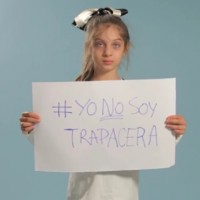
‘I'm Not a Swindler': A Campaign Against Romani Discrimination Takes Aim at the Dictionary
On April 8, on the occasion of the International Romani People Day, the organizations that form the Romani People Council started a campaign using social networks to request the Royal Spanish Academy to change the definition of the word gitano (Spanish word for gypsy) in the dictionary. The purpose of...
The European Union Won't Give e-Books Reduced VAT
On March 5, 2015, the European Union Court of Justice ruled that the reduced value-added tax (VAT) established for printed books should not apply to digital books, considering everything distributed or delivered electronically or via Internet as a service. Amalia Lopez questions the resolution on the Blog Sinerrata Editores: Lo que más me...
Can Artists Earn a Living in the Age of Social Media?
Not only can artists live off their work, but the Internet can actually be a lifeline for them in today's increasingly competitive marketplace. The blog RamGon looks into opportunities for painters in social media and, more importantly, into how the medium can help artists to publicize and market their work. In...
Spain and Latin America Celebrate Open Data Day
One again, bloggers, hackers, designers, experts, as well as citizens interested in open data and transparency will meet to celebrate International Open Data Day 2015 all over the world to promote the opening of government data. The event is expected to have online meetings but also in-person activities all over...

How to Reduce the Production of CO2 in Daily Life?
Rut Abrain reflects on her blog Esturirafi about one of the main cause of climate change: the production of carbon dioxide (CO2). In this sense, the blogger stresses out that not only factories, vehicles and planes produce CO2, but also each one of un in our daily lives. To have...
Online Entrepreneurship: Interview With Ana Bizarro from ‘Acción Alegría’
Andrea Collazo, who we already know from her blog Profesora de Informática (Computing teacher), shares an interview with entrepreneur and creator of accionconalegría.com, Ana Bizarro. Bizarro's website aims to provide support to “entrepreneur parents, with children and no time, this is, people who are responsible for their lives”. There is...
What is Sinology?
Sinology is still unknown to many people, as Isma Ruiz writes after attending the I International Congress of Sinology in Spanish, last June at the University of Tamkang – Tamsui, Taiwan. Although the focus was translation and interpretation of classic Chinese books, the necessity of learning a new language when...
Astrophysicist Shares the History of the Rosetta-Philae Mission
The comet Churymov-Gerasimenko was discovered on 1969, the same year a mission landed on the Moon. Back then, no one would have imagined that 45 years later a small spacecraft called Rosetta transporting a landing module and the hopes of thousands would touch down on surface of a comet known as...
Do You Read Ecolabels When Shopping?
Rut Abrain Sanchez on her blog Esturirafi defines and identifies legal and volunteer product labels. Among the latter we find ecologic labels, “so manufacturers show us they are abiding by a series of requirements and for the consumer to be able to identify products environmentally more sustainable”. There are Type...

Promoting Responsible Use of Social Networks
Andrea Collazo, blogging for Mujeres Construyendo (Women Building), proposes educating parents about the resposible use of social networks, so they can promote it among their children. Collazo advises parents on how to socialize their children from very early age with new technologies, promoting responsible use of social networks. She points...
Do You Know What Sustainable Fashion Is?
After watching Sweatshop TV series, where three Norwegian youngsters travel to Cambodia to discover the miserable living conditions of garment industry workers, Rut Abrain reflects on sustainable fashion. Sustainable garments are those that take care of the environment on the electing their raw materials and their manufacturing processes. Likewise, those...
Sexual Violence as Weapon of War
Marita Seara, blogging for Voces Visibles, invites us to reflect on the suffering of women sexually subdued during armed conflicts. The author recommends us to watch the documentary The war against women, where director Hernán Zin describes rape as real “weapons of war” and confronts us with the reality of...
Moments of Life: A Call for Sympathy
Carlos G. de Juan, blogging on Hacia rutas de cambio positivo (Towards routes of positive change), offers a reflection through a short mute film about the story of many homeless people in big cities, who had a normal life until life struck them so hard they just lost heart: Esta...
What is Your Carbon Footprint?
Today it is becoming increasingly common to hear about climate change, a topic everybody talks about but are rarely aware of its real impact. We've heard many times that we are all contributing to the destruction of the planet, but how can we know the footprint we are leaving behind? This...
A Mouse Amidst the Mist
First thing in the morning, amidst the mist that populates the waves in the township of Guetaría, a typical fishing village in the shores of Guipuzkoa (Basque Country), we can discern the shape of Mount of San Antón, which as we can see on J. G. del Sol Cobos in...
Spanish Congress Comission Approves AEDE Tax or Google Tax
The Spanish Congress’ Commission of Culture approved the so called AEDE Tax (for the Spanish name of the Association of Editors of Spanish Newspapers), also known as Google Tax as part of the draft bill of the Law of Intellectual Property. GurusBlog explains what is this tax about: A tax...
Spanish Football Club Presents Peculiar T-Shirt
Spanish football club Cultural y Deportiva Leonesa, presented its new T-shirt on July 22, 2014, with a peculiar design that simulates a tuxedo, with shoulder braids, and even a bow tie just below the neck. Twitter users were quick to express their opinion, not always favorable: No sé cuál es peor: Las...
Football Analysis of 2014 FIFA World Cup Brazil
International football fan Alberto Palmás analyzes the best teams that took part on the 2014 FIFA World Cup Brazil. He remarks the general performance of the national teams, the best players and other topics. He starts with Germany: Ha ganado el Mundial. Es la mejor y ha sido la mejor...
Lucky 13: Tips for Protecting your Data on Public Computers
If you are about to go on holiday and you are thinking of taking your computer and get connected to Wi-Fi or using computers that are available in hotels and other public places, you must read this post with 13 tips to protect data, as published by Andrea on her...
German Offensive Beated Argentinian Defense
On El mago del balón (The magician of the ball), Spanish journalist José Eduardo Carratalá analyzes the national teams that played the final match on 2014 FIFA World Cup Brazil 2014, Germany and Argentina, where the European crew won, and compares how the German presented a mainly offensive team againt...
Instagram as a Marketing Tool
Online marketing consultant Elena Leukona runs the blog El Club del Marketing where she “(helps) every small business owners that don't have a marketing department so they may understand the fast world of Internet”. On the latest entry, she shares her expert opinion about Instagram, the visual social network with...