Stories from Quick Reads and Morocco
Moroccan Royal Motorcade Runs Down By-Stander
Moroccans are sharing links for a video showing a car which is part of a royal motorcade ferrying Moroccan King Mohammed VI running over a man in Tangiers during the visit of French President Francois Hollande. Samia Errazzouki tweets: Video footage showing royal security protocol running over a man in...
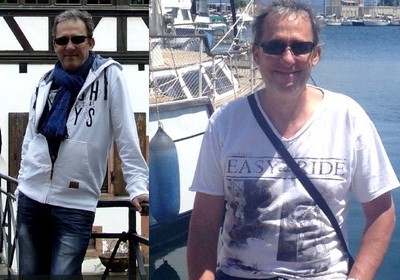
Herve Cornara's Relatives Want Him to Be Remembered as a Great Guy, Not the Beheaded Victim of a Lunatic
Herve Cornara was the manager of ATC, a delivery company in Chassieu in the suburbs of Lyon, France. More importantly, he was a father of a young man and loved by his relatives and colleagues. Cornara was killed and beheaded by Yassin Salhi next to a ISIS flag at a factory in...
10 African Children’s Illustrators You Should Know
Jennifer Sefa-Boakye highlights 10 of Golden Baobab Prize for African Illustrators’ finalists: Late last year Ghana-based pan-African literary organization Golden Baobab introduced us to a shortlist of talented illustrators, whose work ranged from 3-D Ashanti folktales to intricately drawn Moroccan cityscapes and African barbershop-inspired murals in Durban. Awarded in November,...
Emerging Threats in Cybersecurity Legislation in Africa
Access, an international human rights organization is troubles by emerging threats in cybersecurity and data protection in Africa. Ephraim Kenyanitto explains: The Convention was originally scheduled to pass in January 2014, but was delayed for modifications after protests by the private sector, civil society organizations, and privacy experts—all of whom...
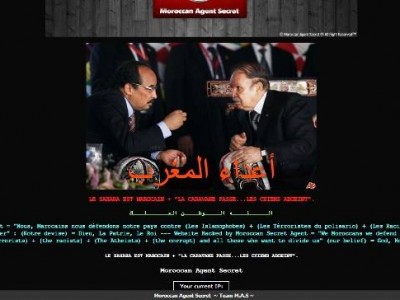
Moroccan Hackers Attack Mauritanian Government Sites
A group of hackers calling themselves the “Moroccan Secret Agent” have succeeded in breaching and seizing control [ar] of several Mauritanian governmental websites. The group defaced the websites with slogans insulting the Mauritanian president Mohamed Ould Abdel Aziz, and his Algerian counterpart, Abdelaziz Bouteflika, calling the two heads of state “enemies...
In the Information Age, the End of Status Quo for Morrocan Media
Hicham Lasri is a film maker from Casablanca, Morocco. In his second movie called “C'est eux les chiens” (They are the dogs”), Lasri talks about the evolution of media in Morocco [fr] with the expansion of information technology: Moi j'ai grandi dans un pays où les informations à la télévision...
A Call for African Leaders to Stand with the Central African Republic
As the situation in the Central African Republic (CAR) drastically worsens [fr] (935 000 IDPs as of today), Thione Niang, the Senegalese head of the GIVE1Project and Mehdi Bensaid, a Moroccan MP, calls from the African continent to stand up and show support to the victims of the conflict in CAR [fr]: Nous ne...

French Strategical Report to Counter China's Economic Influence in Africa
Top Francophone economists & diplomats (namely H El-Karoui from Morocco, T Thiam from Côte d'Ivoire, L Zinsou from Benin, J-M Severino and H Vedrine from France) submitted a joint report [fr] that outlines the strategy that France should implement to remain competitive on the African Market in the near future. Joel Té-Léssia highlights...
Congolese Teacher Pushed Out of Moving Police Van in Morocco, Dies
The death of Toussaint-Alex Mianzoukouta, a french teacher in Tanger is symptomatic of increasing brutality towards sub Saharan immigrants from the Moroccan police, Afrik Online reports [fr]. Mianzoukouta was not given the opportunity to present his immigration documents before he was taken into the van, the report says. He died from...
The State of Torture in the World in 2013
On January 23, 2013, an excerpt from the annual report of l'ACAT-France, A World of Torture 2013, makes a fresh assessment of the state of torture in the world [fr]: “A report called A World of Torture in 2013, assesses torture practices that continue to be alarming, from Pakistan to...
MENA: Acclaimed Authors’ Favorites of 2012
M. Lynx Qualey, blogger, who is interested in Arab and Arabic literature, wrote a series of posts introducing acclaimed Arab poets, novelists, and short-story writers’ favorite Arab reads of 2012. She started with a list of nonfiction books, then followed by a list for poetry [En] and fiction [En].
Maghreb, France: The Arc of Revolution is Long but It Bends towards Freedom
Had humanity obsessed itself with the potential pitfalls of every fight for emancipation and always analyze the events under the prism of one segment of society, we all will still be living under the old regime of monarchy. Faysal Riad argues that the revolution in France took almost a century [fr] to reach...
Morocco: Sexual Abuse to Cry Long Live the King
Once we got to the police station, they stripped us of all of our clothing and stuck hard objects into our anuses. They also ripped out our eyelashes, reports Nour Essalam Kartachi, in order to force us to cry, “long live the king.” reports Moroccan site Mamfakinch on the plight...
Morocco: Jail Sentence for Ramadan's Public Eater
A court in Rabat has sentenced a young man to serve three months in jail for failing to fast in public during the holy Muslim month of Ramadan. “[Individual freedom,] a right we are not likely to see protected anytime soon,” laments Yabiladi [fr], who reports the news.
Morocco: Marriage Proposal During Twitter Meetup Caught On Tape
A video of a marriage proposal during a tweetup in Casablanca is buzzing in the Moroccan social media sphere. “So far The Geekiest marriage proposal in Morocco,” comments Amine Hachimoto, who first published the video on Youtube.
Morocco: Video Explores the Question of Racism
In Morocco, an ethnically diverse country and one that has seen a recent influx of sub-Saharan African migrants, racism is seldom discussed. A video [Ar] posted by Moroccan YouTube user ch3aldaw (Turn on the light) asks: Are Moroccans racists?
Morocco: Mc Donald's Won't Serve Muslim Adults During Ramadan
An image of a sign in a Mc Donald's restaurant in Casablanca has been circulating among Moroccan netizens today. The sign reads, “Notice to our customers. During Ramadan, only children and non-Muslims can be served in the restaurant. All other orders will be served strictly for carry-out.”
Morocco: 22-Year-Old Arrested For Posting Cartoons of Prophet Mohammed on Facebook
According to online news magazine eMarrakech, a young Moroccan was arrested on Friday in Casablanca on charges of posting “insulting caricatures of the Prophet Mohammed on Facebook.” The accused, whose name has not been disclosed, has, according to local newspapers, published cartoons depicting the Prophet in the form of different...
Arab World: Detect Dialect Search Tool for Twitter
On Twitter, @Detect_Dialect is pushing for Detect Dialect – a dialect-specific search tool for Arabic content on Twitter. In addition to Classic Arabic, Arabs speak their local dialects, which sometimes differ even between neighbouring villages. This new tool claims to detect the dialects of Gulf, Iraqi, Levant, Egyptian and Maghreb...