Stories from Quick Reads and India
Updates on the 18th SAARC Summit On Social Media
The ongoing summit of the The South Asian Association for Regional Cooperation (SAARC) was covered by international media with different perspectives. However non-official initiatives such as 18th SAARC Summit blog, Facebook account, Twitter and Google+ account are aggregating updates on the summit for easy archiving. Here are some examples: This...

Too Many Under Trial Detainees in India's Jails
Indian alternative news portal Beyond Headlines sheds light on the darker side of India's judiciary. In India, of all people detained in lockups and state prisons there are more people under trial than convicts. Because of the slow process of the judiciary process, thousands of people suspected or accused of...

Mumbai School Children Have Big Ideas About Technology and Innovation
In a video by non-profit Atma, one girl wants to invent technology that can help a man fly. Another wants to invent a wallet in which the money never ends.

An Indian Photoblogger's Lone Fight Against Plagiarism
Indian photoblogger Anirban Saha points to a growing problem in India — plagiarism of intellectual property online. A number of his photos were used in a poster for a theatre festival, on a cover of a book, in an advertisement by the state government, in political banners, in magazines in...
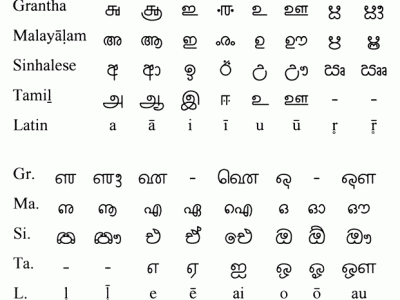
In new iOS, Apple Introduces Five Indic Language Input Methods
Computer giant Apple in its newest release of iOS8, expands its languages by adding more input methods and interface languages.
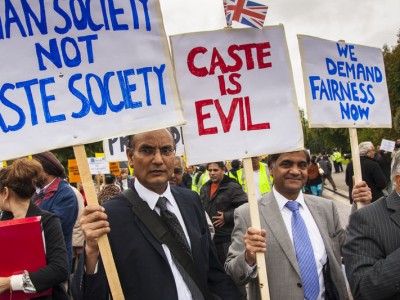
The Curious Case Of Marrying Out Of Caste in India
Karthik Shashidhar, a freelance management consultant and data scientist, shares interesting statistics from the National Family Health Survey. Shashidhar discusses the percentage of women in India who are married to someone of their own caste. The caste system in India is based on an order of (predominantly) endogamous groups rendering marriage...
A Terrifying Experience at A Mumbai Train Station
Blogger Antarik Anwesan recalls an alarming experience at Goregaon train Station in Mumbai, India. A local train started from the platform without notice and the crowd hurried to get on board. As the train gathered speed quickly, some people fell from the door and two persons were miraculously saved from...
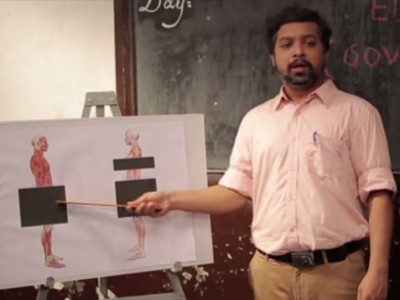
This Video Parodies What a Government-Approved Sex Education Class in India Would Look Like
Stand-up comedian Sourav Pant‘s comedy company East Indian Comedy has uploaded a YouTube video lampooning what a government-approved sex education class in India would look like. The video has gone viral, with more than 1 million hits in three days. The video mocks a suggestion made by Health Minister Harsh...
Indians Say Goodbye To Orkut, Reluctantly
Indian users are reacting to the impending demise of Google's Orkut social networking platform. Orkut is the oldest citizen media site Indians used and around 20% of Orkut’s users today are from India. Vinaya Naidu at Lighthouse Insights compiles some of the users’ comments on the end of Orkut: Priya...
Yes, I Wear a Bra, and It's Visible. So?
Nivedita N Kumar, a journalist, posts an emotional Facebook note which has gone viral. Here is an excerpt from the powerful essay that lashes at the notion of the Indian patriarchal society that clothes provoke rapists: Why? Why do you do that? Stare at my breasts like they are cute...
Srinagar-Leh Highway: An Adventurous Road Trip
The 434-kilometer-long Srinagar-Leh Highway is a spectacular and often scary highway in the Kashmir Valley. This road, which is open for traffic from June to November, is generally muddy, gravely and non-existent at best. The Zoji La mountain pass at 3,528 meters is particularly dangerous with only enough clearance for...
Jonbeel, a Barter Market in the 21st Century
The centuries old Jonbeel Mela, a community fair in the northeast Indian state of Assam, has a unique ritual. Around 10,000 indigenous people from tribes like the Karbi, Khasi, Tiwa, and Jayantia of the northeast come down from the hills to the Jonbeel wetlands with their produce or catch and...
Farewell Hindustan Ambassador
Hindustan Motors has recently suspended production of India's iconic Hindustan Ambassador car which was first rolled out in 1958. Soumyadip Choudhury at Cutting The Chai posts a tribute to the classic car creating an unofficial (and animated) Google doodle. The car still remains popular with taxi drivers, some politicians and...
Internet Policy In India – Which Way?
The newly elected Bharatya Janata Party headed by Narendra Modi is expected to implement policies and regulatory reforms that will augment economic growth in India. Avantika Banerjee at India Law and Technology blog opines that there is a strong correlation between economic growth and internet access/internet freedom and the expected...
Live blogging The Indian Lok Sabha Election 2014 Results
Youth Ki Awaaz is curating a live blog highlighting the Indian 2014 general election results including analysis and debates.
Online Tools And Resources For Learning Bangla Language
Kolkata based British expat blog My Bangla Diary posts an interview with Steve Capell, the creator of Bangla Tangla. This resourceful website by Capell contains useful tools and contents for learning Bangla (Bengali) language online.
The Challenge Of Keeping The Indian Electoral List Updated
The world's largest elections are underway in India and blogger Anuradha Shankar at “A Wandering Mind” blog points to the practical challenges of keeping the huge electoral list of the country updated for ready use.
Menstruation Is Not a Shameful Secret. Let's Talk Periods.
“Why do women hush themselves when it comes to discussing menstruation?” asks Sourav Kumar Panda at Youth Ki Awaaz and goes on to discuss that in this day and age, keeping periods a ‘hush-hush’ issue is unnecessary – the time has come for us to break the silence and shame...
The State Of Women In The Present Indian Society
Transhuman Collective (THC), a brainchild of Soham Sarcar & Snehali Shah, is a multidisciplinary collaborative project based on the philosophy of Transhumanism. In this moving video created and uploded to YouTube by Transhumanism.in it is revealed that there is lack of basic respect for women in Indian patriarchal society. To...
The Role Of Media In The Indian General Elections 2014
Vidyut at AamJanata, the common man's blog, writes an open letter to the Indian media criticizing its role in reporting about the ongoing Indian Lok Sabha elections. Media has failed to report adequately on the implications of perception engineering through doctored poll surveys. Media has failed to draw attention to...
“It's a Girl”: Campaign Against infanticide Feminicide in India and China
The website MujeresMundi, directed by Peruvian Belgium-based communication specialist Xaviera Medina, is involved with the awareness campaign It's a girl against infanticide feminicide in India and China: Girls are killed in a gendercide routine in any one decade than people were slaughtered in all the genocides of the twentieth century....