Stories from Quick Reads and Brazil
Why You Should Pick France as Your 2nd Favorite Team at the 2014 World Cup
Graham MacAree at SB Nation posts an entertaining comment on why one should pick the French national team as their 2nd favorite team after their home team at the 2014 World Cup in Brazil : You'll want to watch France games because if they're on, they'll be lovely to watch,...

From Our World Cup Archive: How Brazil Fooled the World With a Meme
Remember “Cala Boca Galvão”, the Internet meme that became a worldwide joke when millions of Twitter users started telling a famous Brazilian sports narrator and broadcaster, Galvão Bueno, to shut up, during the 2010 World Cup opening ceremony? Almost instantly it was a worldwide trending topic on Twitter and people from all over the...
‘Stadium of Exception': Brazilian Police Arrest Anti-Cup Activists
Collective Midia Ninja denounces [pt] that activists against the World Cup are being arrested in the city of Rio de Janeiro one day before the kick-off of the matches. These arrests are meant to prevent “future crimes in an attempt to intimidate” those who are willing to go on the...
Video: Brazil's Military Police Assaults Subway Workers on Strike
The Brazilian independent media collective Midia Ninja posted a video and a news report [pt] on Youtube that expose the violence of the Military Police of São Paulo against subway workers on a peaceful strike in the early hours of June 5, 2014. The video shows riot police officers charging against workers...
Costs and Benefits of Brazil's World Cup
Daniel Bustos blogs [es] from Colombia on the economy of the World Cup in Brazil and after touching upon the inevitable issue of corruption, states: Finally, Brazil will serve as a “guinea pig” for the Latin American countries that someday had dreamt of organizing this great event, it will serve to...
Peru and NetMundial: Same Old, Same Old… or Worse
Chillinfart writes [es] on V de Vergüenza about NetMundial, which he considers as a farce. To him this was: a meeting just for the sake of the picture, with core topics revolving around the share-out for Internet domains and concerns about cybersecurity (ring a bell?), leaving aside topics as neutrality...
#NETmundial, Tweets from São Paulo, Brazil
Here we share some Storify stories that sum up what happened on the first day of NETmundial, the conference on the future of Internet governance in São Paulo, Brazil (April 23 and 24, 2014). In English: – @APC_News: #NETmundial officially kicks off – First impressions of #NETmundial. – @PdF_Europe: NetMundial...
Brazil Scores Before “the Internet World Cup” Begins: Marco Civil Approved by the Senate
Update (23 April 2014, 15:15 GMT): President Dilma has sanctioned the bill in the NetMundial event. Marco Civil is now a law in Brazil. Livestream: blog.planalto.gov.br In the eve of the global Internet governance event hosted in Brazil, NETmundial, the Brazilian Senate approved the one-of-kind bill of rights for Internet users,...

Coming Soon! Rising Voices Microgrants for Amazon Communities
Rising Voices will be launching a microgrant competition next month for digital citizen media projects in the Amazon region which is home to many indigenous communities. Thanks to Avina Americas, Fundación Avina, and the Skoll Foundation, we'll be offering this support with ongoing mentorship from the Global Voices community. Read...
Delayed Construction Works in Brazil Fuel “(un)Happy” Video
The contagious feeling triggered by Pharrell Williams’ viral music video “Happy” inspired citizens of Porto Alegre, Brazil, to take advantage of the fact that their city holds the Portuguese word for “happy” in its name — but rather to express what's making them unhappy. The video shows people dancing joyfully in front...
Brazilian Congress Approves Pioneering Bill of Rights for Internet Users
Marco Civil has finally been approved in the lower house of Brazil's Congress and next should be voted in Senate. The bill of rights for Internet users became a worldwide trending topic on Twitter, following a large-scale campaign that was promoted during the day of the vote, March 25, 2014, under the hashtags #MarcoCivil and #EuQueroMarcoCivil (I want...
Brazil's Internet Bill of Rights Ignites Storm of Posts
Activists who support Brazil's bill of rights for Internet users, known as the #MarcoCivil, and who have Facebook or Twitter accounts are invited to participate in a large-scale campaign on social networks to pressure the National Congress to vote on the current version of the bill. An article by Julie Rovono on TechCrunch explains how...
‘The Subject': A New Crowdfunding Tool for Brazil's Independent Media
Aimed at providing an alternative to the traditional business model of media production, a new crowdfunding platform for independent journalism has been launched in Brazil. O Sujeito (The Subject) [pt] is hosted by the crowdfunding website Catarse, which wrote about the new venture [pt] coming at a time of transition for media funding: O veículo impresso está...
“Happy” Video Exposes the Other Side of Rio de Janeiro
Inspired by the “worldwide contagious happiness” that was sparked by Pharrell Williams’ viral music video “Happy“, as can be seen in hundreds of dancing videos from around the world, Brazilian group of video-makers Jeitinho Carioca (“Shit Cariocas Say”) has created a local version for Rio de Janeiro with a satirical tone. Besides showing people...
Activists Mobilize for Passage of Brazil's Internet Bill of Rights
Internet rights activists are in Brasilia today to pressure the National Congress to approve the Brazilian bill of rights for Internet users, known as the Marco Civil. One of them is former Global Voices collaborator Diego Casaes, who works with global civic organization Avaaz and wrote on Facebook [pt] before heading to the capital city: Hoje...
Brazil's Carnival Waste: The Day After in Photos
“The party in Carnival week never ceases in Rio,” says Brazilian photographer Leonardo Coelho. But eventually the day comes when the party is over and thus “Rio de Janeiro wakes up to a trashed city after Carnival night“. That is the title of a photo report by Coelho, which shows the...
27 Brazilian Songs Against Police Violence
Brazilian journalist and activist Carlos Carlos posted [pt] a list of the most important “Brazilian songs that denounce the police” on his blog, Bola e Arte. He explains: Now it is trendy to make lists, right? and amid so many useless lists, Bola e Arte blog has prepared a selection of...
Amendments to Brazil's Bill of Rights for Internet Users Jeopardizes Privacy
Recent amendments to Brazil's pioneer bill of rights for Internet users, the “Marco Civil da Internet” (Internet Civil Rights Framework), put net neutrality and users’ privacy at stake. The bill is expected to be voted on by Congress during the last week of February 2014. Activists have launched an online campaign asking for the...
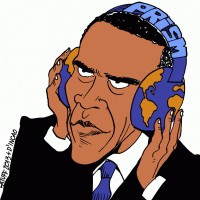
Brazilian Activists Fight Back Against Mass Surveillance
As the world comes together to take a stand against mass surveillance on February 11, 2014, Brazilian citizens, organizations and collectives are bringing momentum to #TheDayWeFightBack campaign.
Pre-Registration Open for Brazil's Global Internet Governance Event
In preparation for the Global Multistakeholder Meeting on the Future of Internet Governance that will take place in Sao Paulo, Brazil, on 23-24 April 2014, the organizers are now accepting pre-registrations through a form for expression of interest. The event is a partnership between the state-convened Brazilian Internet Steering Committee (CGI.br), and...
Human Rights Video: 2013 Year in Review
A video by WITNESS on the Human Rights Channel of YouTube wrapped up some of the most significant protests and human rights abuses of 2013. Dozens of clips shot by citizens worldwide are edited together to show efforts to withstand injustice and oppression, from Sudan to Saudi Arabia, Cambodia to...